Kimchi Ramen Bowls for a Flavor-Packed Meal
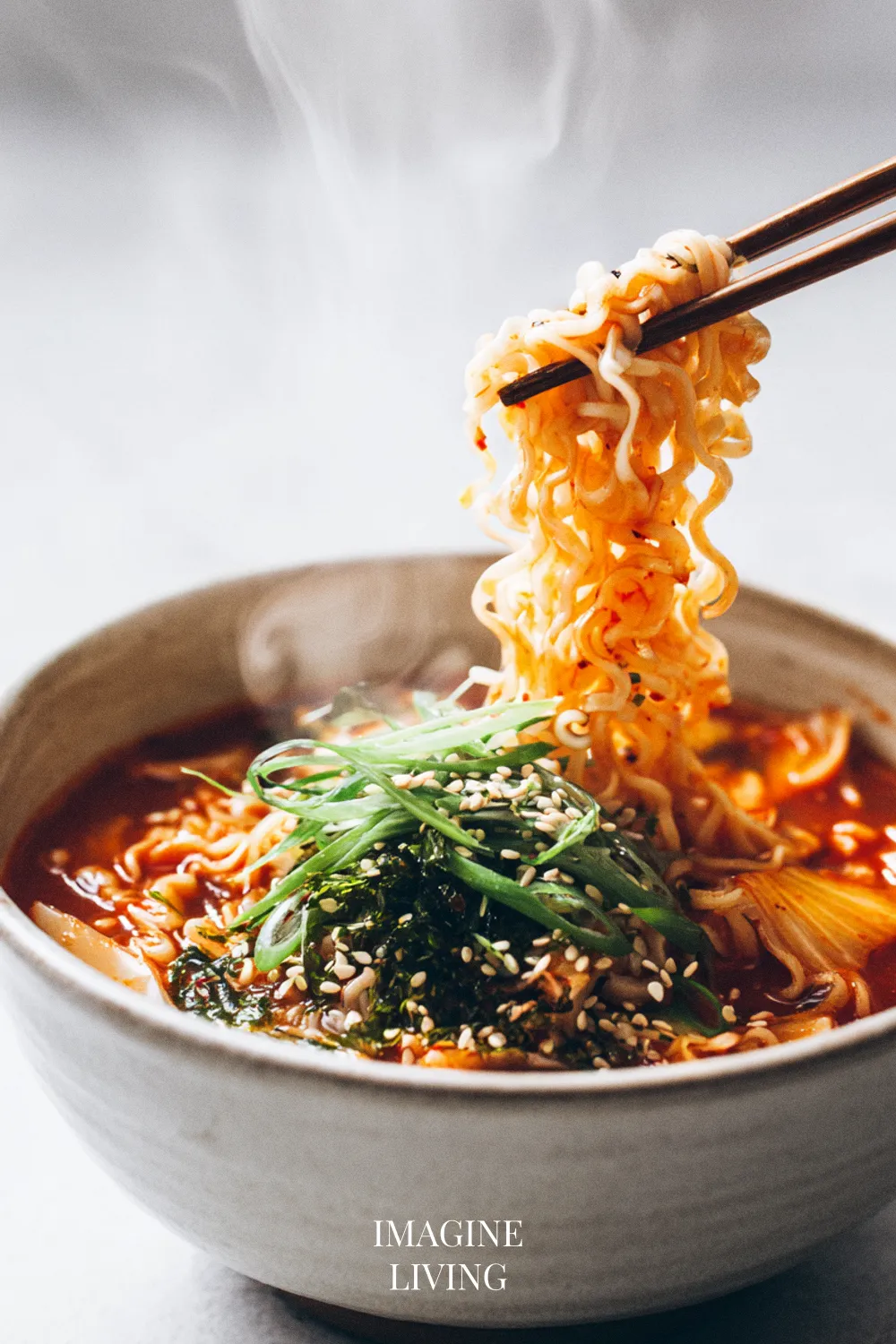
Steam rising from a deep bowl of kimchi ramen has a way of waking up your senses right away. As you cook, you might notice the ginger warming in the pot — a small reminder that this dish comes together with easy, steady steps. Nothing here is fussy, and you can trust your instincts as you go. And if a little kimchi brine splashes somewhere unexpected, well, it tends to do that.
Why You’ll Love This Recipe
Kimchi Ramen Bowls bring big flavor without asking much from you, the kind of meal that feels generous even on a busy day. Here are a few reasons to fall in:
- Quick to Prepare: With minimal prep time, dig into a delicious dish in less than half an hour.
- Customizable: Adjust spice levels, toppings, or broth based on your preferences.
- Nutritious: Packed with vegetables, protein, and probiotics from kimchi, it’s as healthy as it is flavorful.
“One pot, bold kimchi broth, noodles on repeat.”
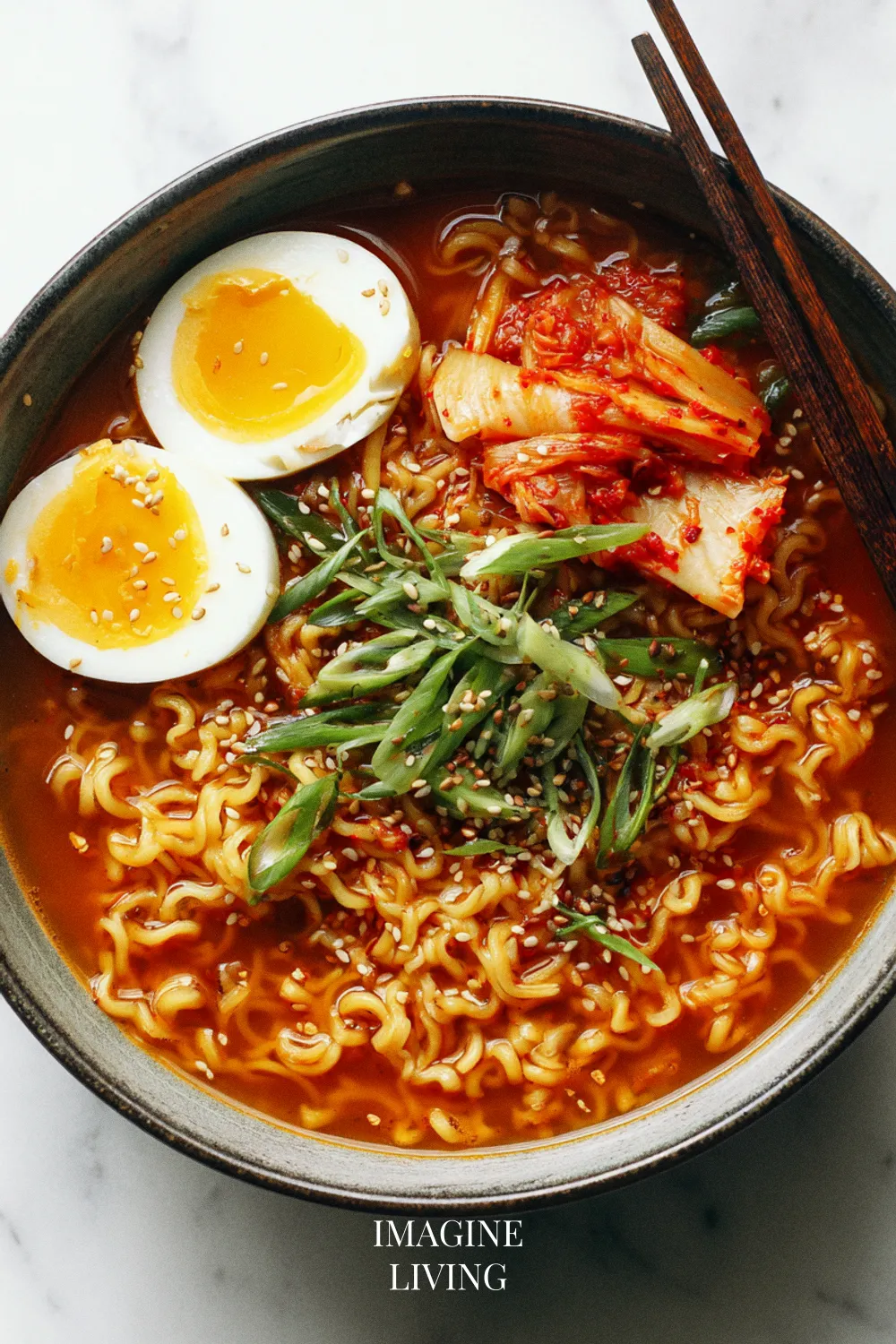
Ingredients: Flavorful Kimchi Ramen Bowls (Serves 4)
For the Broth
- 4 cups chicken or vegetable broth (960 ml)
- 1 tablespoon sesame oil
- 2 tablespoons soy sauce
- 1 tablespoon miso paste
- 1 teaspoon grated ginger
For the Noodles
- 12 ounces ramen noodles (340 g)
For the Toppings
- 1 cup kimchi, chopped
- 2 green onions, sliced
- 2 soft-boiled eggs
- 1 cup spinach
- Toasted sesame seeds
- Optional: seaweed sheets for garnish
Options: Swap out soy sauce for tamari to make this recipe gluten-free.
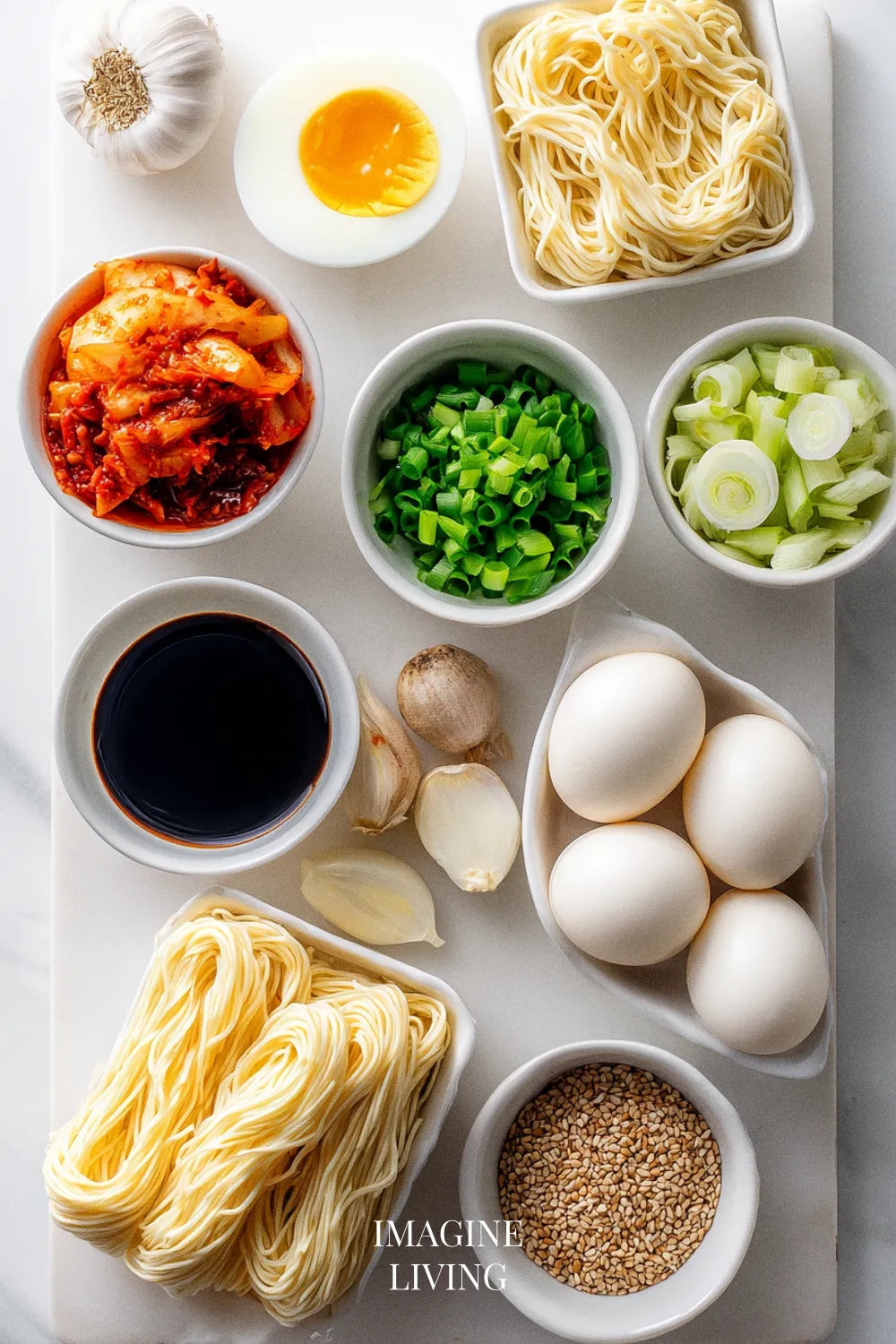
Equipment Needed
- Large pot
- Mixing bowl
- Slotted spoon
- Ladle
- Knife and cutting board
Step-By-Step Guide: Making Kimchi Ramen Bowls
A warm broth, quick-cooking noodles, and a few bright toppings — the only real challenge here is pacing yourself. Luckily, each part is easier than it looks.
Prepare the Broth
In a large pot, heat the sesame oil over medium heat. Add the grated ginger and sauté for about one minute until fragrant. Follow this by adding the broth, soy sauce, and miso paste, stirring thoroughly to combine. Allow the mixture to simmer for about 10 minutes. — The miso melts in slowly; a little patience helps it disappear fully.
Cook the Noodles
Bring a separate pot of water to a boil. Once boiling, add the ramen noodles and cook according to package instructions, usually about 3-4 minutes. Once ready, drain and set aside, allowing the noodles to cool slightly.
Tip: Do not overcook the noodles, as they will continue to soften when added to the hot broth.
Assemble the Bowls
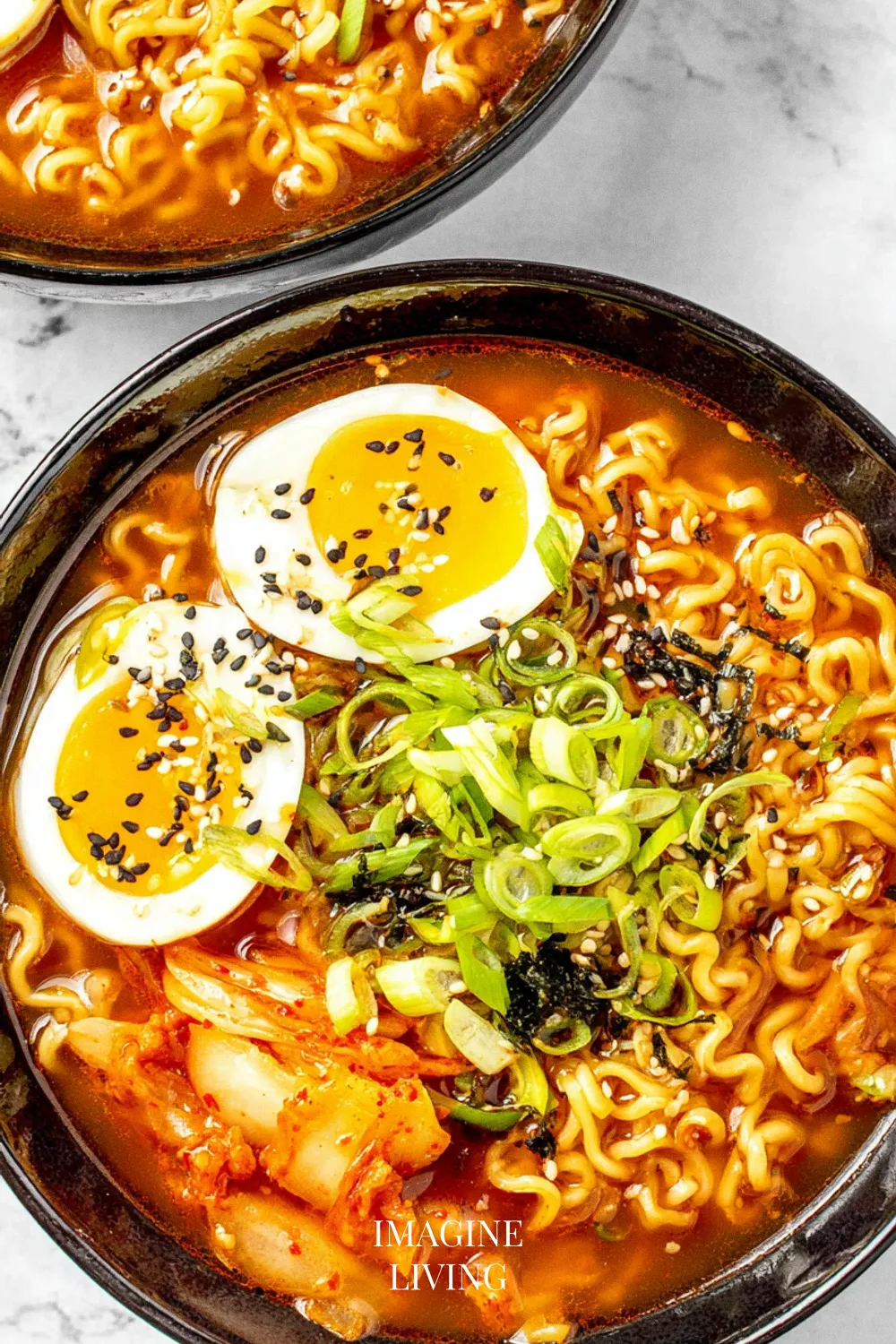
Divide the cooked ramen noodles into four serving bowls. Ladle the hot broth over the noodles generously. Top each bowl with a scoop of kimchi, a handful of fresh spinach, sliced green onions, and a soft-boiled egg cut in half. — The spinach wilts just enough from the heat, which always feels satisfying to watch.
Tip: For perfect soft-boiled eggs, simmer them for 6-7 minutes and plunge them into ice water for easy peeling.
Finishing Touch
Sprinkle toasted sesame seeds over each bowl for an added nutty flavor. Optionally, lay a sheet of seaweed on the side for extra texture. — A few seeds inevitably bounce away; they tend to have their own plans.
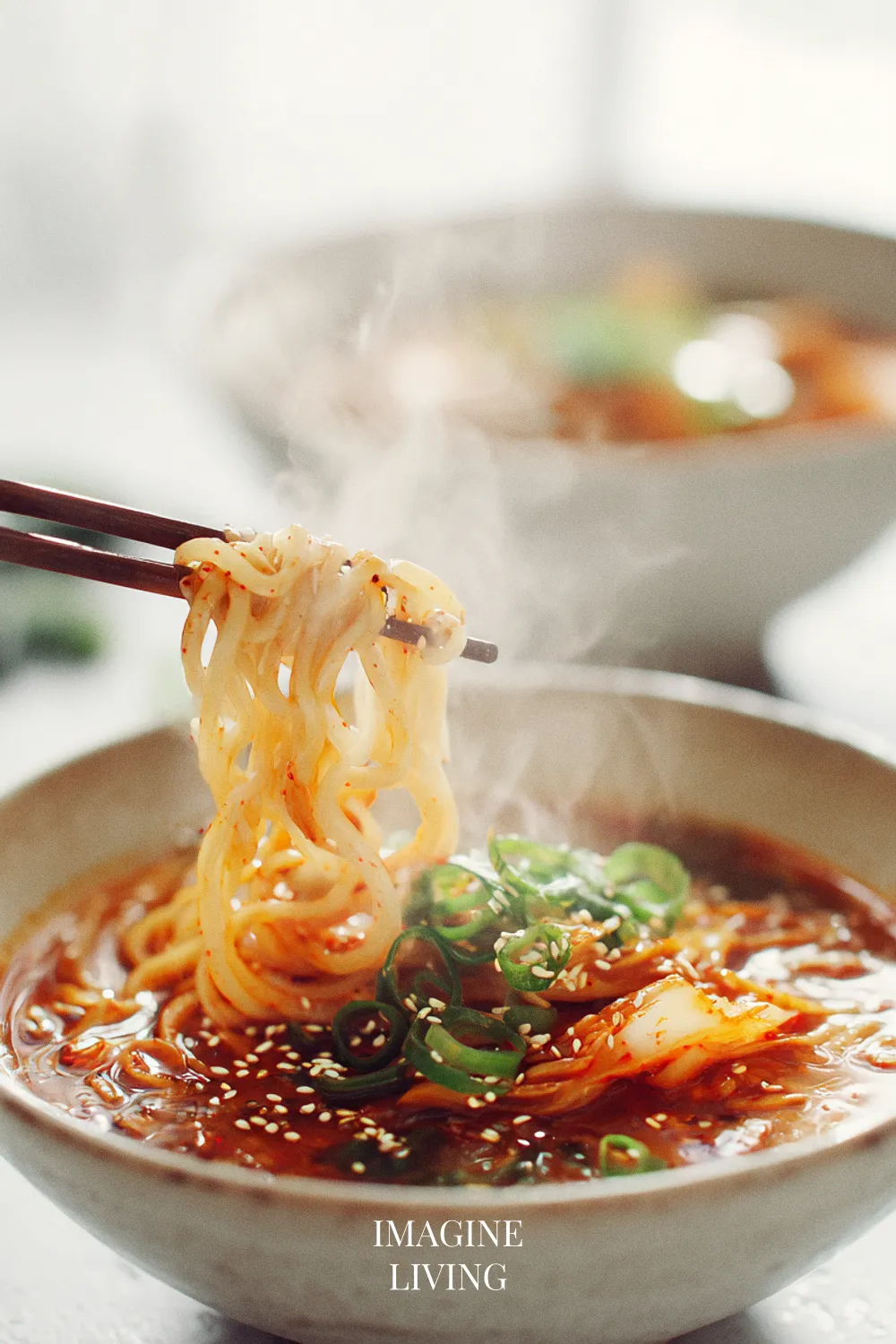
Pro Tips for Kimchi Ramen Bowls
A few small choices can make this bowl feel even more satisfying.
- Use fresh, high-quality kimchi for maximum flavor.
- Feel free to add other vegetables, like carrots or mushrooms, for variety.
- Customize the spiciness by incorporating gochujang or chili flakes.
- Experiment with proteins like tofu, chicken, or shrimp.
One small note: a little extra kimchi brine can be surprisingly perfect.
Dietary Variations & Substitutions
Gluten-Free Version
- Replace regular ramen noodles with gluten-free ramen noodles (use a 1:1 ratio).
- Use tamari instead of soy sauce to maintain flavor without gluten.
- Ensure no cross-contamination with shared cooking surfaces if gluten-sensitive.
Tip: Check that your miso paste is labeled gluten-free, as some contain wheat.
Dairy-Free
- This recipe is inherently dairy-free as no dairy products are included.
- Ensure any additional toppings or sides are also dairy-free if needed.
Tip: A splash of rice vinegar can enhance the broth’s flavor without adding dairy.
Vegan Version
- Swap out chicken broth for vegetable broth and use firm tofu instead of eggs.
- Use non-dairy toppings or omit them altogether for a fully vegan dish.
Tip: Marinate the tofu in soy sauce or tamari for added depth of flavor.
Nut-Free
- This recipe is nut-free as written; ensure any additional toppings (like nut-based sauces) are omitted.
- Always verify that miso paste and any pre-packaged ingredients are nut-free to avoid cross-contamination.
Tip: Use sunflower seeds in place of sesame seeds for extra crunch and flavor if needed.
Low-Sugar
- This recipe is naturally low in sugar; ensure that your kimchi does not contain added sugars.
- Consider omitting any additional sweet toppings or sauces.
Tip: Taste-testing your broth can help you balance the flavors without sugar.
High-Protein Version
- Increase protein by adding edamame or chickpeas; use about 1 cup to boost the protein content.
- If not vegan, consider adding grilled chicken or shrimp for additional protein.
Tip: Mix the extra protein with the broth and cook for a few extra minutes to heat through.
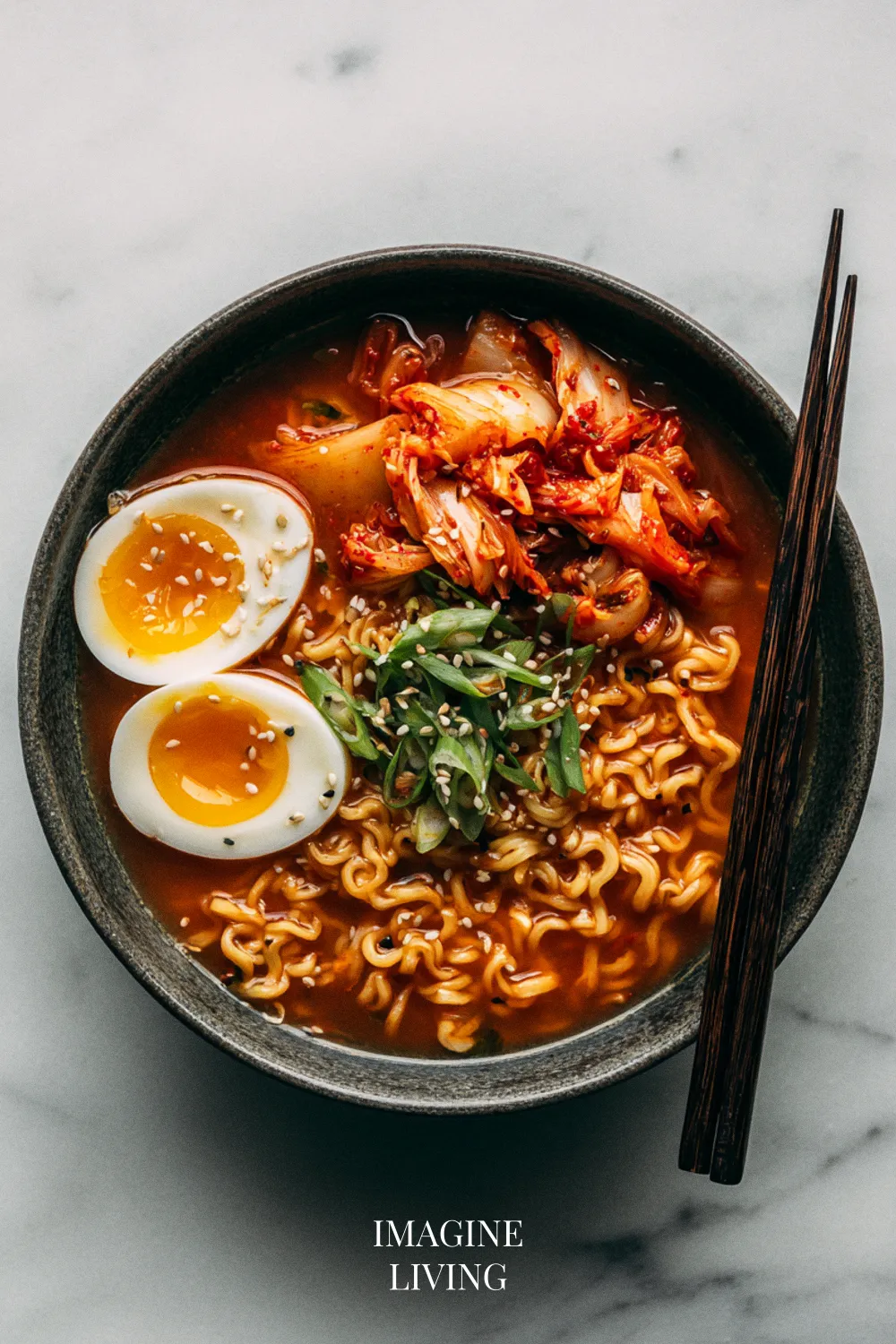
Creative Variations: Exciting Twists on Kimchi Ramen
Vegan Kimchi Ramen
Swap out chicken broth for vegetable broth and use tofu instead of eggs.
Tip: Marinate the tofu in soy sauce before pan-frying for extra flavor.
Spicy Beef Kimchi Ramen
Add thin strips of beef to the broth during simmering.
Tip: Use a high-quality cut that cooks quickly for the best results.
Seafood Kimchi Ramen
Incorporate shrimp and mussels for a delicious seafood twist.
Tip: Add seafood towards the end of cooking to retain tenderness.
Coconut Curry Kimchi Ramen
Mix in coconut milk and curry paste for a tropical twist.
Tip: Garnish with fresh cilantro for a burst of freshness.
Miso Mushroom Kimchi Ramen
Add sautéed mushrooms to deepen the earthy flavors.
Tip: Shiitake mushrooms are an excellent choice for a rich taste.
Serving Suggestions
Serve these Kimchi Ramen Bowls with a side of crispy tempura vegetables or a light salad to complement the bold flavors. A chilled bottle of Asian lager or a refreshing iced green tea pairs beautifully, making it a complete dining experience.
Storage and Reheating
Store any leftover broth and toppings separately in airtight containers in the refrigerator for up to three days. When reheating, warm the broth gently and prepare fresh noodles for the best texture. Avoid reheating pre-mixed ramen, as it can become mushy.
Common Mistakes to Avoid
A few small slips can change the texture or balance, but each has an easy fix.
Overcooking Noodles
Ensure you follow package instructions closely for perfectly cooked noodles.
Tip: If you have leftovers, undercook the noodles slightly.
Rushing the Broth
Take your time with the broth; simmering beautifully develops flavors. A few extra minutes always help.
Skipping Toppings
Toppings are essential for both flavor and presentation; don’t neglect them. They bring needed brightness.
Choosing Low-Quality Kimchi
Invest in good-quality kimchi; cheap options may lack flavor. Better kimchi makes a noticeable difference.
Not Taste-Testing
Always taste and adjust the seasoning, as broth salinity can vary. A quick sip can guide you.
FAQs
Can I use instant ramen noodles?
Yes, instant noodles can be used, but avoid using the seasoning packet, as you’ll have your own broth.
Is this recipe gluten-free?
To make it gluten-free, use gluten-free ramen noodles and tamari instead of soy sauce.
Can I make this dish vegetarian?
Absolutely! Just use vegetable broth and omit any animal protein.
What can I substitute for miso paste?
You can use tahini or leave it out entirely if you prefer a lighter broth.
How long does kimchi last in the fridge?
Homemade kimchi can last several months in the fridge if stored correctly.
Satisfying Your Cravings with Kimchi Ramen Bowls
When everything comes together in the bowl — the broth, the noodles, the sharp bite of kimchi — it feels grounding in a simple, pleasant way. This is the kind of meal you can return to whenever you want something warm and steady, no fuss required.
Kimchi Ramen Bowls
Equipment
- Large pot
- Mixing bowl
- Slotted spoon
- Ladle
- Knife and cutting board
Ingredients
For the Broth
- 4 cups chicken or vegetable broth (960 ml)
- 1 tablespoon sesame oil
- 2 tablespoons soy sauce
- 1 tablespoon miso paste
- 1 teaspoon grated ginger
For the Noodles
- 12 ounces ramen noodles (340 g)
For the Toppings
- 1 cup kimchi chopped
- 2 green onions sliced
- 2 soft-boiled eggs
- 1 cup spinach
- Toasted sesame seeds
- Optional: seaweed sheets for garnish
Instructions
Prepare the Broth
- In a large pot, heat the sesame oil over medium heat. Add the grated ginger and sauté for about one minute until fragrant. Follow this by adding the broth, soy sauce, and miso paste, stirring thoroughly to combine. Allow the mixture to simmer for about 10 minutes.
Cook the Noodles
- Bring a separate pot of water to a boil. Once boiling, add the ramen noodles and cook according to package instructions, usually about 3-4 minutes. Once ready, drain and set aside, allowing the noodles to cool slightly.
- Tip: Do not overcook the noodles, as they will continue to soften when added to the hot broth.
Assemble the Bowls
- Divide the cooked ramen noodles into four serving bowls. Ladle the hot broth over the noodles generously. Top each bowl with a scoop of kimchi, a handful of fresh spinach, sliced green onions, and a soft-boiled egg cut in half.
- Tip: For perfect soft-boiled eggs, simmer them for 6-7 minutes and plunge them into ice water for easy peeling.
Finishing Touch
- Sprinkle toasted sesame seeds over each bowl for an added nutty flavor. Optionally, lay a sheet of seaweed on the side for extra texture.