Savory Stir‑Fried Bok Choy with Ground Meat: Quick, Flavorful Asian Sauté
I love the way a sizzling wok can turn a few simple ingredients into a hug of flavor. The moment the pan starts to sing, the kitchen fills with a caramelized aroma that says, “We’re about to serve a protein‑packed, bright‑green delight.” Fresh bok choy ribbons meet aromatic garlic, while ground meat browns to a savory depth, creating a dish that feels indulgent yet wholesome. (And yes, I always keep a small bowl of rice ready in the back of the fridge—just in case.)
Why You’ll Love This Quick, Flavor‑Rich Stir‑Fry
- Speed – ready in under 20 minutes, perfect for busy weekdays.
- Nutrient‑dense – bok choy supplies vitamins A, C, and K, while lean ground meat adds iron and protein.
- Flavor balance – a gentle soy‑ginger sauce ties everything together without overpowering the greens.
- Versatility – swap beef for turkey or pork, or use tofu for a vegetarian twist.
The only real mistake is the one that does not lead to improvement.
Julia Child
Ingredients: The Fresh, Flavor‑Burst Bok Choy Stir‑Fry
Serves 4
For the Bok Choy
- 2 bunches of bok choy (about 12 ounces / 340 g) – leaves separated and stems sliced
For the Ground Meat
- 1 pound (450 g) lean ground beef, turkey, or pork
For the Sauce
- 1/4 cup soy sauce (60 ml)
- 2 tablespoons oyster sauce (30 ml)
- 1 tablespoon hoisin sauce (15 ml)
- 1 tablespoon rice vinegar (15 ml)
- 1 teaspoon sesame oil (5 ml)
- 1 teaspoon cornstarch dissolved in 1 tablespoon water (15 ml)
Aromatics & Extras
- 3 cloves garlic, minced
- 1 tablespoon ginger, grated
- 1 small red chili, sliced (optional)
- 1 tablespoon vegetable oil
- Sesame seeds, for garnish (optional)
Options: tamari (gluten‑free soy sauce) or coconut aminos (lower sodium)
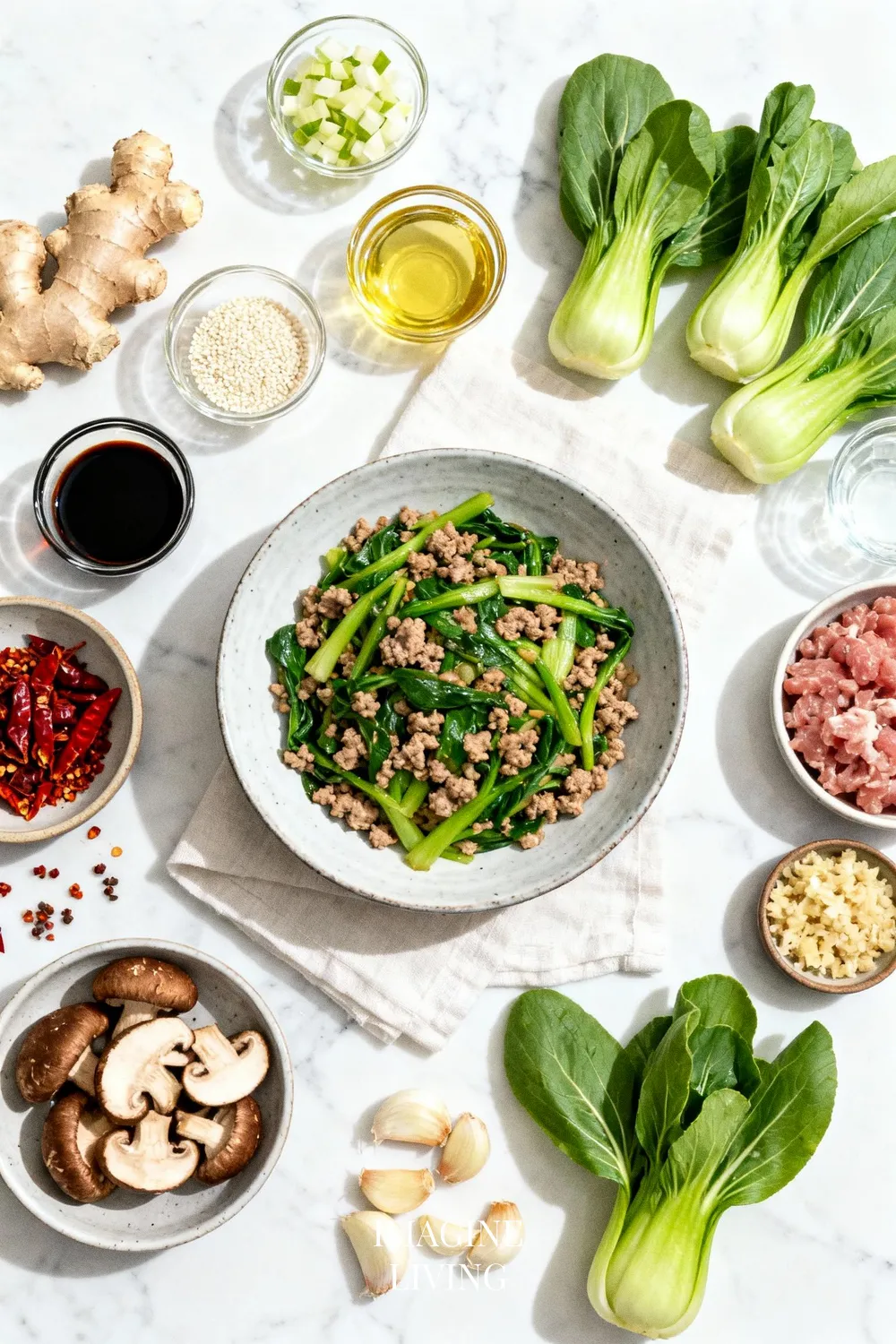
What You’ll Need: Equipment for a Quick Stir‑Fry
- 10‑inch wok or large skillet
- Wooden spatula
- Measuring spoons and cups
- Small bowl for sauce
Step‑By‑Step Guide: Quick Ground‑Meat Bok Choy Stir‑Fry
Let’s dive in. I like to keep the process breezy and flavorful—here’s how I do it.
Step 1: Prep the Bok Choy
Trim stems, wash, and slice stems into 1‑inch pieces. Leave leaves whole or in halves.
Tip: Use a sharp knife to keep stems crisp.
Step 2: Brown the Ground Meat
Heat the wok over medium‑high. Add the oil, then the meat, breaking it apart. Cook until browned and no pink remains, about 5 minutes.
Tip: Keep the meat moving to prevent sticking.
Step 3: Add Aromatics
Push the meat to the side, pour a splash of oil, then add garlic, ginger, and chili. Sauté 30 seconds until fragrant.
Tip: Be quick to avoid burning the garlic.
This is where I lean in for that first whiff—you’ll smell the spices bloom.
Step 4: Introduce the Bok Choy
Add the stems first, stir‑fry for 1 minute, then toss in the leaves. Cook until stems are tender but still bright green, about 2–3 minutes.
Tip: Cover briefly to steam the leaves faster.
(And yes, I’m still trying to master the “quick steam” technique.)
Step 5: Pour the Sauce
Stir in all sauce components and the cornstarch slurry. Cook until the sauce thickens and coats the meat and greens, 1–2 minutes.
Tip: Keep the wok moving to prevent the sauce from burning.
Option note: If using tamari or coconut aminos, replace soy sauce with the chosen alternative.
Step 6: Finish and Serve
Taste and adjust seasoning if needed. Sprinkle with sesame seeds and a drizzle of sesame oil. Serve hot over steamed rice or noodles.
Tip: Garnish with scallions for extra crunch.
Food is not just about the flavors; it’s about the moments it creates.
Anthony Bourdain
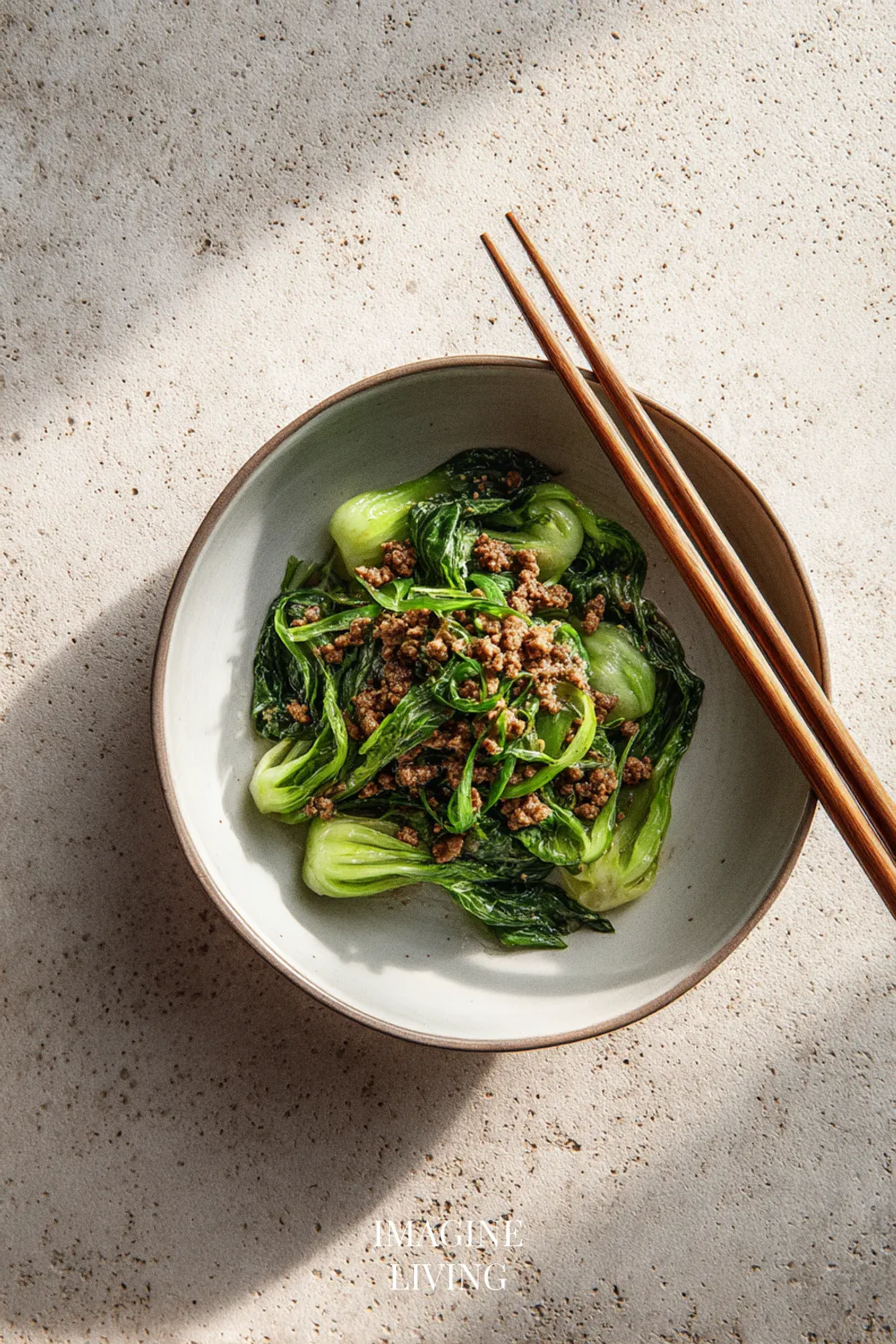
Pro Tips for the Ultimate Bok Choy Stir‑Fry
- Use fresh bok choy – older leaves wilt quickly.
- Cut the stems before cooking – they take longer than leaves.
I remember my first time and the wok got a bit cold—never again.
- Keep the wok hot – a hot surface locks in moisture and crispness.
- Stir constantly – prevents scorching and ensures even cooking.
- Add a splash of water if the dish starts to dry out before the sauce thickens.
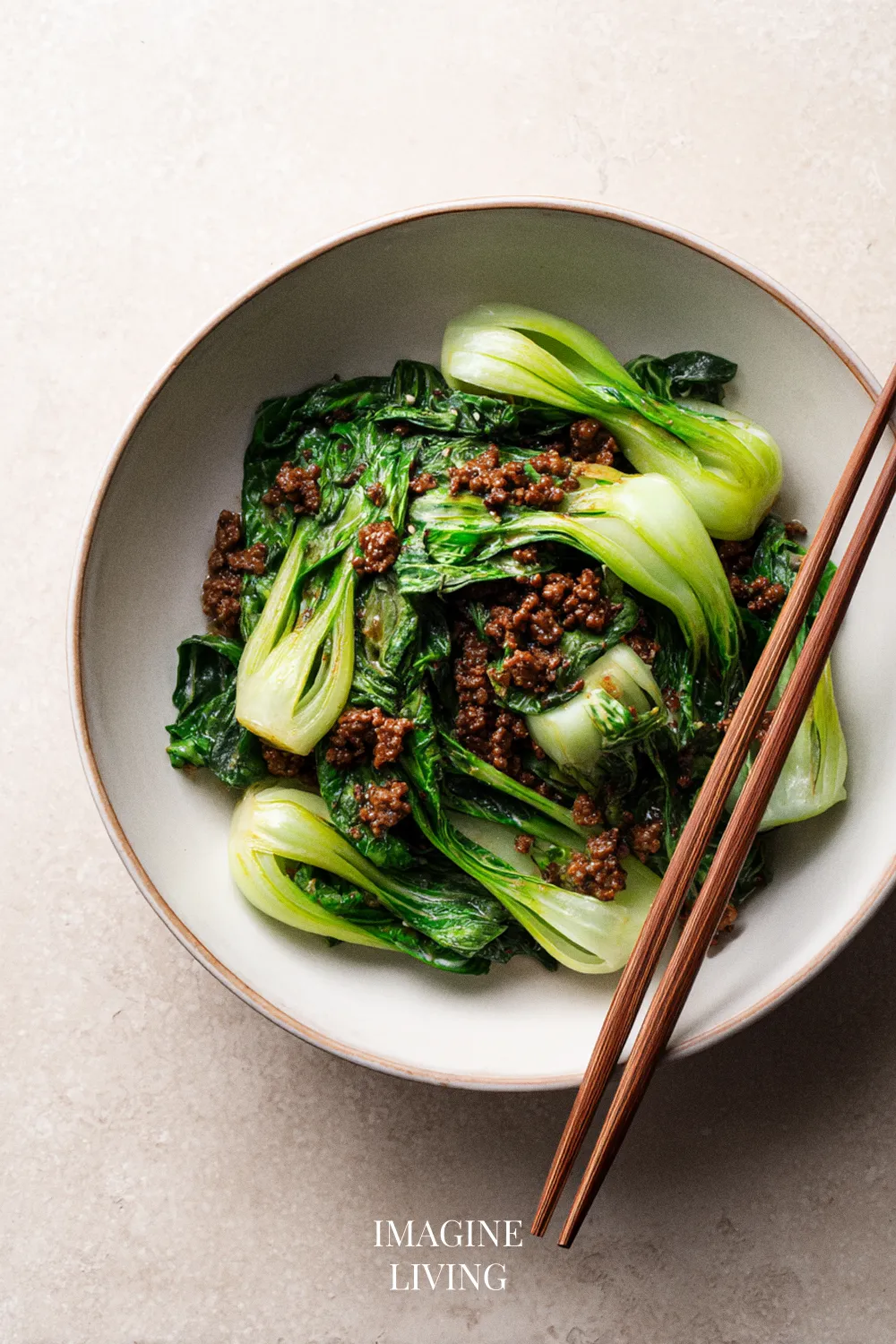
Dietary Variations & Substitutions
Gluten-Free Version
- Swap soy sauce for tamari or coconut aminos 1:1.
- Use a gluten‑free soy sauce that lists no wheat; verify label.
- If using a store‑brand soy sauce, check for hidden wheat starch.
- Keep the rest of the sauce unchanged; cooking time stays the same.
Tip: Always taste the sauce before adding it to ensure the flavor profile remains balanced.
Vegetarian Version
- Replace ground meat with crumbled firm tofu or textured vegetable protein (TVP).
- For tofu, press ½ pound to remove excess moisture, then crumble and sauté until lightly browned, about 4 minutes.
- For TVP, rehydrate in hot water for 10 min, then drain and sauté until crisp.
- Add the tofu or TVP in Step 2; aromatics follow as written.
- Cook time is similar; add an extra 30 sec to brown the protein.
Tip: Sprinkle a pinch of nutritional yeast at the end for a savory “cheese” note.
Vegan Version
- Use the same vegetarian protein (tofu or TVP).
- Replace the 1 tsp sesame oil with an equal amount of neutral oil; sesame oil adds no dairy but is optional.
- Ensure all sauces are free of fish sauce or any animal products.
- Keep the rest of the recipe unchanged; no adjustments to temperature or time needed.
Tip: Finish with a squeeze of fresh lime juice for a bright, zesty lift.
Low‑Sodium Version
- Reduce soy sauce to 2 Tbsp and use low‑sodium tamari if preferred.
- Replace oyster sauce with 1 Tbsp low‑sodium oyster sauce or a dash of mushroom broth.
- Add an extra 1 Tbsp of rice vinegar to balance the reduced salt.
- Keep the rest of the sauce components at the same volume.
- Cooking time remains the same; taste and adjust seasoning after adding sauce.
Tip: A pinch of crushed red pepper can add heat without extra sodium.
High‑Protein Boost
- Add ½ cup cooked edamame or 2 Tbsp protein powder (unflavored) to the sauce in Step 5.
- For edamame, sprinkle them in after the bok choy is nearly done; cook 1 min to heat through.
- For protein powder, whisk into the cornstarch slurry before adding; it will thicken the sauce slightly.
- No need to change cooking time; the dish will finish in the same 1–2 min.
Tip: A handful of toasted hemp seeds on top gives a nutty crunch and extra protein.
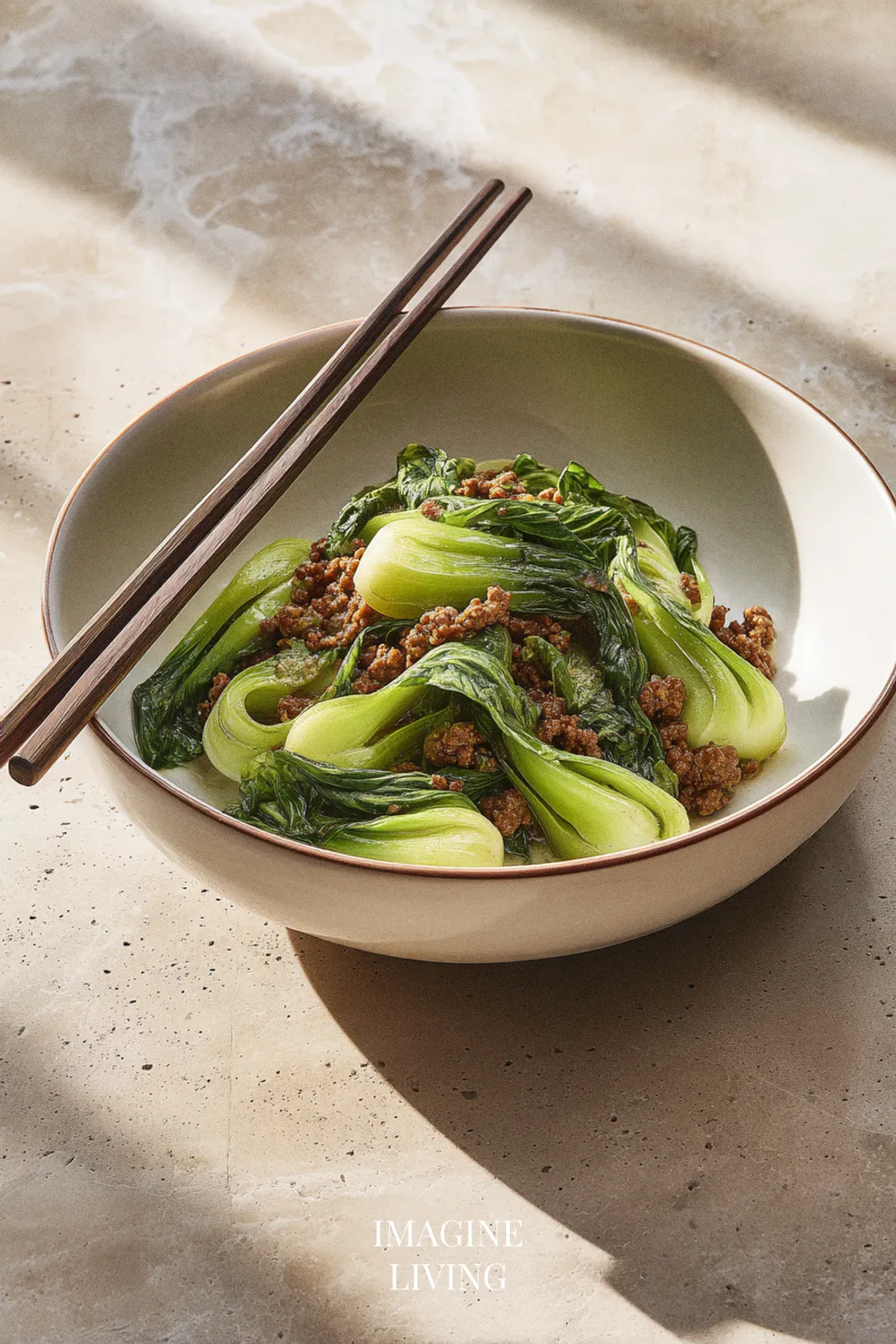
Creative Variations: Elevate Your Bok Choy Stir‑Fry
Use Coconut Milk for Creaminess
Add 1/4 cup coconut milk after the sauce thickens for a tropical twist.
Tip: Stir gently to keep the milk from separating.
Swap Ground Beef for Chicken Thighs
Dice chicken into bite‑size pieces; marinate briefly in soy and ginger for extra tenderness.
Tip: Cook until chicken is cooked through, about 6 minutes.
Add Fresh Spinach at the End
Drop a handful of spinach after the sauce sets; it wilts instantly.
Tip: Spinach adds a pop of color and nutrients.
Incorporate Mushrooms
Sauté sliced shiitake or button mushrooms with the aromatics before the meat.
Tip: Mushrooms release moisture; add sauce sooner to avoid sogginess.
Use Sesame Seeds for Crunch
Toast sesame seeds separately and sprinkle on top just before serving.
Tip: Toasting enhances their nutty flavor.
Add Sweet Corn Kernels
Stir in frozen corn during the last minute of cooking for a sweet contrast.
Tip: Thaw before adding to keep the texture firm.
Cooking is like love. It should be entered into with abandon or not at all.
Harriet Van Horne
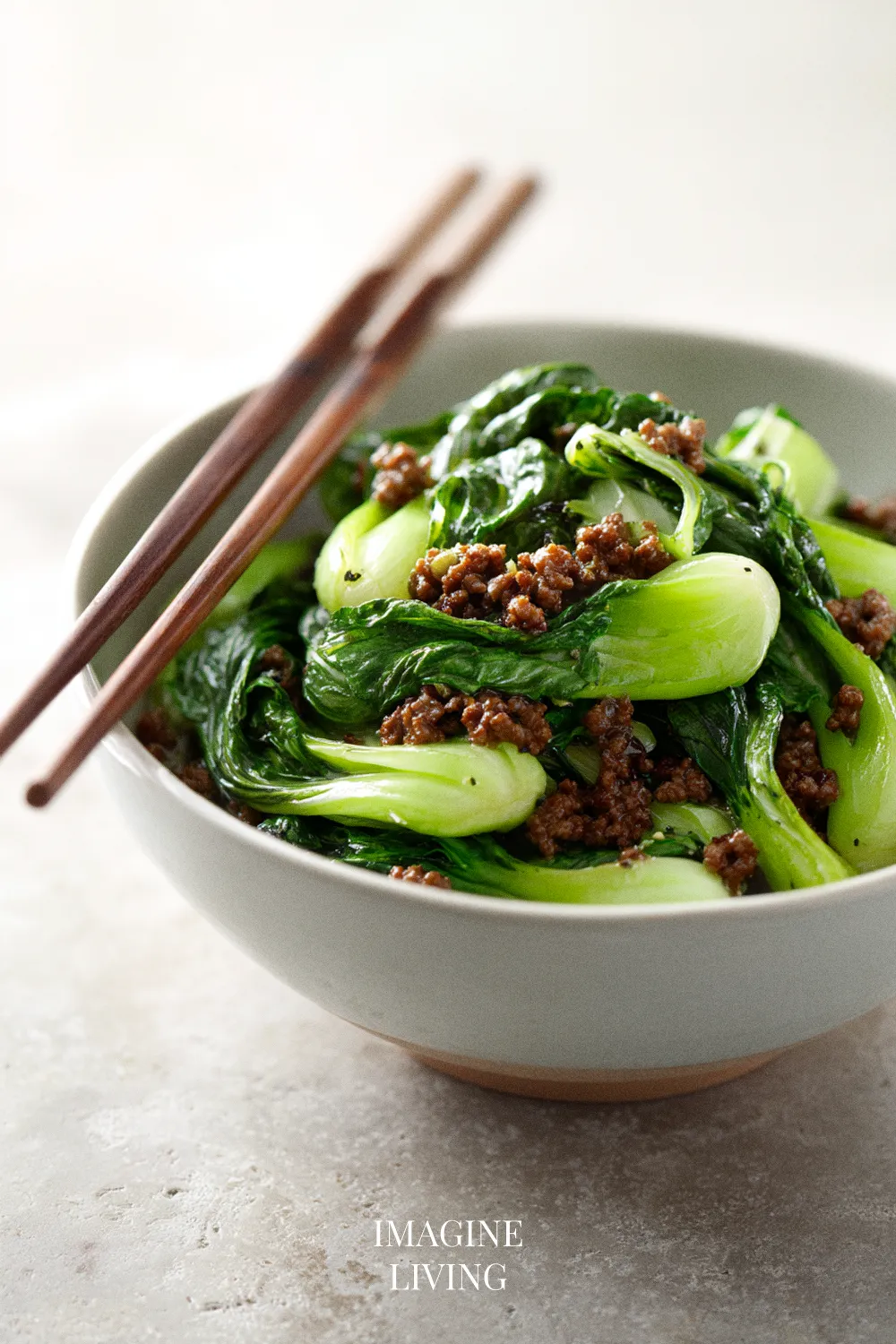
Serving Suggestions: Perfect Pairings
- Serve over jasmine or basmati rice for a classic combo.
- Pair with a chilled cucumber salad for freshness.
- Add a side of pickled daikon for acidity balance.
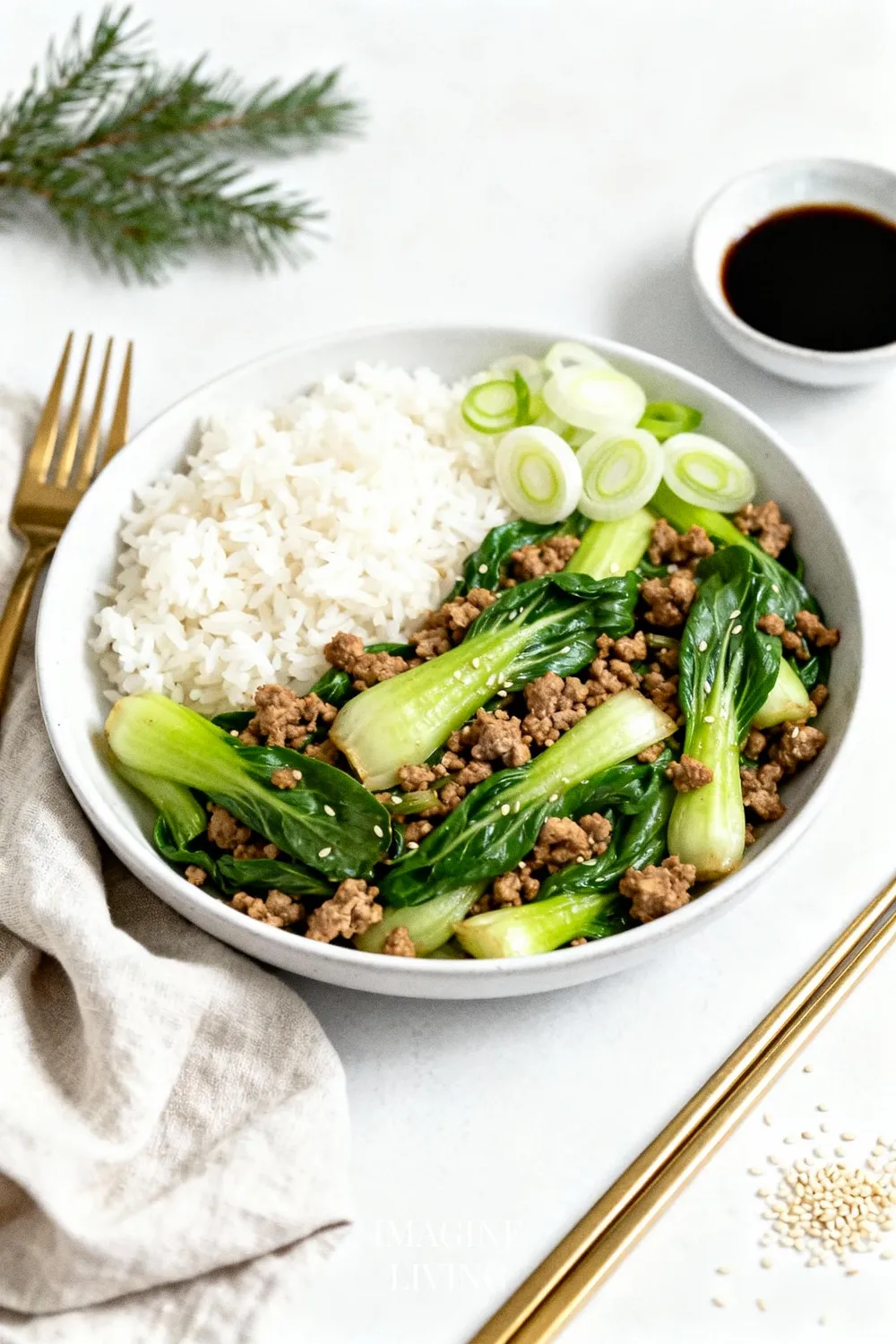
Storage & Reheating: Keep the Flavor Alive
- Cool the dish to room temperature before refrigerating.
- Store in an airtight container for up to 3 days.
- Reheat gently in a skillet or microwave, adding a splash of water or broth to restore moisture.
Common Mistakes to Avoid: Steer Clear of Soggy or Overcooked
Overcrowding the Wok
Crowding lowers the temperature and steams instead of searing.
Tip: Cook in batches if needed.
I’ve learned to batch cook; it keeps the heat steady and the flavors popping.
Skipping the Pre‑Browning Step
Skipping results in a soggy texture.
Tip: Ensure the meat releases its juices before adding aromatics.
If the meat stays too wet, a quick brown it first—trust me, it pays off.
Adding Sauce Too Early
Early addition can cause the vegetables to overcook.
Tip: Add sauce after the bok choy is nearly done.
I once tossed the sauce in too soon—my greens were mushy. Lesson learned.
Not Stirring Frequently
Can lead to uneven cooking and burning.
Tip: Keep a brisk rhythm of motion.
I swear by the “one quick stir every 15 seconds” rule—keeps everything even.
Using Too Much Oil
Makes the dish greasy and masks flavors.
Tip: A tablespoon of high‑smoke‑point oil is sufficient.
If it feels too slick, finish with a splash of water—flavor comes back.
Ignoring Temperature of Ingredients
Cold bok choy slows down the process.
Tip: Let greens come to room temperature before adding.
I always let them sit out 5 minutes; the result is a vibrant, crisp bite.
FAQs
Can I use frozen bok choy instead of fresh?
Yes, thaw and drain thoroughly before cooking.
What if I don’t have soy sauce?
Substitute with tamari or coconut aminos for a gluten‑free option.
How do I keep the bok choy from turning mushy?
Cook the stems first, then add leaves, and keep the wok very hot.
Is this dish suitable for a low‑carb diet?
Absolutely; skip the rice or serve over cauliflower rice instead.
Can I use ground turkey instead of beef?
Yes, it offers a leaner option with similar flavor.
What’s the best way to store the sauce separately?
Keep it in a small jar; combine when ready to cook.
How long can I keep the finished dish in the fridge?
Up to 3 days in a sealed container.
Can I add other veggies?
Carrots, bell peppers, and snow peas all pair well.
Do I need to blanch the bok choy before stir‑frying?
No; blanching is unnecessary and can dull flavor.
Final Thoughts: Savor the Quick, Nutritious Stir‑Fry
This quick, protein‑packed stir‑fry turns a humble green into a savory masterpiece, blending the crispness of bok choy with the comforting depth of seasoned ground meat. Whether you’re winding down after a hectic day or crafting a meal that feels both comforting and adventurous, it delivers balanced nutrition, vibrant color, and a satisfying rush of aroma that invites you back for another bite. (And I promise, this dish will make your weeknight dinner feel like a small celebration.)
Savory Stir‑Fried Bok Choy with Ground Meat for Quick Asian Sauté
Equipment
- 10‑inch wok or large skillet
- Wooden spatula
- Measuring spoons and cups
- Small bowl for sauce
Ingredients
For the Bok Choy
- 2 bunches bok choy leaves separated and stems sliced
For the Ground Meat
- 1 pound lean ground beef, turkey, or pork
For the Sauce
- 1/4 cup soy sauce 60 ml
- 2 tablespoons oyster sauce 30 ml
- 1 tablespoon hoisin sauce 15 ml
- 1 tablespoon rice vinegar 15 ml
- 1 teaspoon sesame oil 5 ml
- 1 teaspoon cornstarch dissolved in 1 tablespoon water 15 ml
Aromatics & Extras
- 3 cloves garlic, minced
- 1 tablespoon ginger, grated
- 1 small red chili, sliced (optional)
- 1 tablespoon vegetable oil
- Sesame seeds for garnish (optional)
Instructions
Step 1: Prep the Bok Choy
- Trim stems, wash, and slice stems into 1‑inch pieces. Leave leaves whole or in halves.
- Tip: Use a sharp knife to keep stems crisp.
Step 2: Brown the Ground Meat
- Heat the wok over medium‑high. Add the oil, then the meat, breaking it apart. Cook until browned and no pink remains, about 5 minutes.
- Tip: Keep the meat moving to prevent sticking.
Step 3: Add Aromatics
- Push the meat to the side, pour a splash of oil, then add garlic, ginger, and chili. Sauté 30 seconds until fragrant.
- Tip: Be quick to avoid burning the garlic.
Step 4: Introduce the Bok Choy
- Add the stems first, stir‑fry for 1 minute, then toss in the leaves. Cook until stems are tender but still bright green, about 2–3 minutes.
- Tip: Cover briefly to steam the leaves faster.
Step 5: Pour the Sauce
- Stir in all sauce components and the cornstarch slurry. Cook until the sauce thickens and coats the meat and greens, 1–2 minutes.
- Tip: Keep the wok moving to prevent the sauce from burning.
Step 6: Finish and Serve
- Taste and adjust seasoning if needed. Sprinkle with sesame seeds and a drizzle of sesame oil. Serve hot over steamed rice or noodles.
- Tip: Garnish with scallions for extra crunch.
Notes
- Use fresh bok choy – older leaves wilt quickly.
- Cut the stems before cooking – they take longer than leaves.
- Keep the wok hot – a hot surface locks in moisture and crispness.
- Stir constantly – prevents scorching and ensures even cooking.
- Add a splash of water if the dish starts to dry out before the sauce thickens.