How to Style a Cozy Winter Living Room (Without Making It Rustic or Holiday-Coded)
Winter changes how we live inside our homes. The living room becomes less of a passing-through space and more of a gentle refuge — a place to curl up with a book, to sip tea slowly, to gather on a Sunday, or simply to watch the snow drift through the window. Styling a winter living room is ultimately about atmosphere and comfort, not about theme. It’s less about decorations and more about the textures, lighting, and arrangements that make a room feel warm, tactile, and lived in.
“Love lives in the quiet details — a soft blanket, a favorite mug, a warm corner waiting for you.”
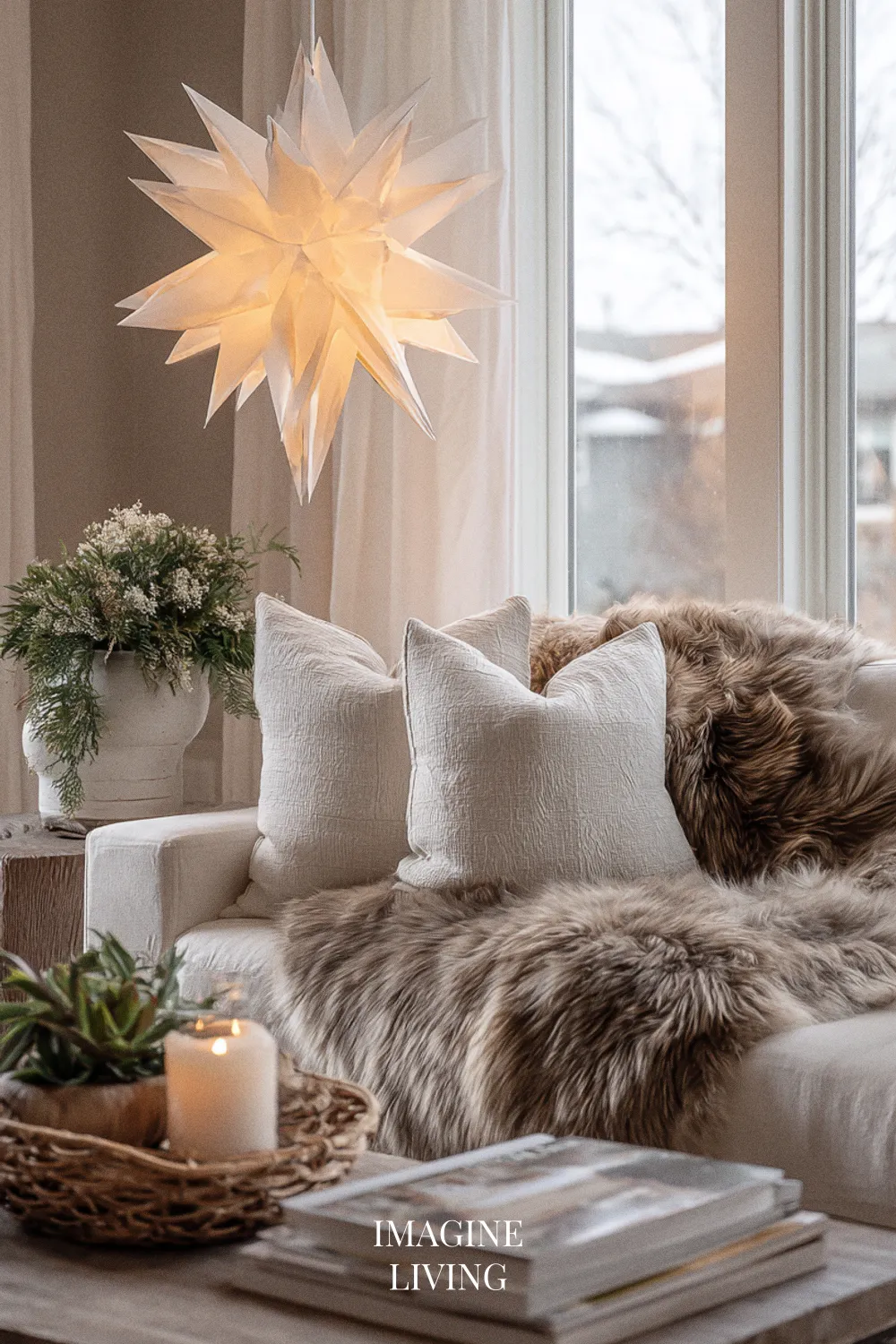
Warmth Through Texture (Not Color)
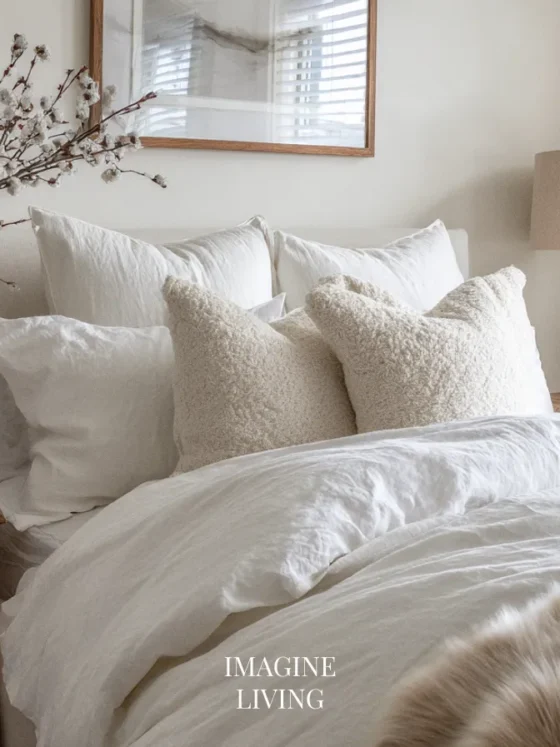
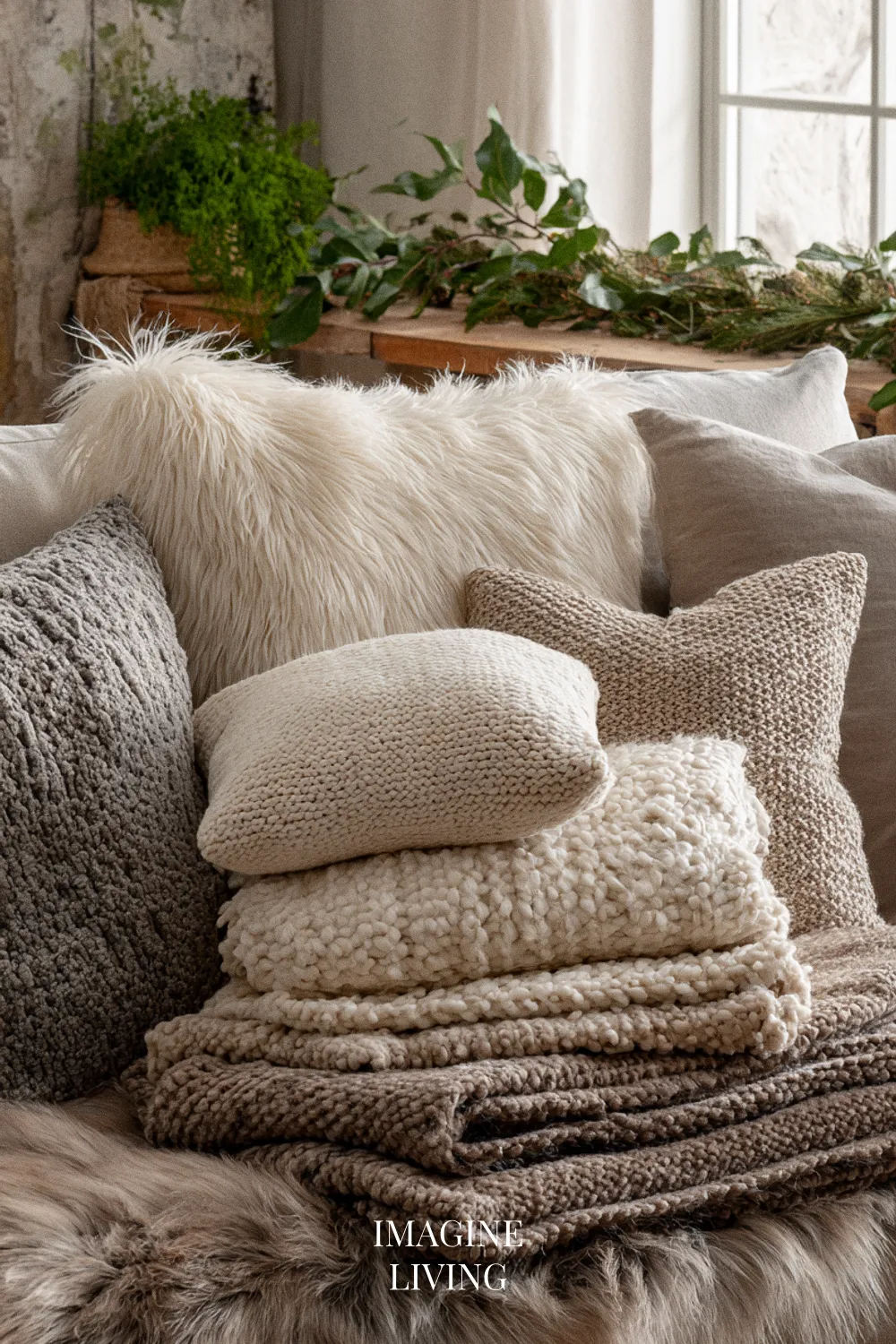
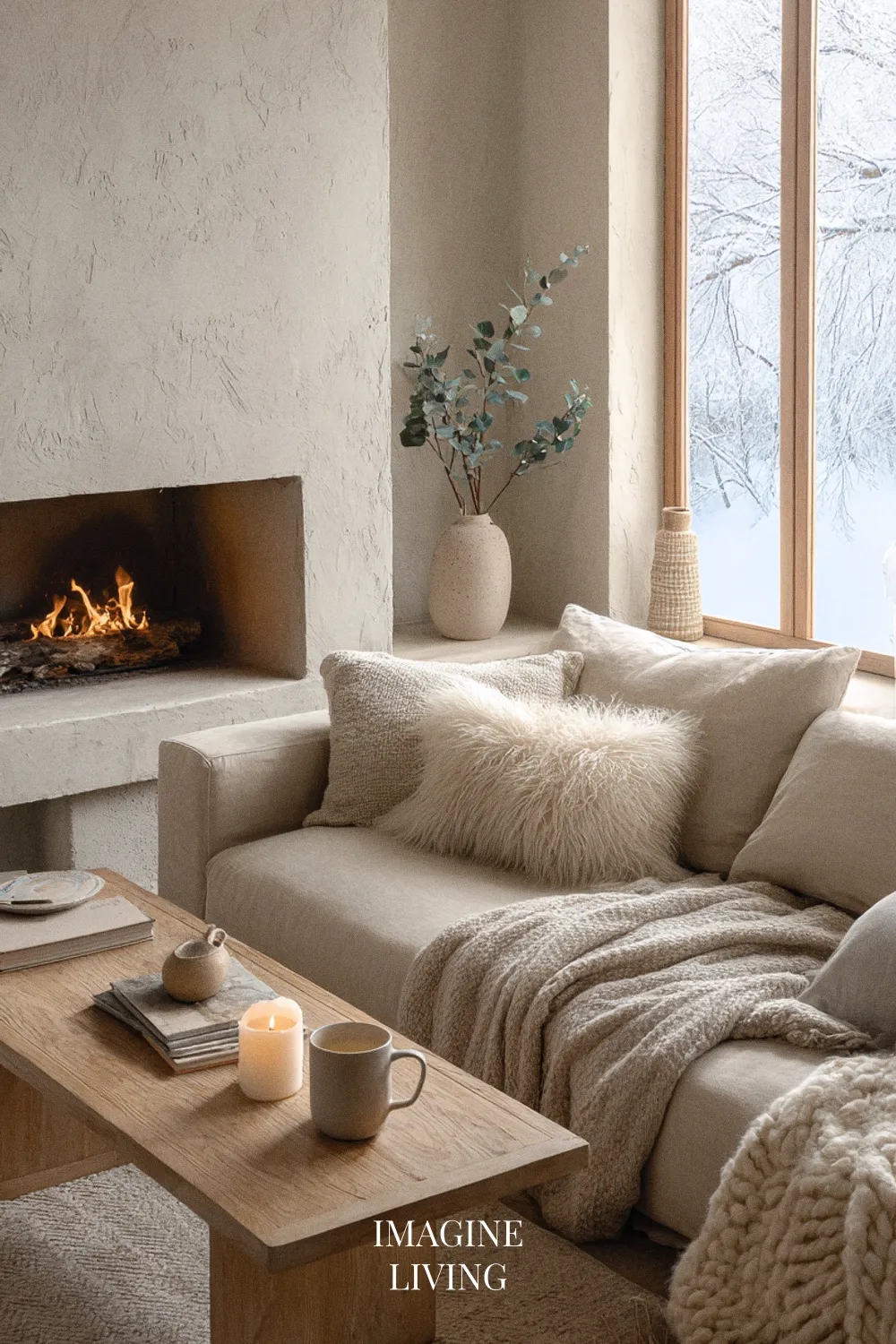
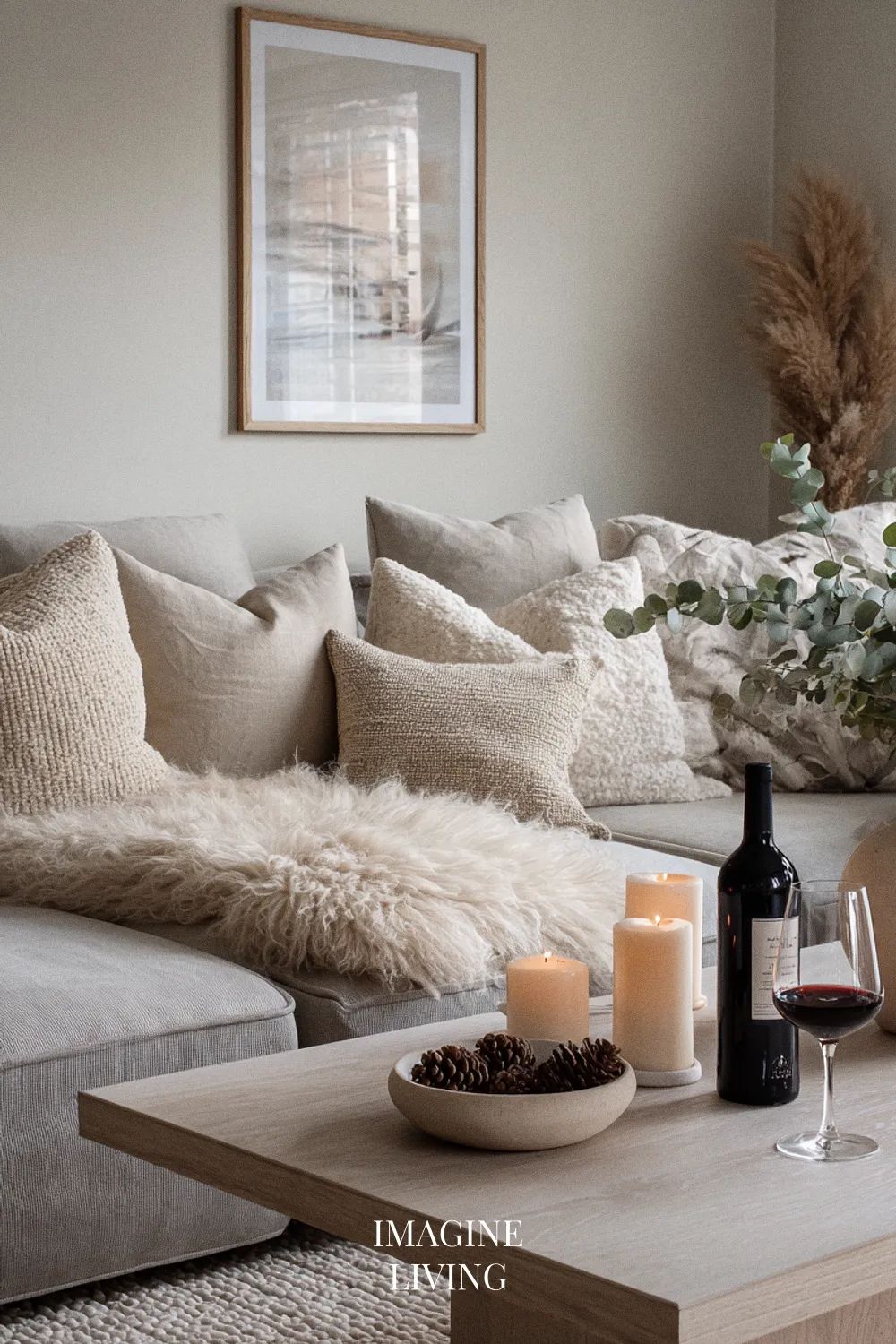
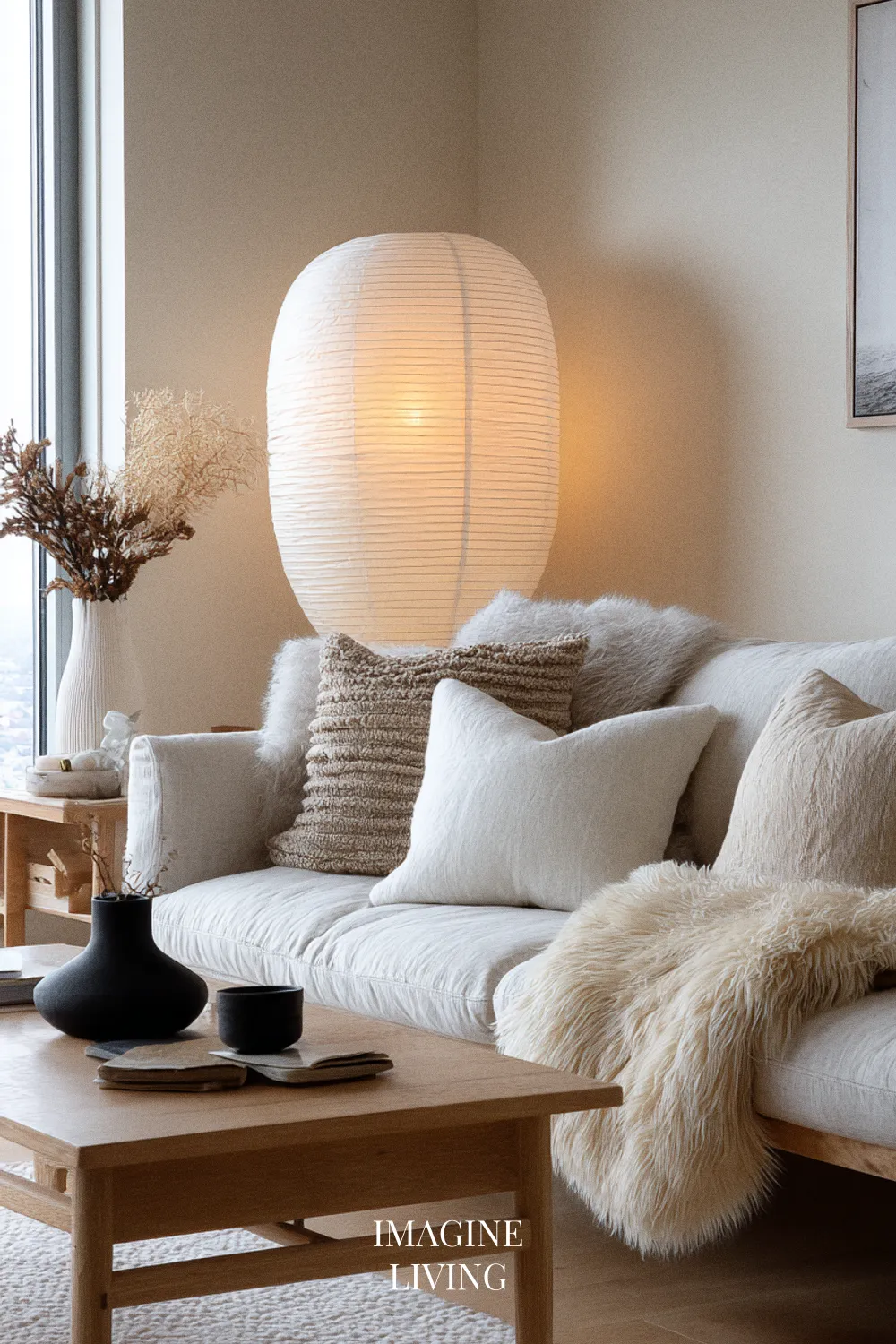
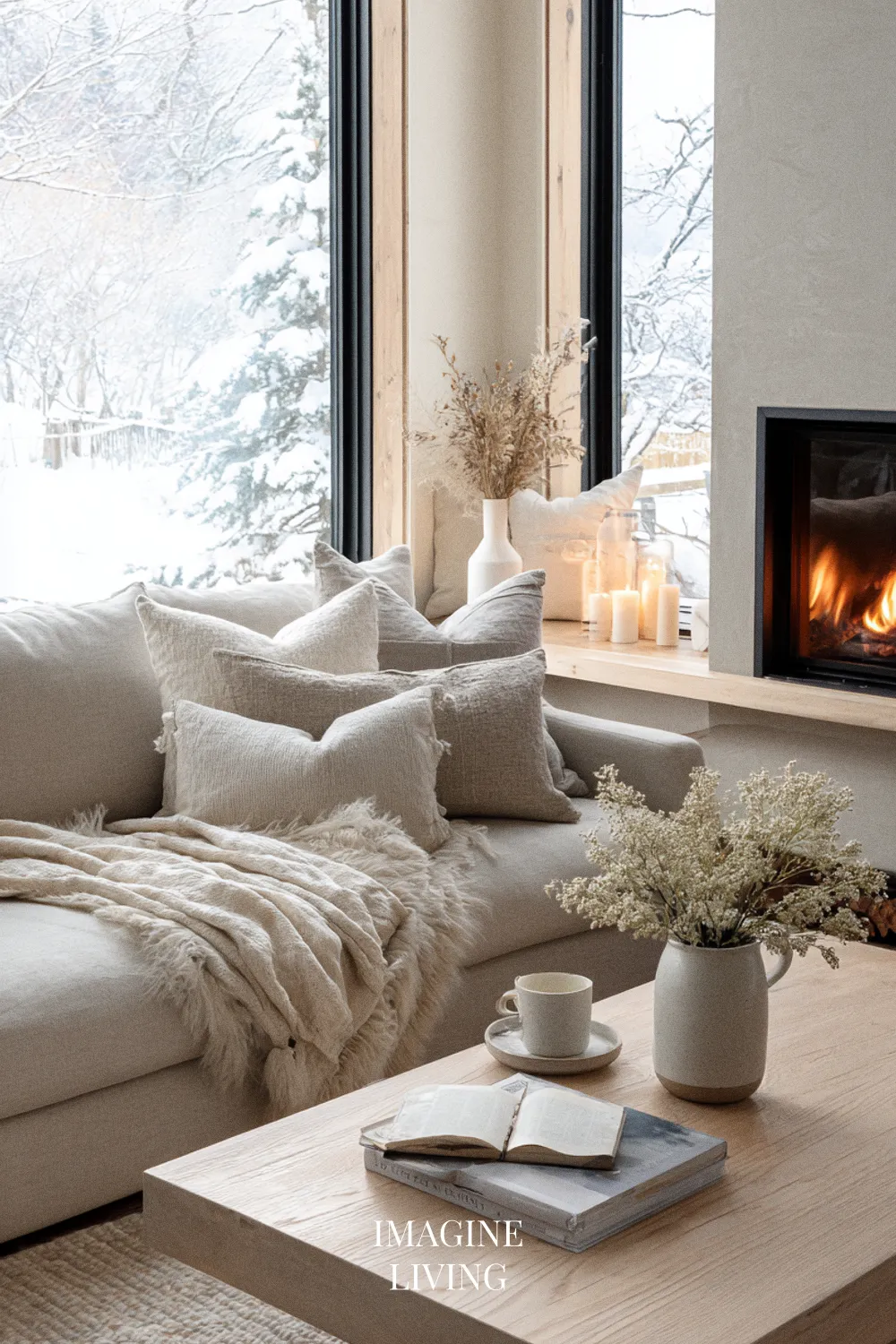
The foundation of winter styling is texture. Instead of introducing bold colors or seasonal patterns, winter decor works best through tactile materials layered in quiet tones. Think boucle pillows, wool throws, brushed cotton, subtle faux fur, plush rugs, and knit blankets — all in neutrals that range from cream to greige to soft chai brown.
Layering textiles gives a room a sense of depth without visual noise. A smooth linen sofa can carry a boucle cushion; a simple wood bench becomes instantly inviting with a single textured throw. It’s these quieter moves that make a room feel warm without tipping into clutter.
Japandi Meets Chalet (But Make It Modern)
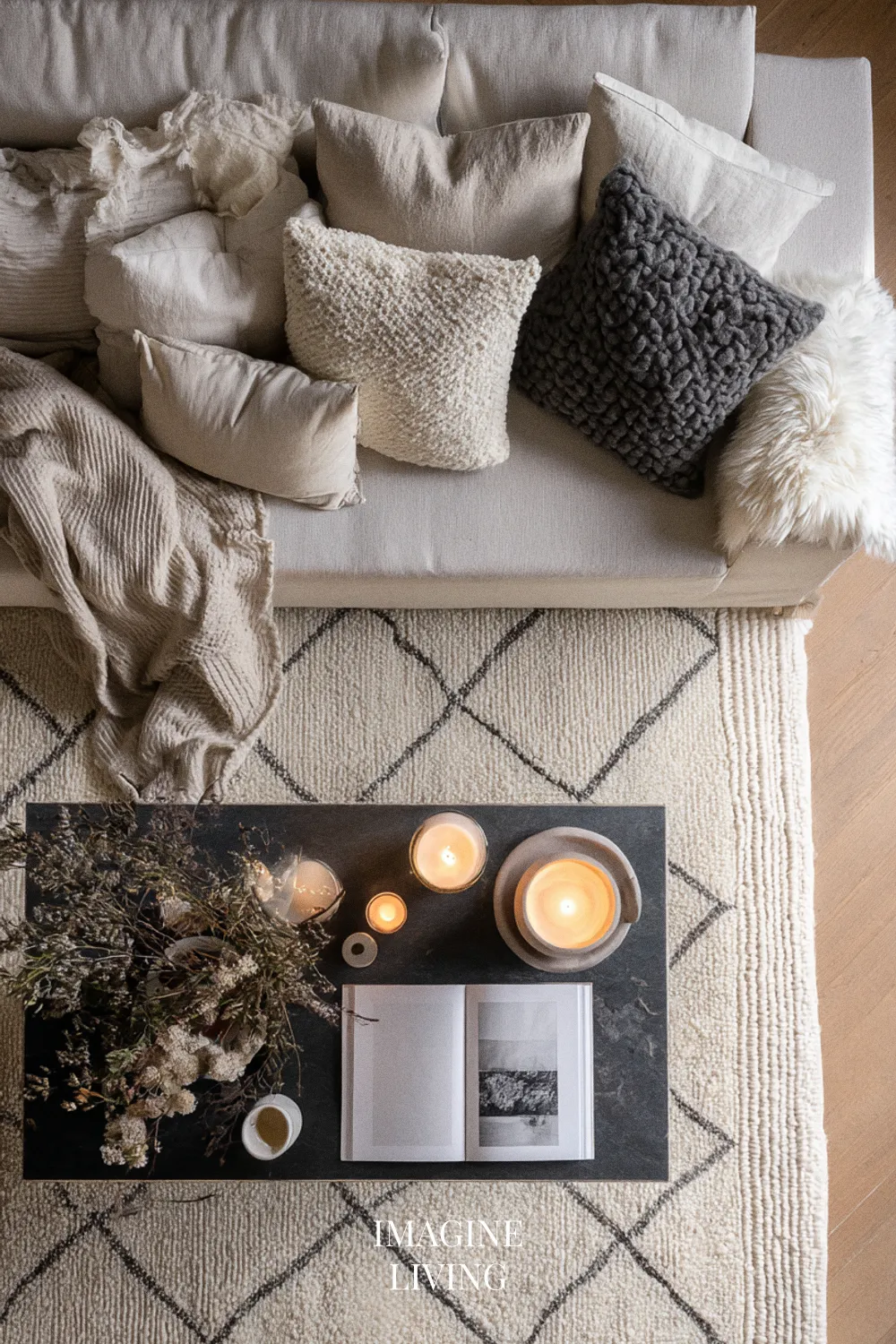
The chalet look used to imply heavy wood, stone fireplaces, and rustic lodge decor. The modern interpretation is lighter, cleaner, and more editorial — closer to Japandi or Scandinavian boho than to a mountain cabin. Instead of distressed surfaces or bulky furniture, think of:
- low-profile sofas
- neutral rugs
- light oak coffee tables
- soft, rounded silhouettes
- matte ceramics
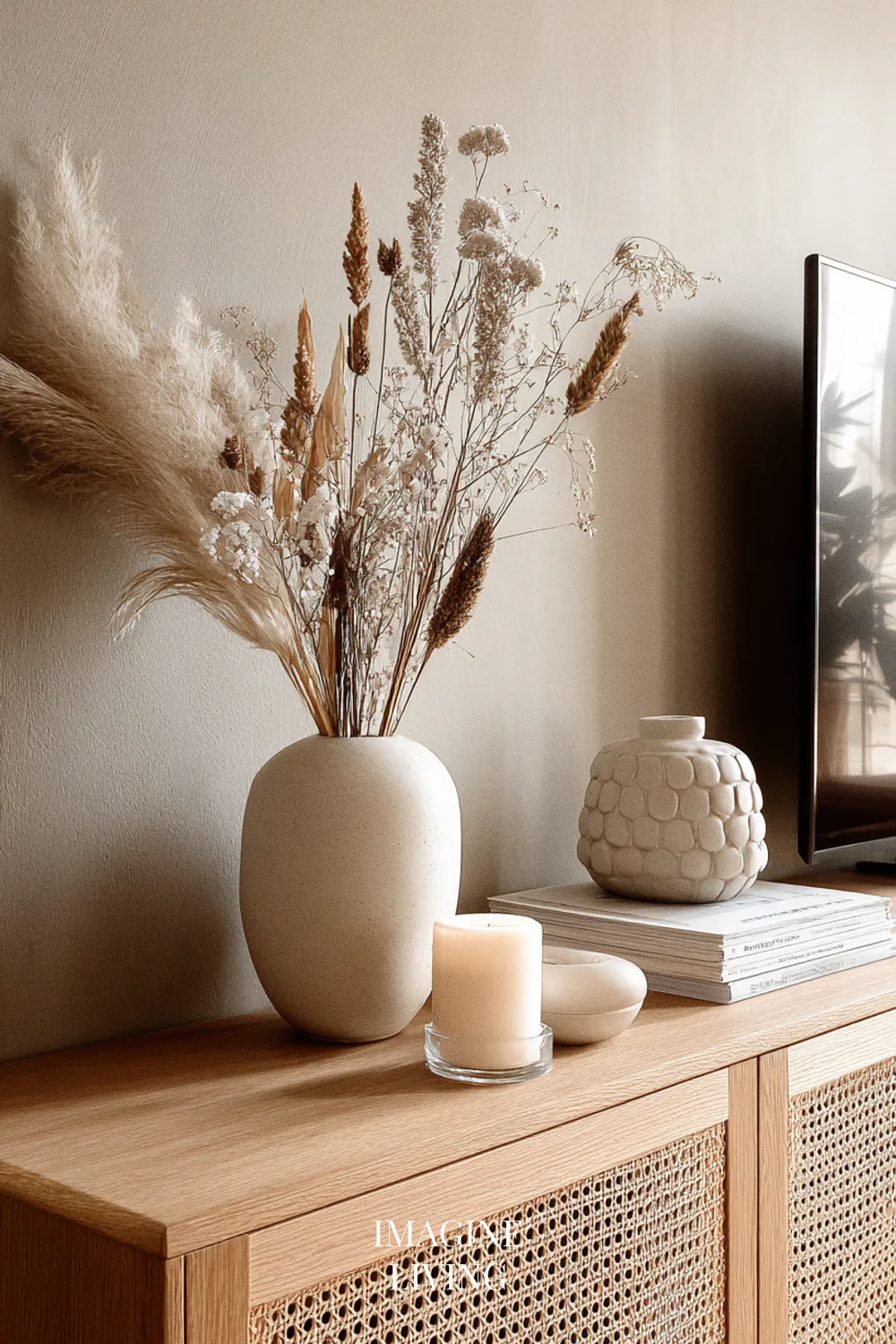
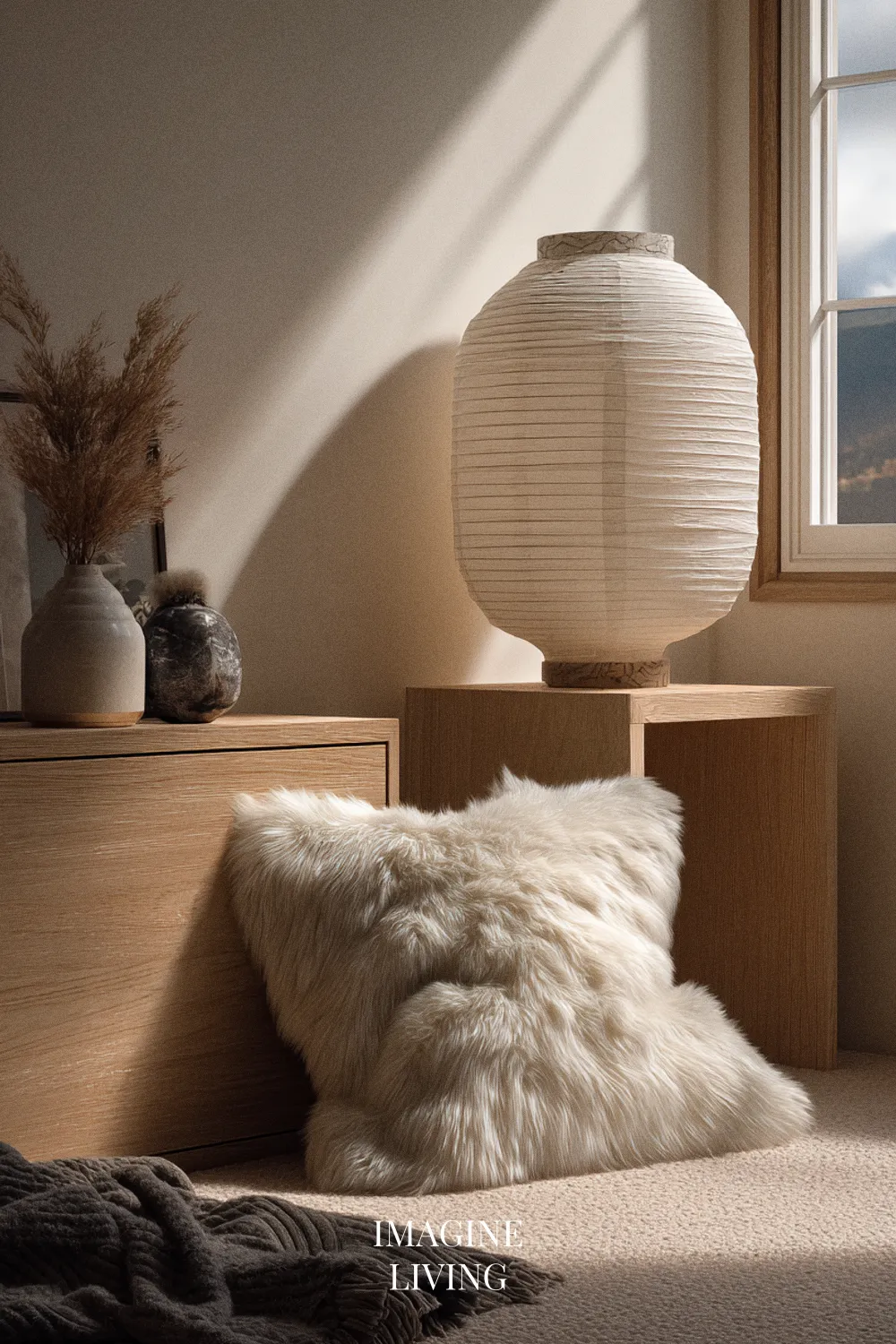
- dried winter greenery
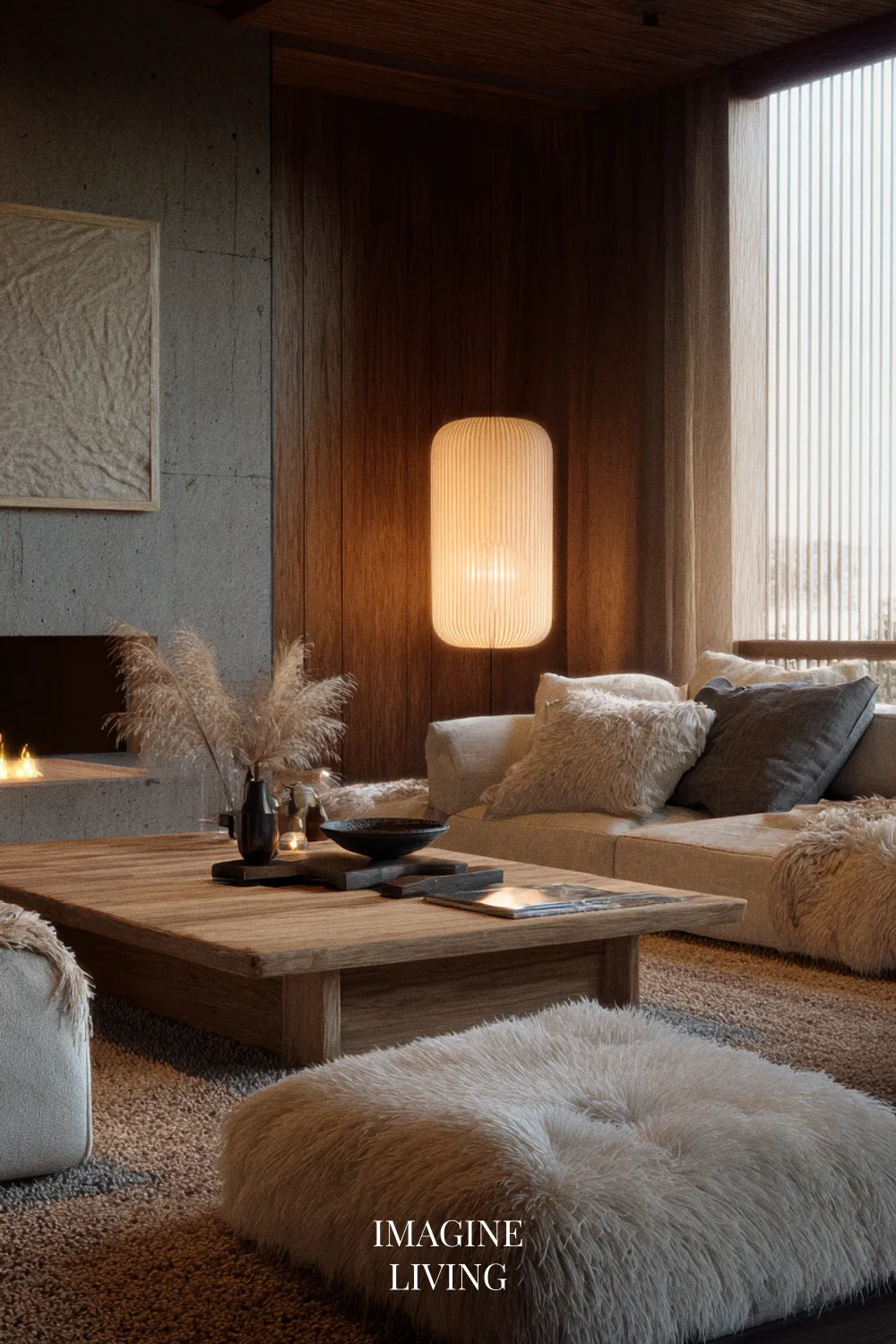
- paper lanterns
- minimal artwork with white passe-partout frames
The atmosphere becomes wintery not through theme, but through mood. Chalet as a feeling, not an aesthetic.
Soft Lighting as a Winter Ritual
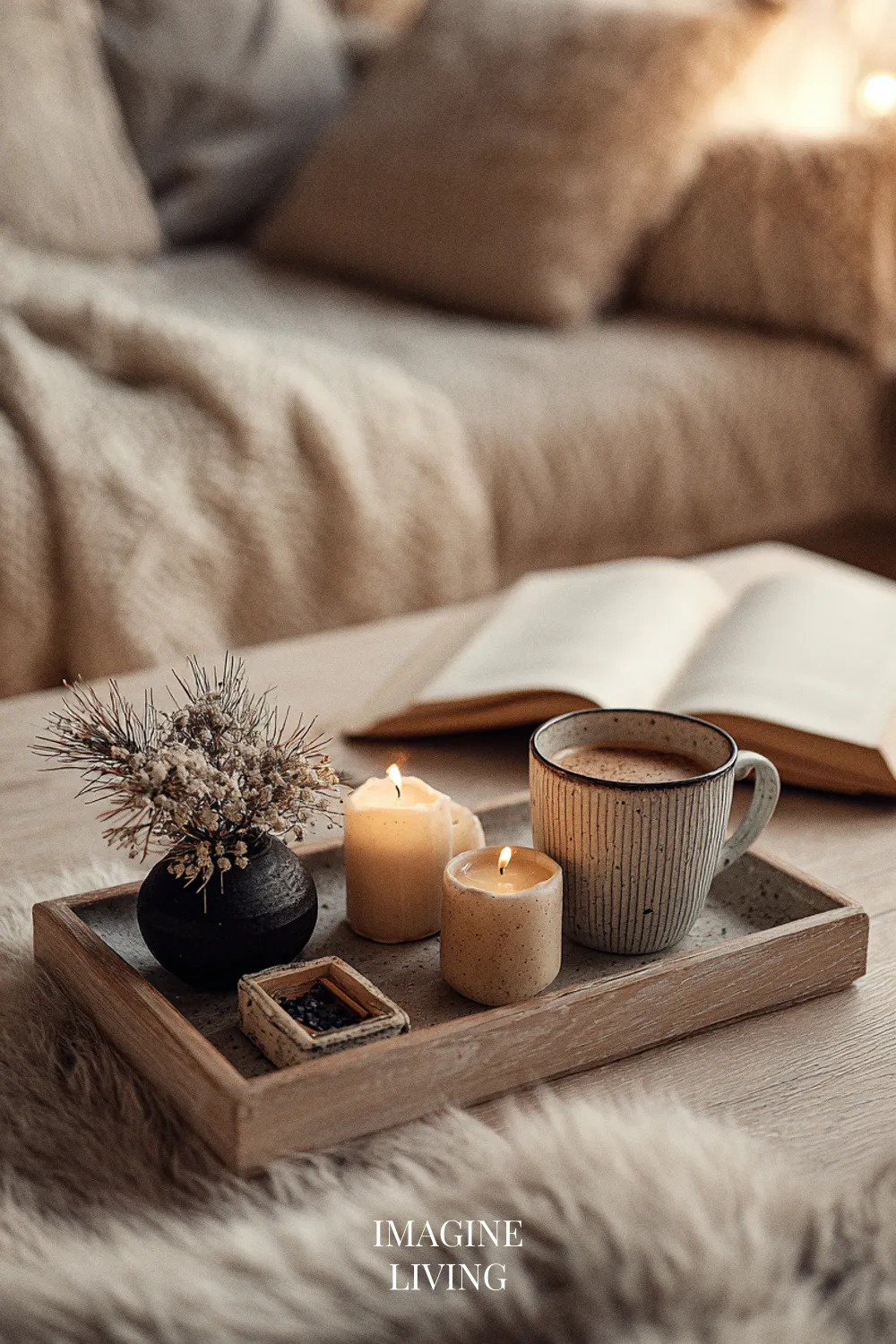
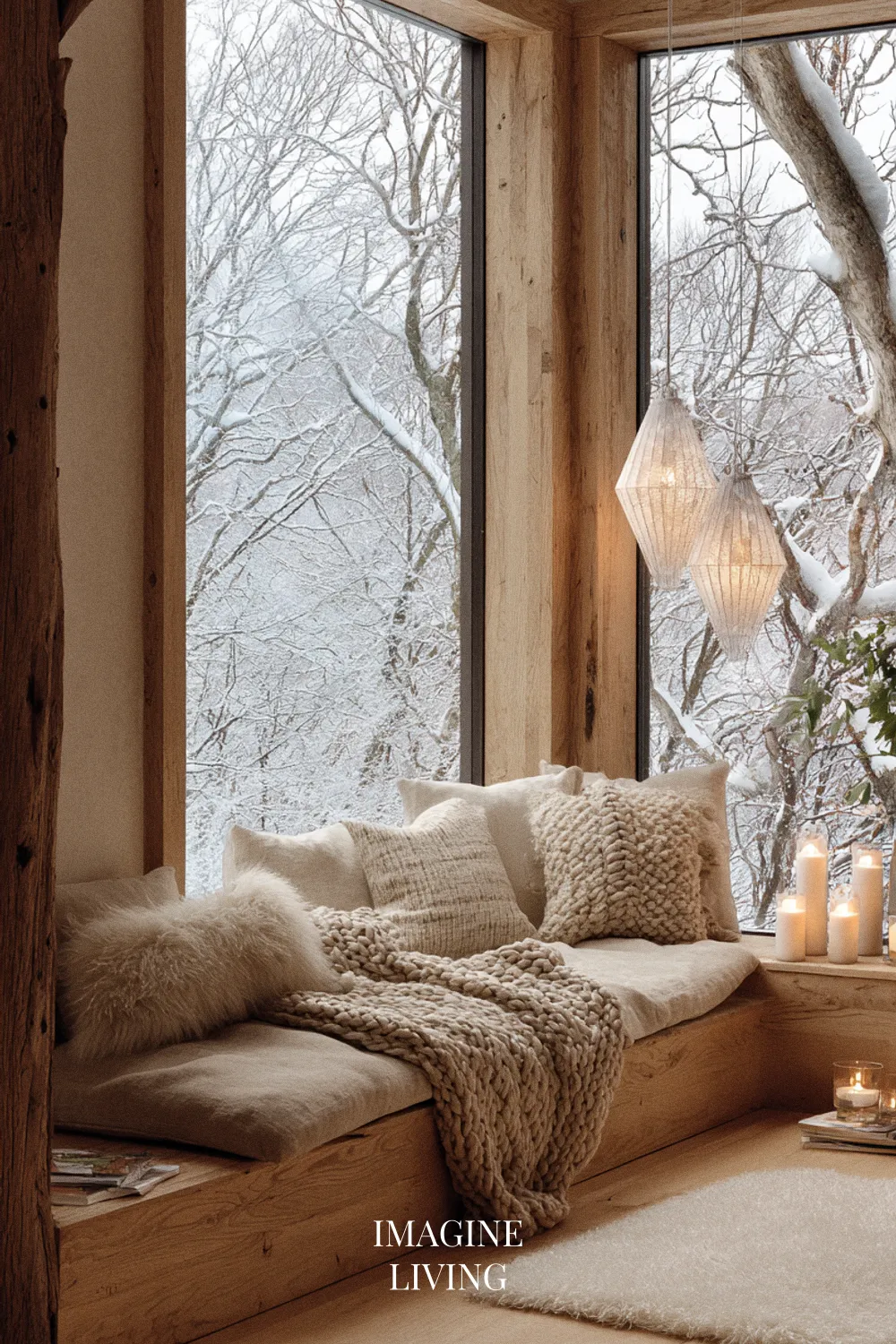
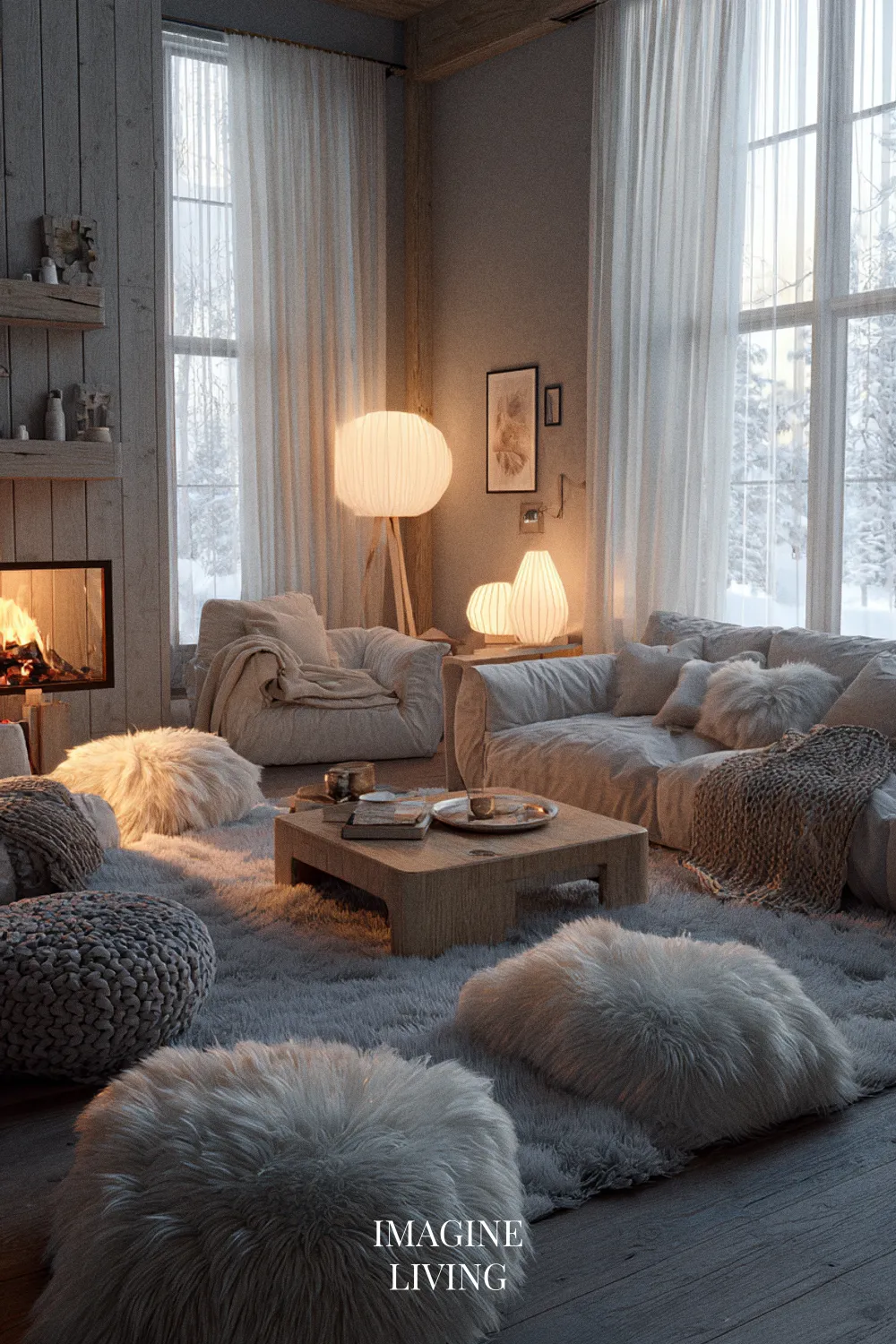
Lighting is where winter interiors come to life. But good winter lighting isn’t about brightness — it’s about softness. Lamps with warm-toned bulbs, paper shades, and dimmers create small pools of glow that make evenings feel slow and cozy. Candles can still play a role, but in a minimal way — one or two on a coffee table, a tea light on a shelf, or a slim taper beside a book. No need for dramatic clusters.
If there’s a fireplace, let it be part of the visual experience rather than the whole story. A sleek linear fireplace or modern ceramic stove paired with simple textiles feels instantly calming, especially in the quiet light of winter afternoons.
A Living Room Designed for Slowness
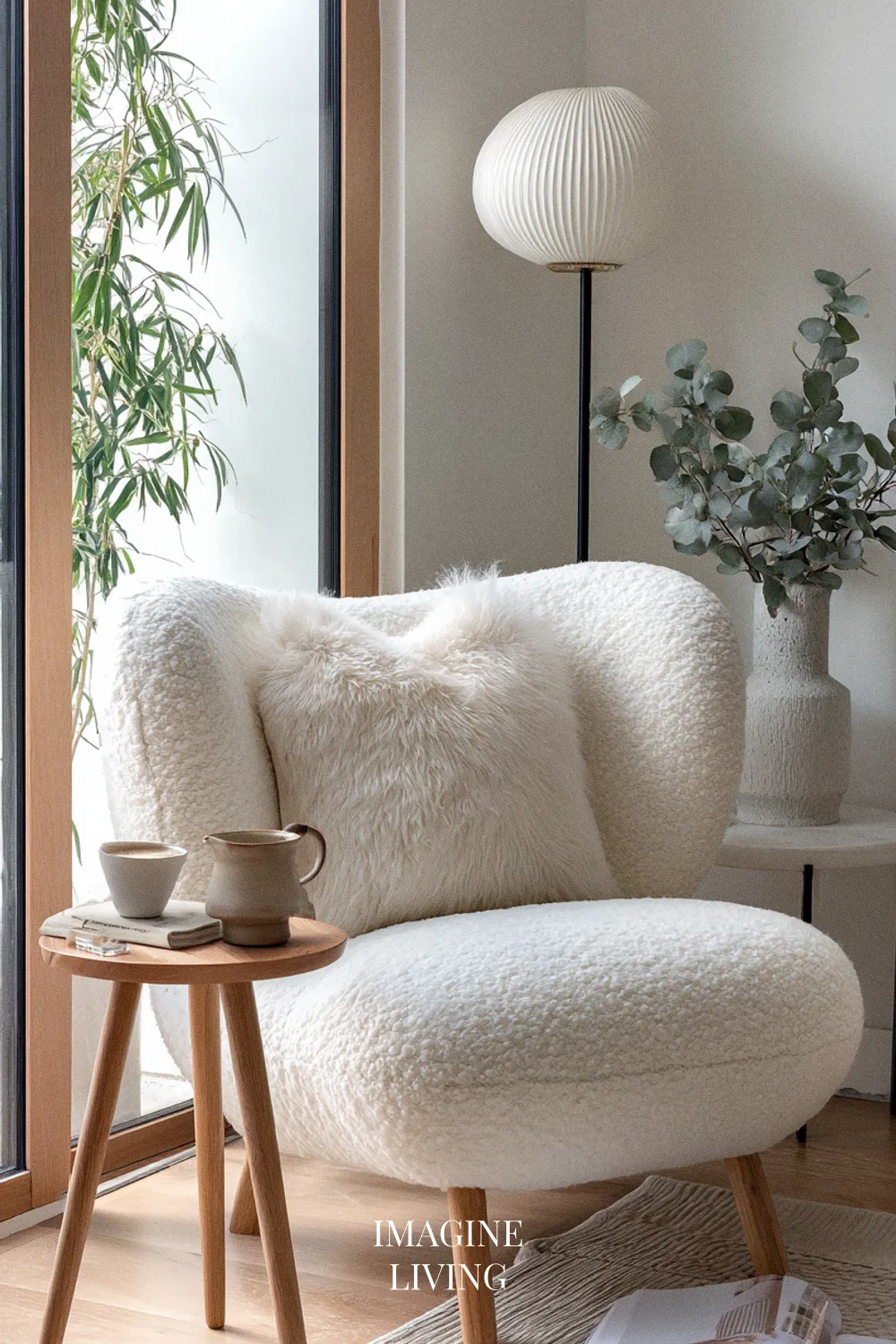
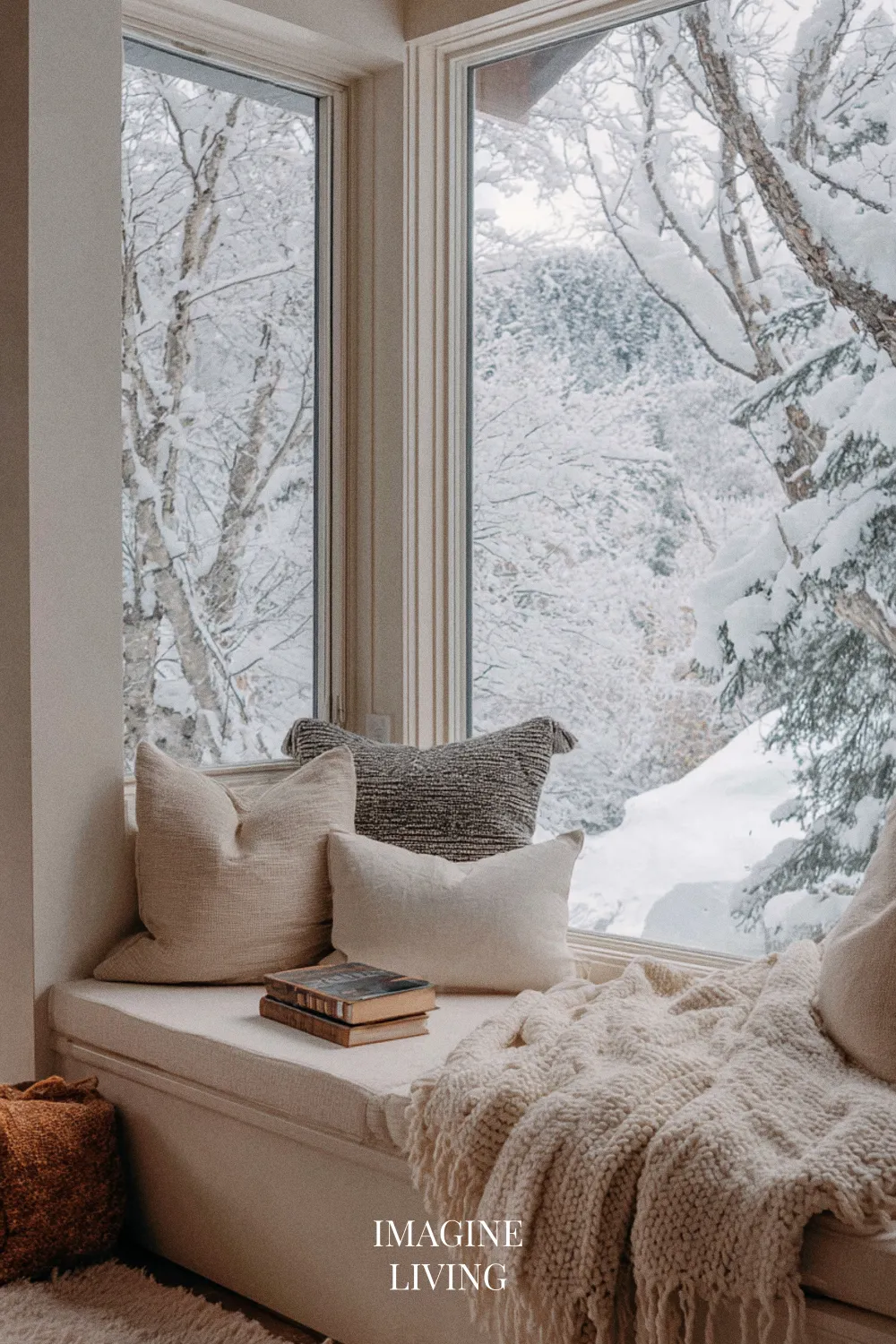
The arrangement of a winter living room can shift slightly toward closeness. Pull the sofa inward, bring the rug forward, and let the coffee table sit lower and softer. Seat cushions, floor pillows, and window benches all make sense in winter — not because they are decorative, but because they invite lingering.
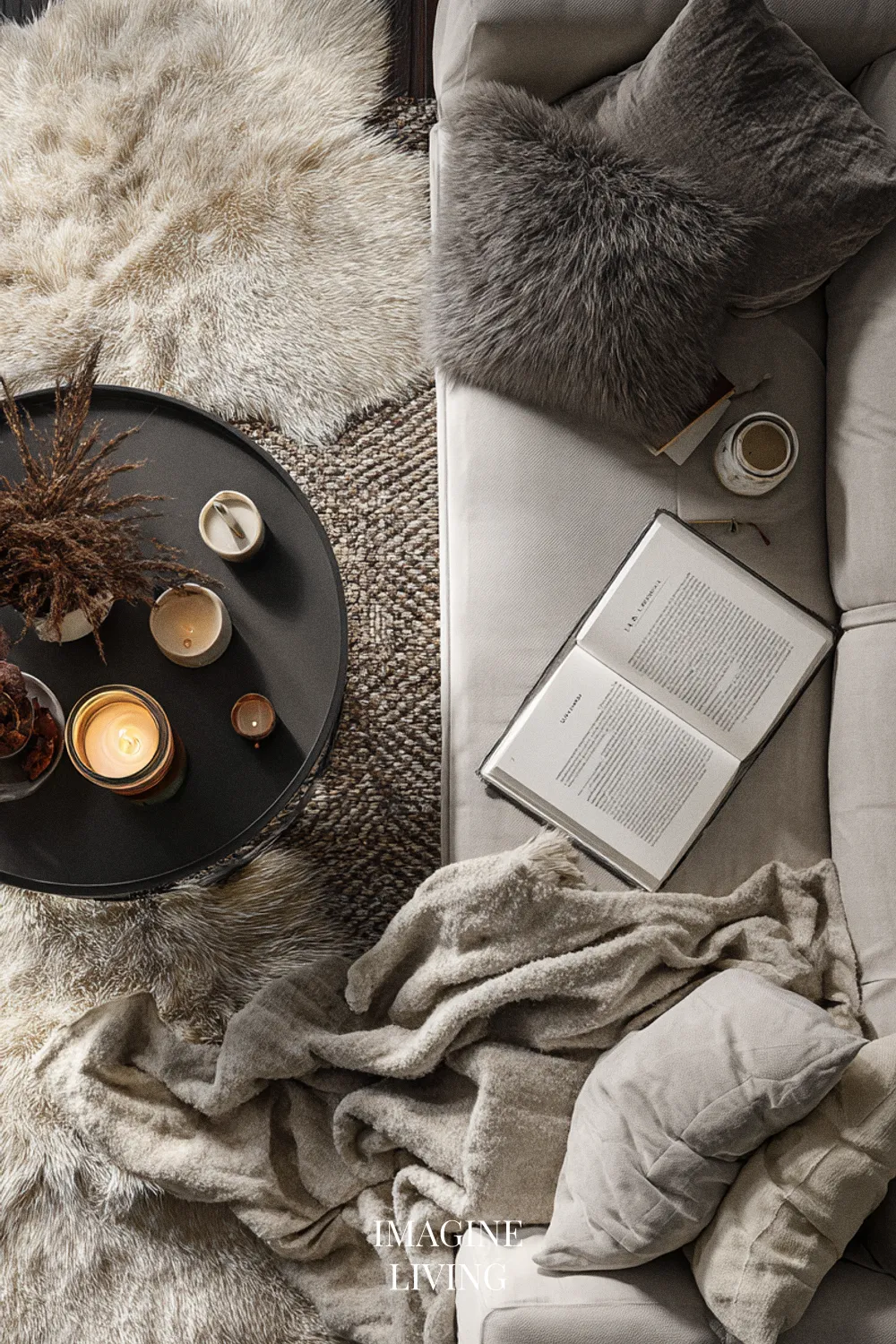
A “slower” winter living room may also include objects that imply use rather than perfection: an open book on the coffee table, a tray with cups on a side bench, or a basket with blankets waiting in the corner. It’s not staged; it’s lived-in, intentionally.
Natural Elements (Without Seasonal Overload)
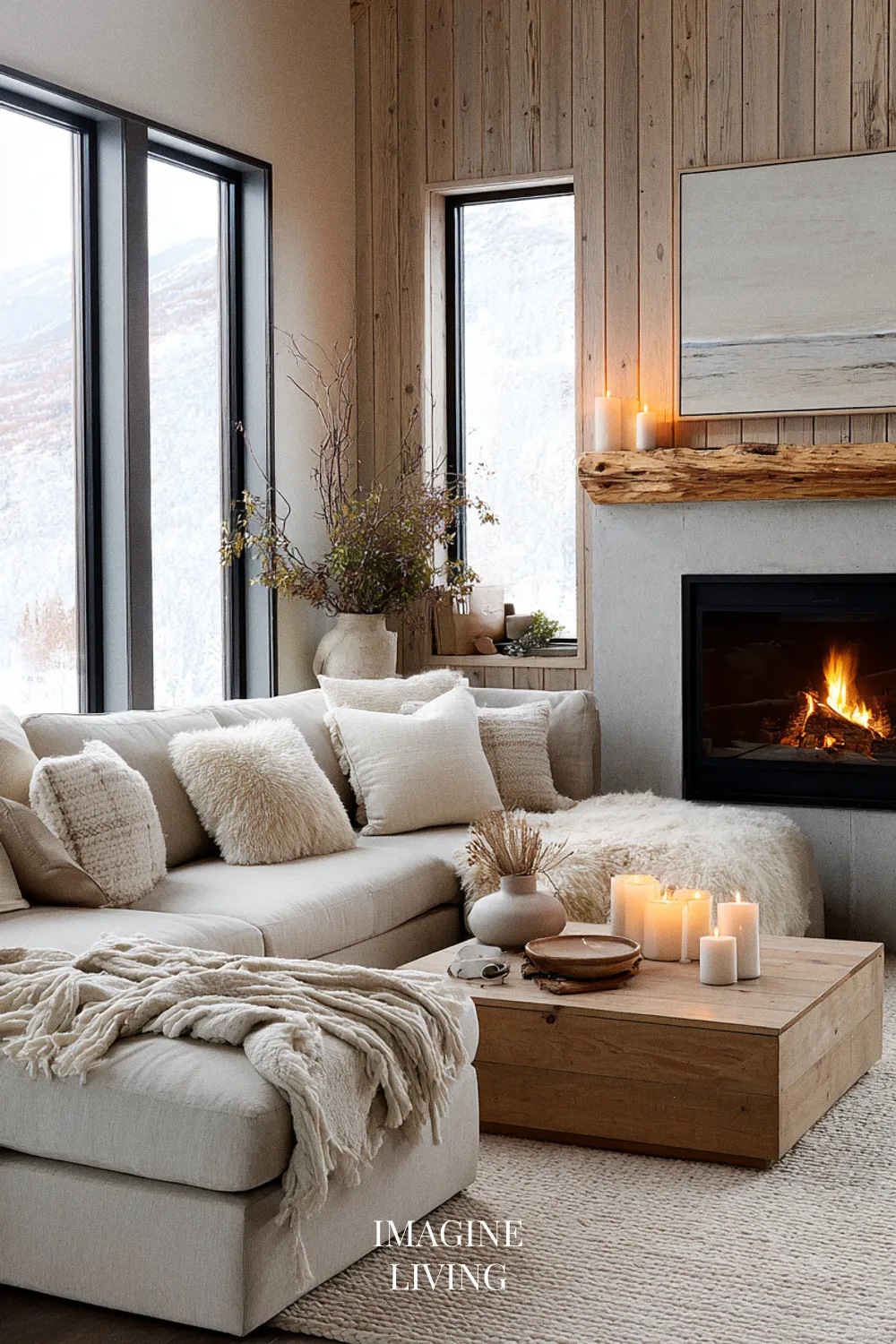
Winter styling pairs well with subtle natural details that don’t read as holiday decor. Instead of poinsettias or evergreen garlands, opt for:
- pine branches in matte vases
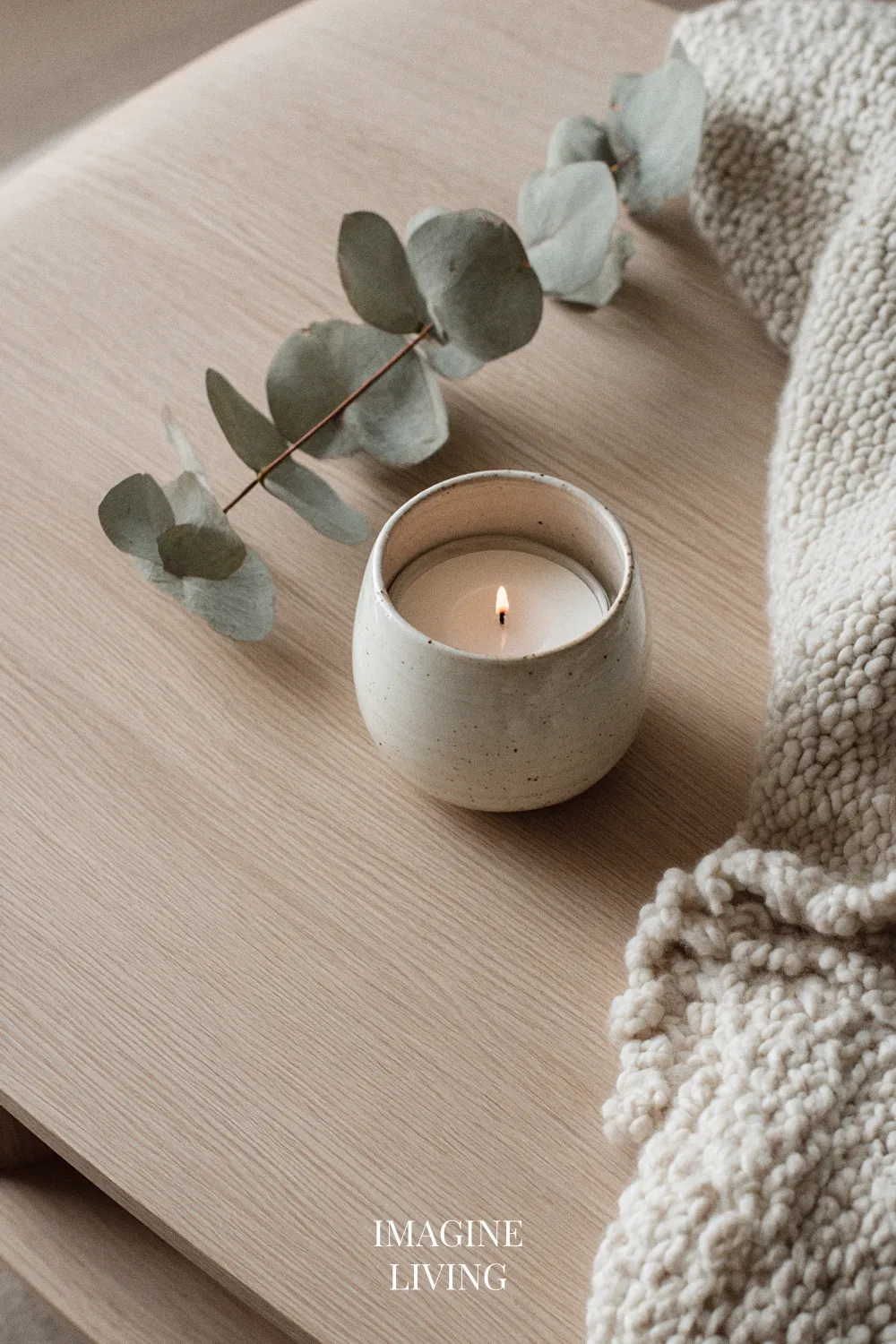
- dried eucalyptus
- winter grasses
- birch stems
- paper snow stars
- neutral ceramic bowls
- tiny pinecones (minimal and unsentimental)
These add a fresh, seasonal cue without pushing the space into holiday territory. They also age beautifully throughout the whole season, not just December.
Materials That Hold Warmth
Certain materials visually and physically hold warmth, making them perfect for winter styling:
- wool (soft & structured)
- boucle (cozy but sophisticated)
- faux fur (for a touch of chalet)
- linen (lightens winter palettes)
- oak and beechwood (bright Scandinavian woods)
- matte ceramics (quiet and grounding)
Together, they form a palette that feels contemporary, tactile, and magazine-ready without being cold.
The Sensory Layer (Often Forgotten)
Winter styling isn’t just visual — it’s sensory. A subtle scent can shift a room instantly. Choose notes that feel warm but not festive:
- amber
- cedar
- vanilla
- bergamot
- pine
- sandalwood
- tea
A good winter scent makes evenings feel richer and mornings feel softer, especially when paired with the right music and the ritual of making something warm to drink.
Minimalism Meets Comfort
Winter interiors often benefit from editing rather than adding. Removing sharp contrasts and visual clutter allows textures and lighting to speak. This is where Japandi principles become useful: fewer objects, better materials, and an appreciation for negative space. A calm room is a warm room.
The Takeaway
A cozy winter living room is not a theme — it’s a rhythm. It brings softness to the edges of daily life and turns ordinary moments into winter rituals. Instead of decorating for winter, you’re creating a place to spend it: layered, grounded, luminous, and quietly beautiful.