Lavender Ideas for Gardens, Balconies, and Terraces
Lavender has a way of making an outdoor space feel softer, brighter, and more alive. It brings color without shouting, fragrance without effort, and structure without feeling stiff. Whether you have a full backyard, a compact balcony, or a sunny terrace, lavender can turn even a simple corner into something that feels calm, warm, and beautifully summer-ready.
Originally native to the Mediterranean region, lavender comes from places where the sun is strong, the soil is light, and the air stays relatively dry. That tells you almost everything you need to know about how to grow it well. Lavender loves sunshine, warmth, and good drainage. It dislikes soggy roots, heavy wet soil, deep shade, and too much humidity without airflow. If you understand that basic rhythm, it becomes one of the most rewarding plants to use outdoors.
Beyond its beauty, lavender has plenty of practical benefits too. It attracts pollinators like bees and butterflies, adds scent to walkways and seating areas, and often needs less water than many other flowering plants once established. It can also help create that clean, airy, slightly luxurious summer look that works so well in both relaxed gardens and more polished patio spaces.
Here are beautiful ways to use lavender across gardens, balconies, and terraces.
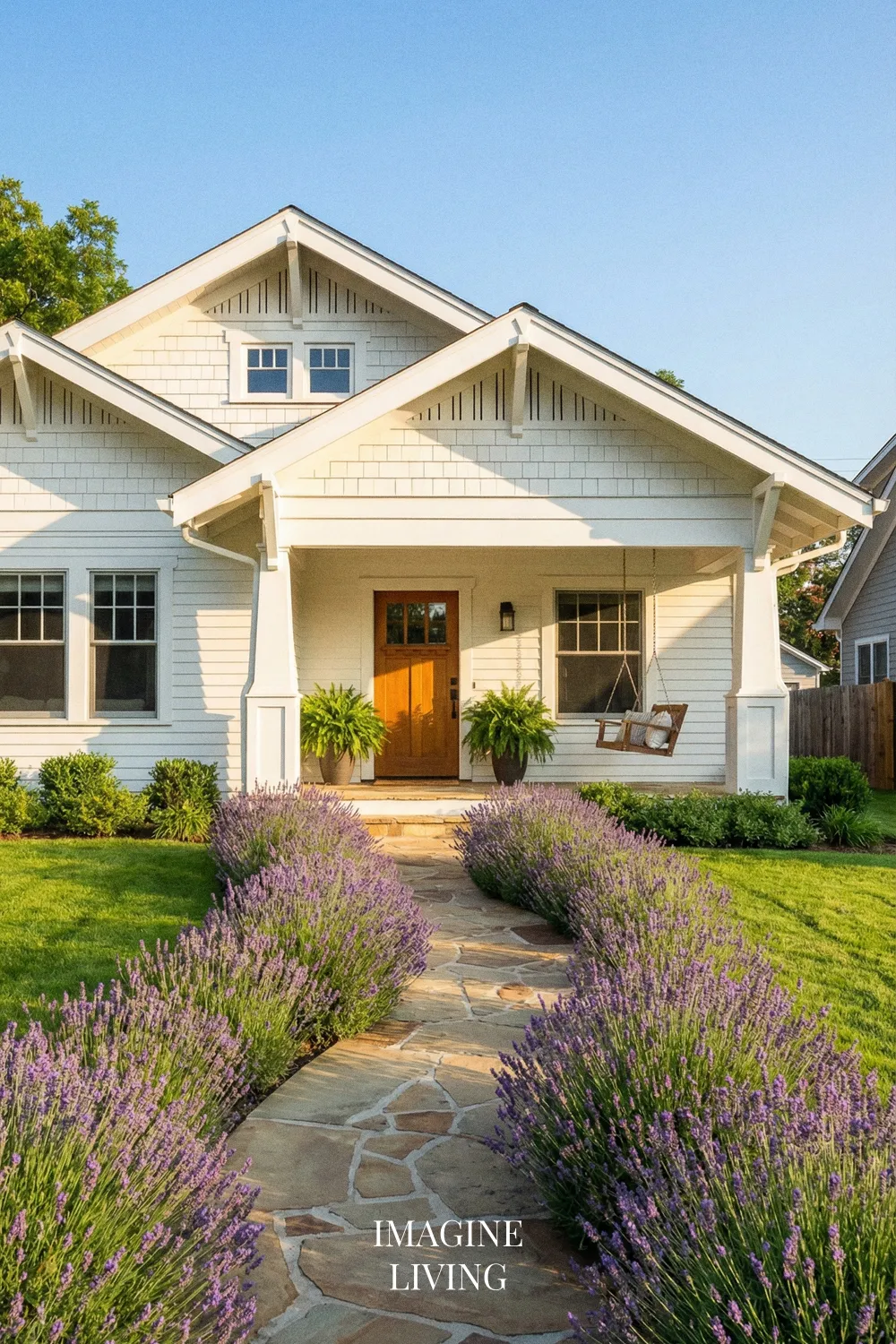
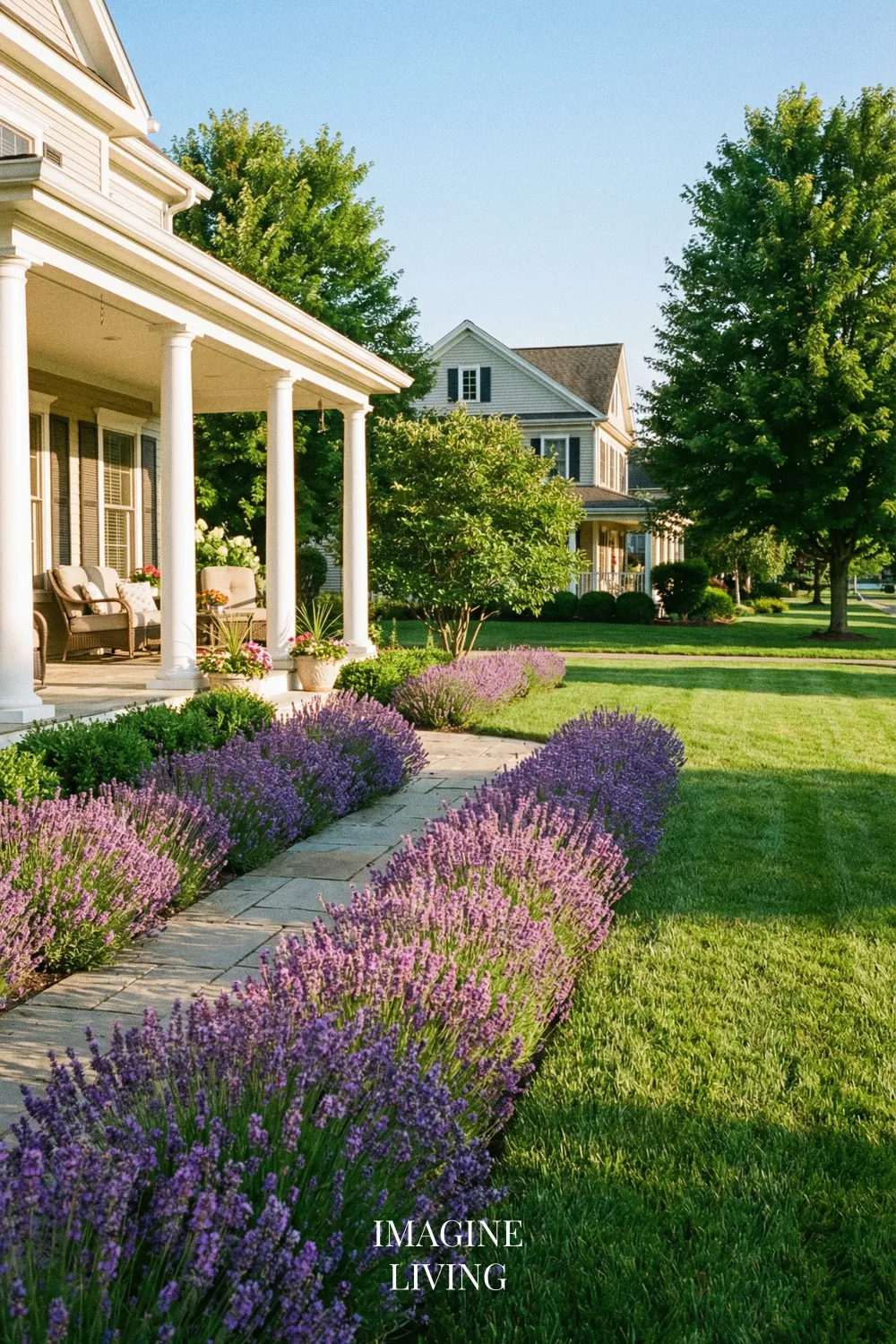
Lavender Walkway for a Classic American Front Yard
A lavender-lined walkway makes an entrance feel welcoming before anyone even reaches the door. It creates softness around hard edges like stone, brick, or concrete paths, and the repeated shape of the plants gives the front yard a more finished and intentional look. In American homes, especially those with white trim, porches, or traditional landscaping, lavender can add a fresh seasonal layer that feels polished without becoming overly formal.
One of the biggest advantages of planting lavender along a walkway is the way it combines beauty with function. It stays relatively neat if trimmed properly, releases fragrance when brushed past, and offers long-lasting summer color. It also helps connect the house to the landscape in a way that feels timeless.
For this kind of placement, lavender likes the sunniest stretch you can give it. A front yard border with at least six hours of direct sun is ideal. It prefers soil that drains well, so if the ground tends to stay wet after rain, it helps to improve the soil with grit or plant slightly raised. Lavender does not enjoy sitting in damp, compacted ground, especially in colder months.
Care is fairly simple once it settles in. Water young plants regularly at first, but once established, let the soil dry more between waterings. Avoid overfeeding. Lavender usually performs better in leaner soil than in rich, overly fertile conditions. Trim it lightly after flowering to keep the plants mounded and full.
California-Inspired Lavender Terrace
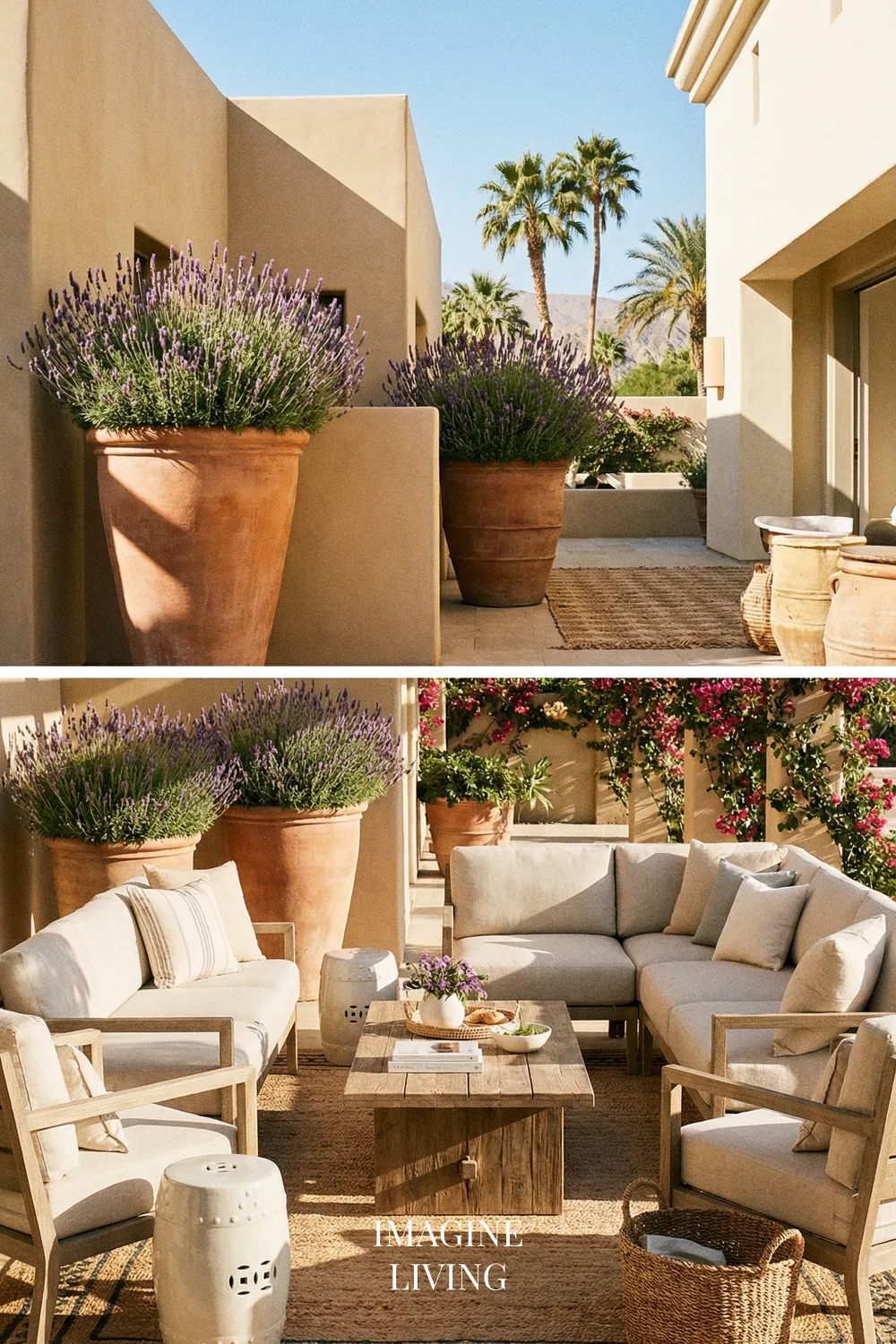
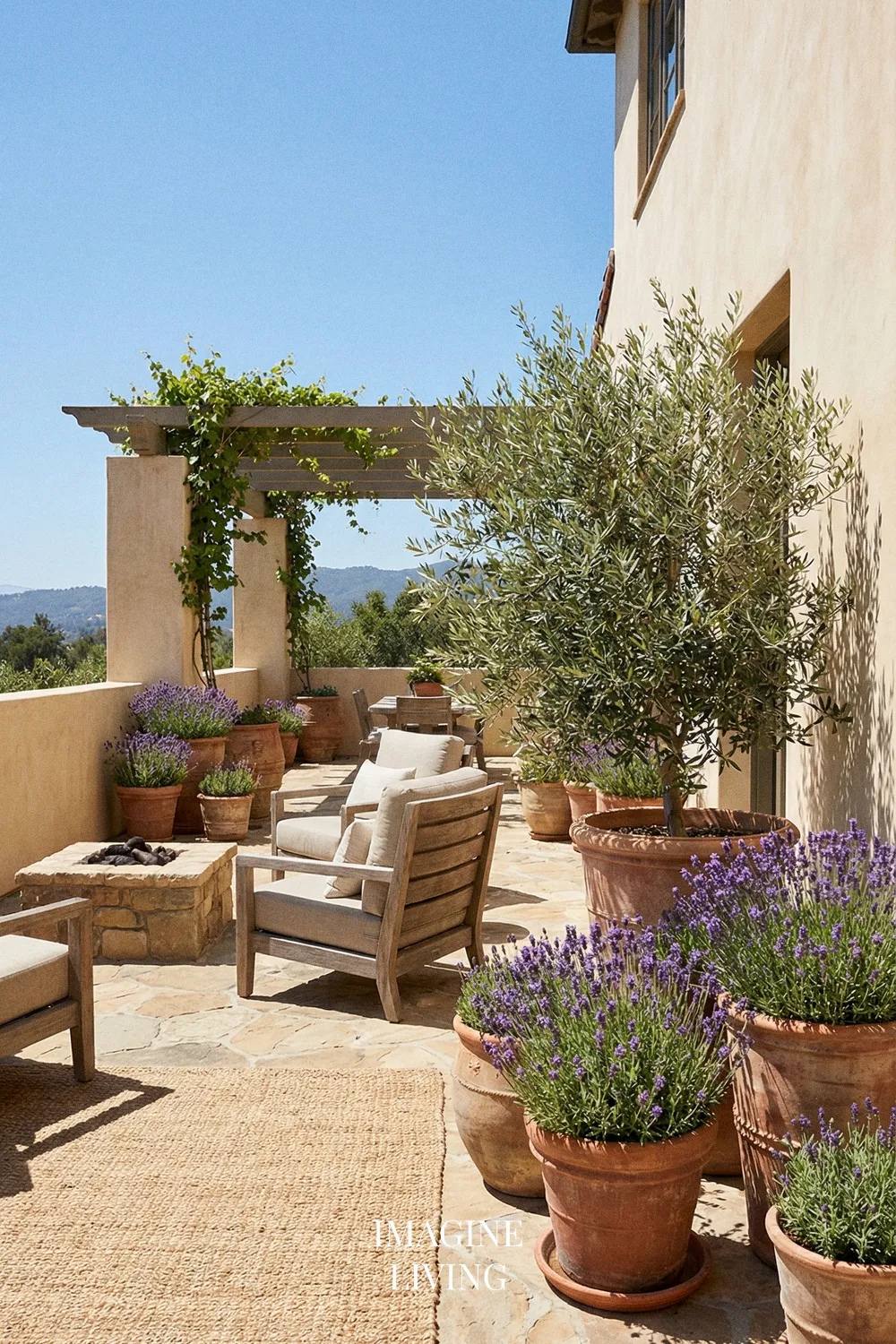
Lavender feels naturally at home in a California-style terrace because that whole look draws from the same climate language lavender came from: sun, warmth, pale walls, dry air, and relaxed elegance. On a terrace, lavender instantly softens hard materials like stucco, concrete, tile, and stone, making the whole space feel warmer and more lived in.
This idea works especially well because lavender brings both structure and movement. The silvery-green foliage looks beautiful even before the flowers open, and the purple bloom spikes add color without overwhelming a refined outdoor palette. It pairs especially well with terracotta pots, olive trees, neutral lounge cushions, and natural textures.
Terraces are often ideal for lavender because drainage is easier to control in containers. Use a pot with a drainage hole and a gritty, fast-draining potting mix. Lavender in pots needs more frequent watering than lavender in the ground, but it still does not want to stay wet. Water thoroughly, then let the top of the soil dry before watering again.
Lavender likes heat and bright exposure, so the sunniest corner of the terrace is usually the best spot. What it dislikes most here is shade from walls, trapped moisture, or oversized pots that hold too much water around a young root ball. If you keep it bright, breezy, and dry between waterings, it usually rewards you with an effortlessly summery look.
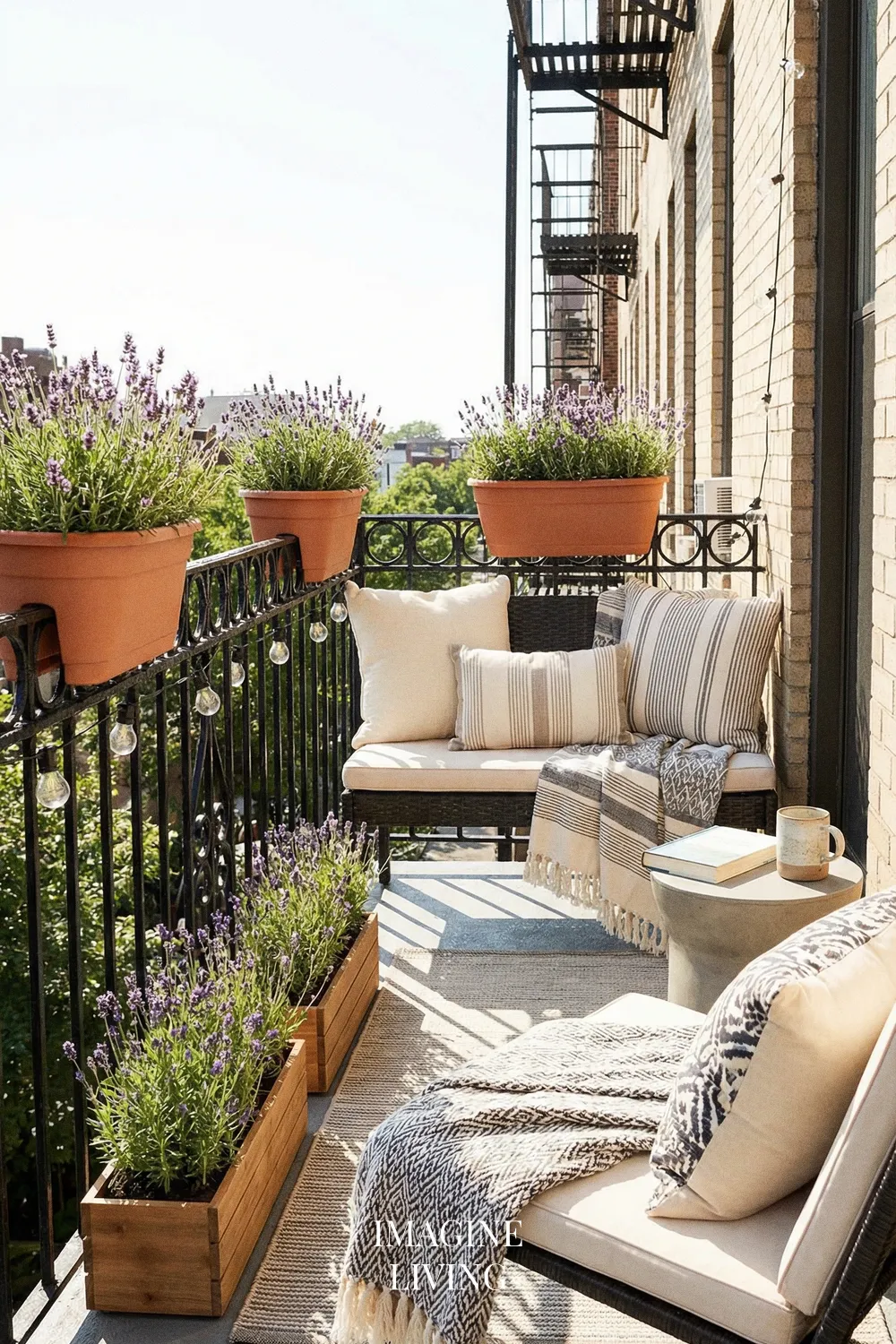
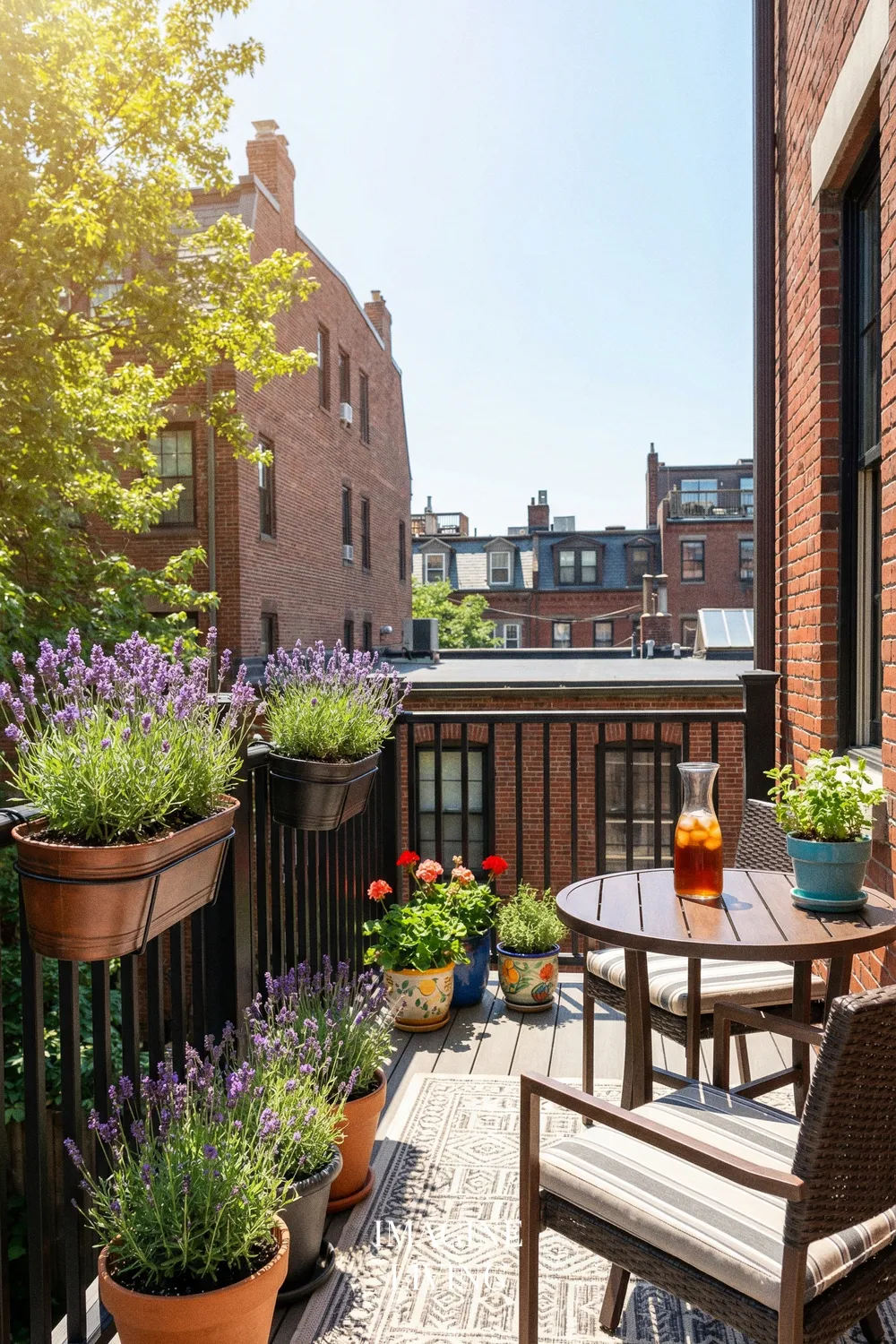
Small Apartment Balcony with Lavender for City Living
Even a small balcony can feel more open and more seasonal with a few pots of lavender. In compact outdoor spaces, lavender works beautifully because it gives color, scent, and texture without looking messy or oversized. It can make a balcony feel less like an afterthought and more like a true outdoor room.
One of the great benefits of using lavender on a balcony is that it brings a little Mediterranean ease into city life. It helps soften railings, concrete surfaces, and tight layouts. It also attracts pollinators, which can make even a tiny urban outdoor space feel more connected to nature.
The key to success is sunlight. Lavender is not a plant for dark or heavily shaded balconies. A south-facing or west-facing balcony is usually best, where it can get strong light and warmth. If your balcony only receives a few weak hours of sun, lavender may survive, but it often becomes looser, less floriferous, and less fragrant.
Container care matters here. Use breathable pots if possible, do not overcrowd the roots, and make sure excess water drains away quickly. Lavender dislikes stagnant humidity, so good airflow is helpful on balconies. Deadhead spent blooms if you want it to look tidier, and trim after the main flowering period to encourage a neat shape.
Lavender and White Flowers for a Hamptons Garden Look
Lavender and white flowers create one of the prettiest summer garden palettes. The cool purple-blue tones of lavender next to crisp whites feel clean, elegant, and timeless. It is a combination that works especially well in gardens aiming for a polished East Coast feel, where structure and softness both matter.
The beauty of this pairing is balance. Lavender brings movement and fragrance, while white flowers add brightness and a sense of calm. Together they create a layered look that feels light, fresh, and expensive without needing too many different colors. It is a very effective way to build a garden that looks intentional in both close-up views and wider backyard scenes.
Because lavender likes drier conditions than many classic flowering plants, the best combinations are with other sun-lovers that do not need heavy watering. When you mix it into a border, be mindful not to group it with plants that demand consistently moist soil. Lavender dislikes that kind of watering schedule and can decline if its roots stay too damp.
Choose an open, sunny garden bed with loose, well-draining soil. Remove faded blooms through the season if desired, and prune lightly after flowering. Good spacing helps too. Lavender likes air around it and does not enjoy being crowded by dense, moisture-trapping plant growth.
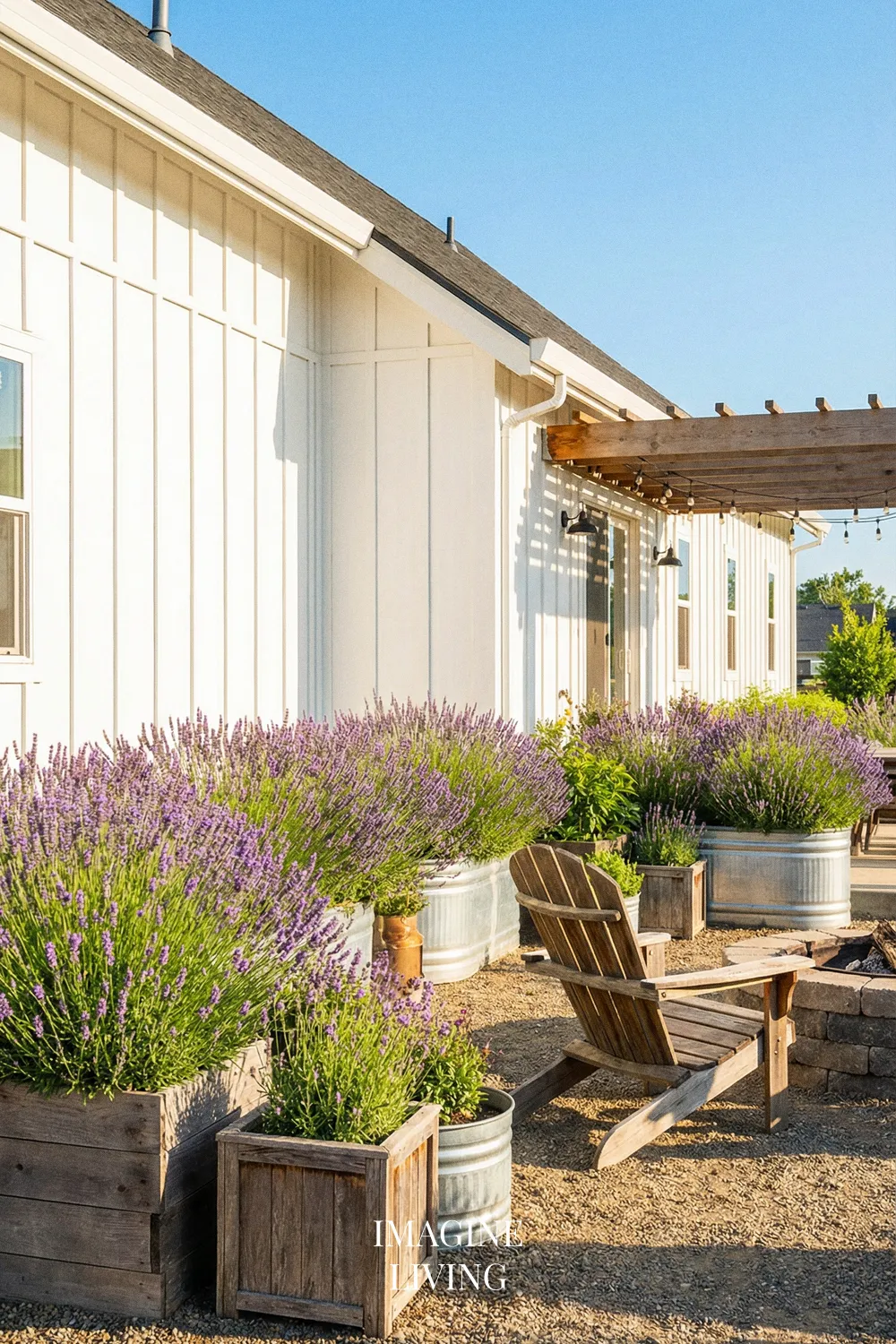
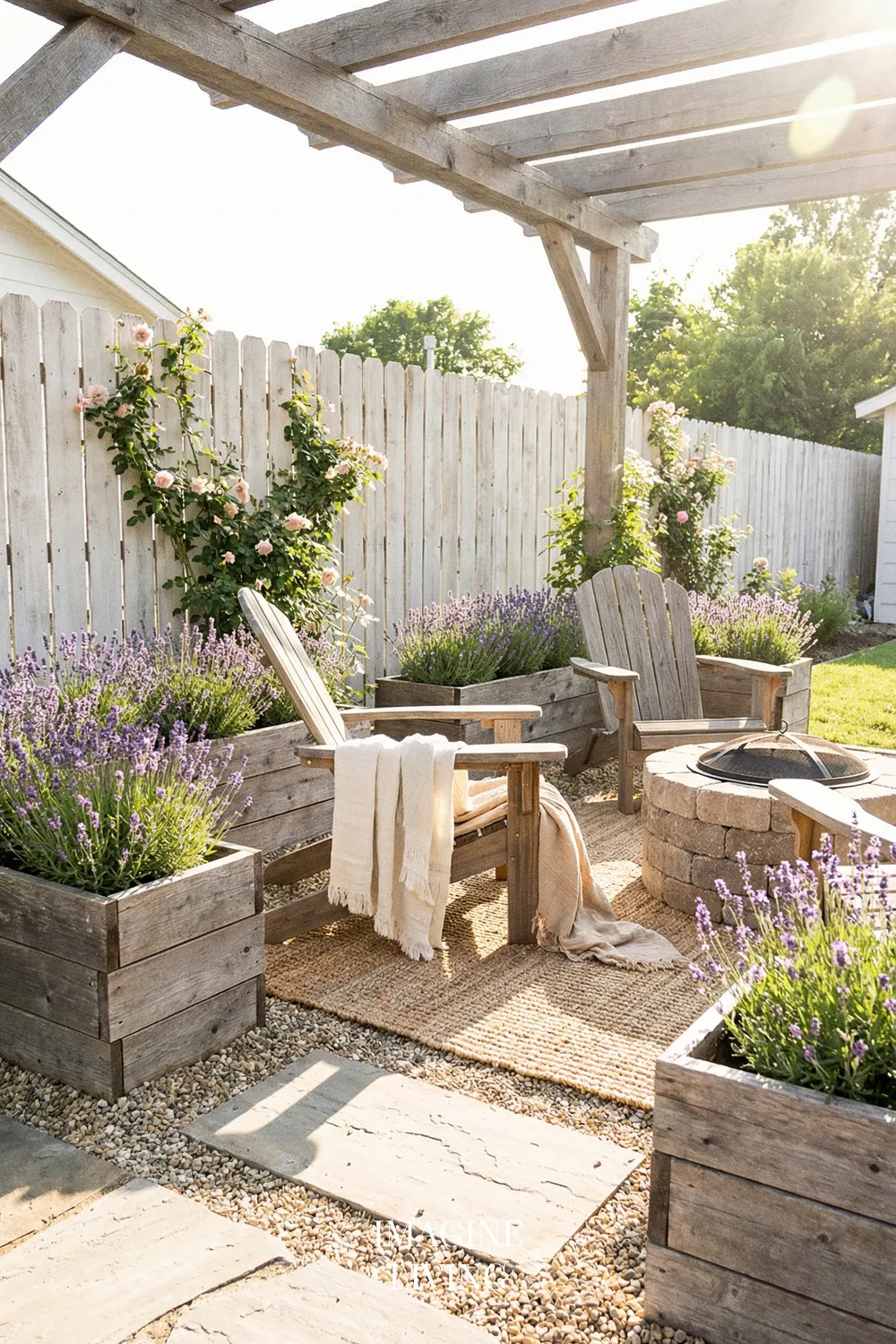
Modern Farmhouse Lavender Garden Corner
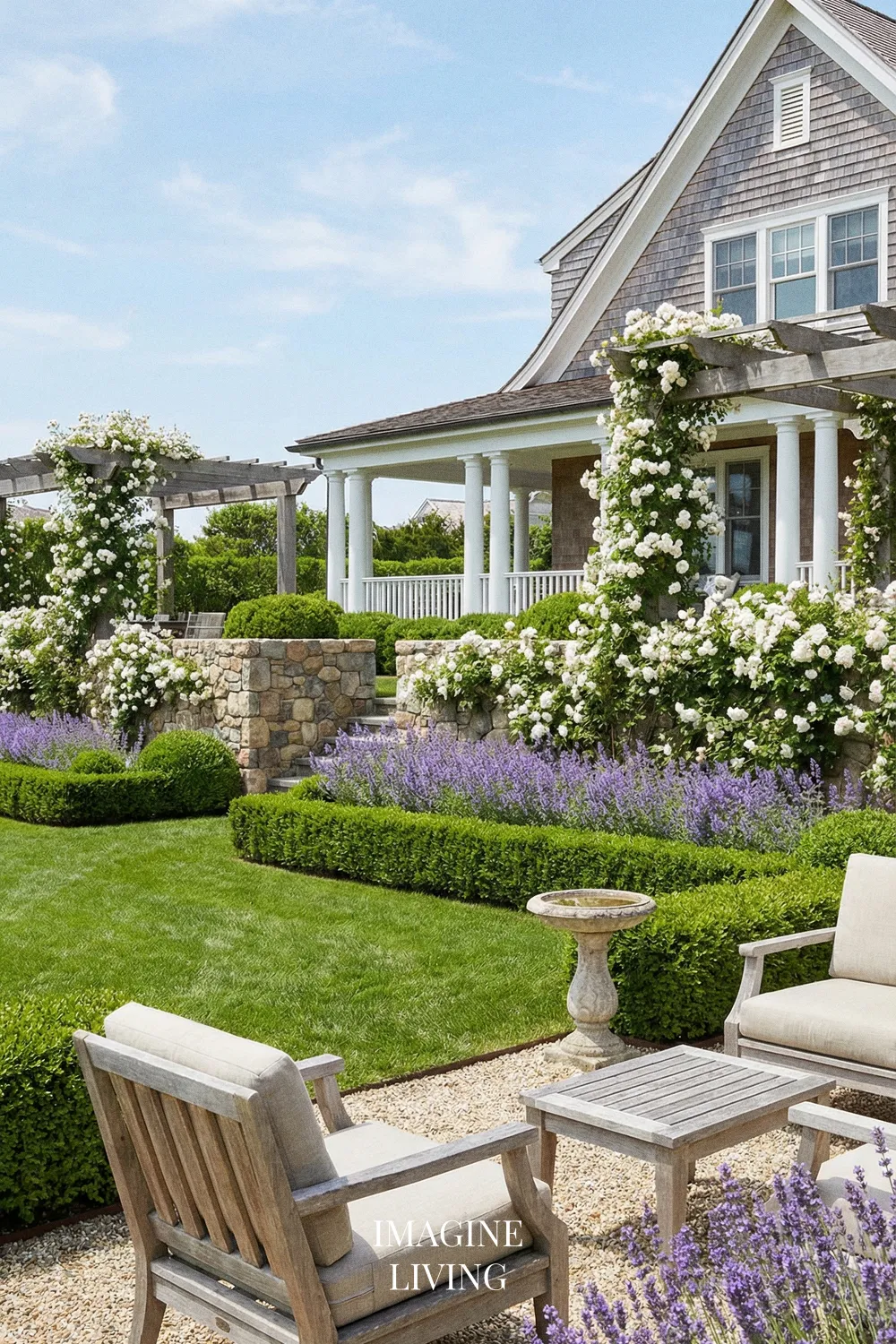
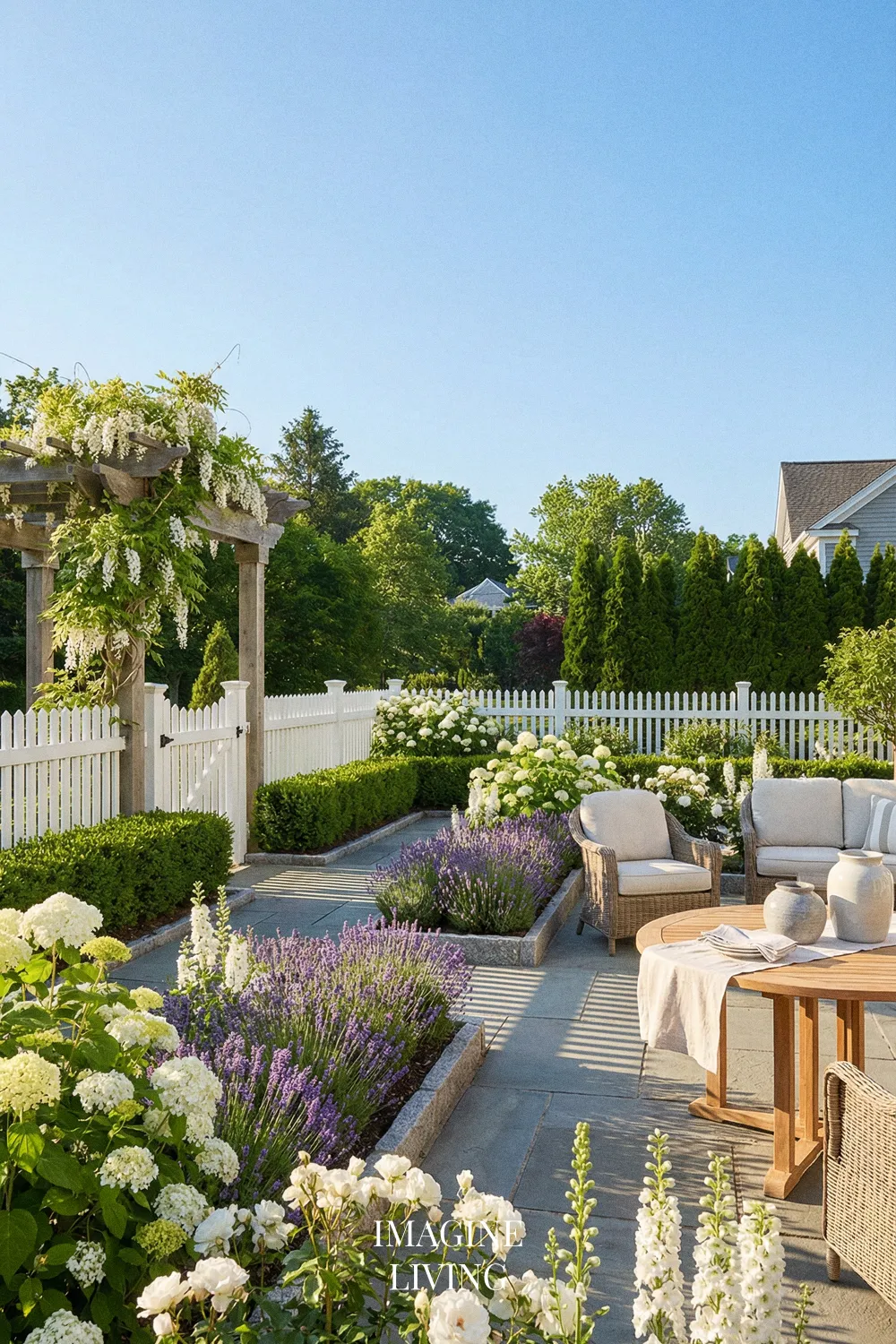
In a modern farmhouse setting, lavender brings a softness that keeps the space from feeling too stark or too styled. Against white siding, fencing, gravel, or simple wood details, the plant adds exactly the kind of relaxed seasonal texture that makes an outdoor corner feel complete.
One of the main benefits here is versatility. Lavender can sit comfortably between rustic and refined. It works with weathered planters, galvanized accents, pale gravel, black hardware, and white-painted surfaces. It feels grounded, but it still has elegance. That makes it especially useful in farmhouse-inspired outdoor spaces that need a little color but do not want to lose their clean look.
A sunny garden corner near the house often works very well, especially if the soil is not too rich or damp. Lavender likes warmth reflected from nearby surfaces, as long as there is still good airflow. It dislikes being tucked into dense, shady planting beds where moisture lingers.
For care, resist the urge to pamper it too much. Lavender is not a plant that wants constant feeding or overly rich compost. In fact, too much fertility can lead to soft growth and fewer flowers. It does best with moderate watering while young and a more restrained approach once mature. Think sun, drainage, and a little neglect rather than constant fuss.
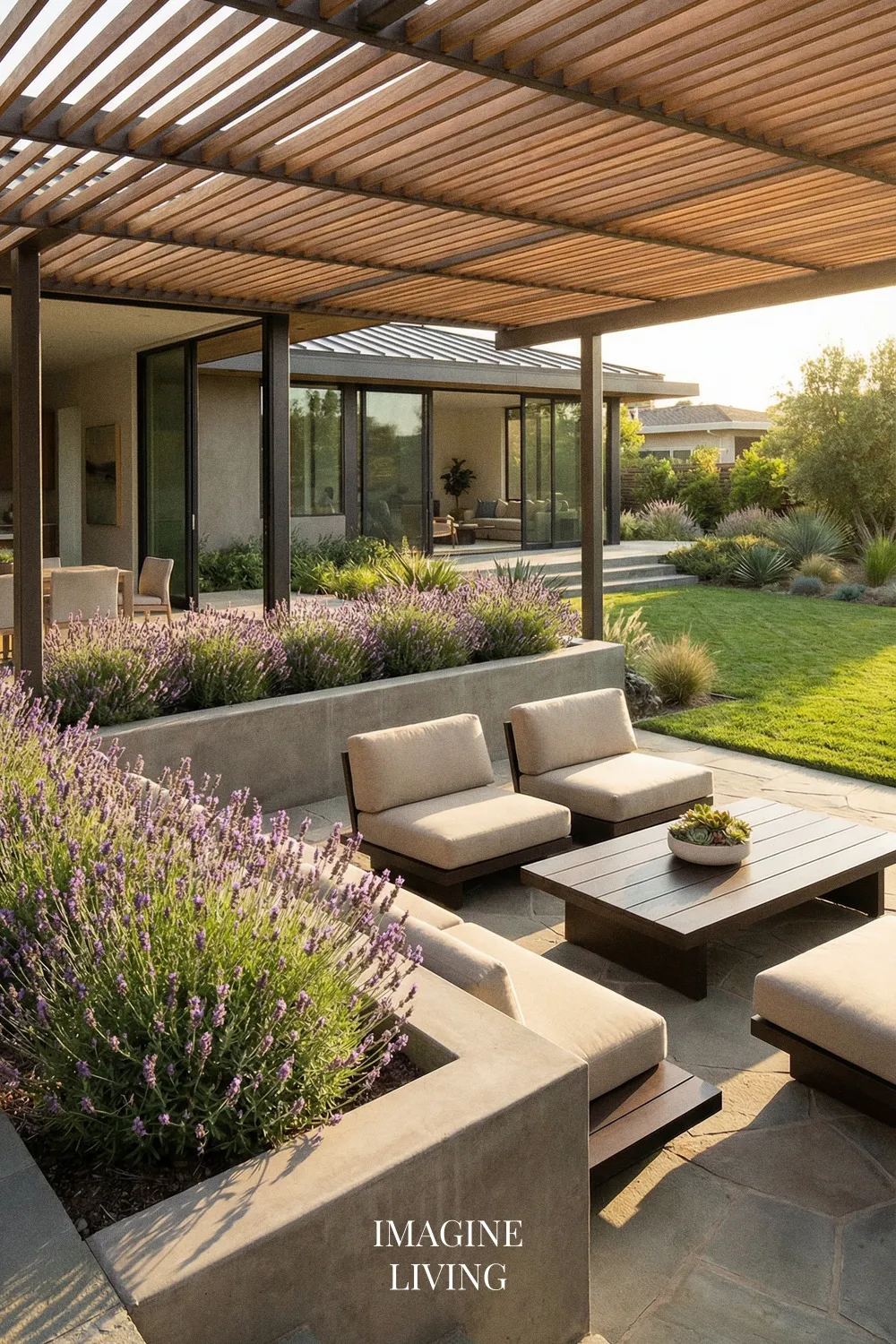
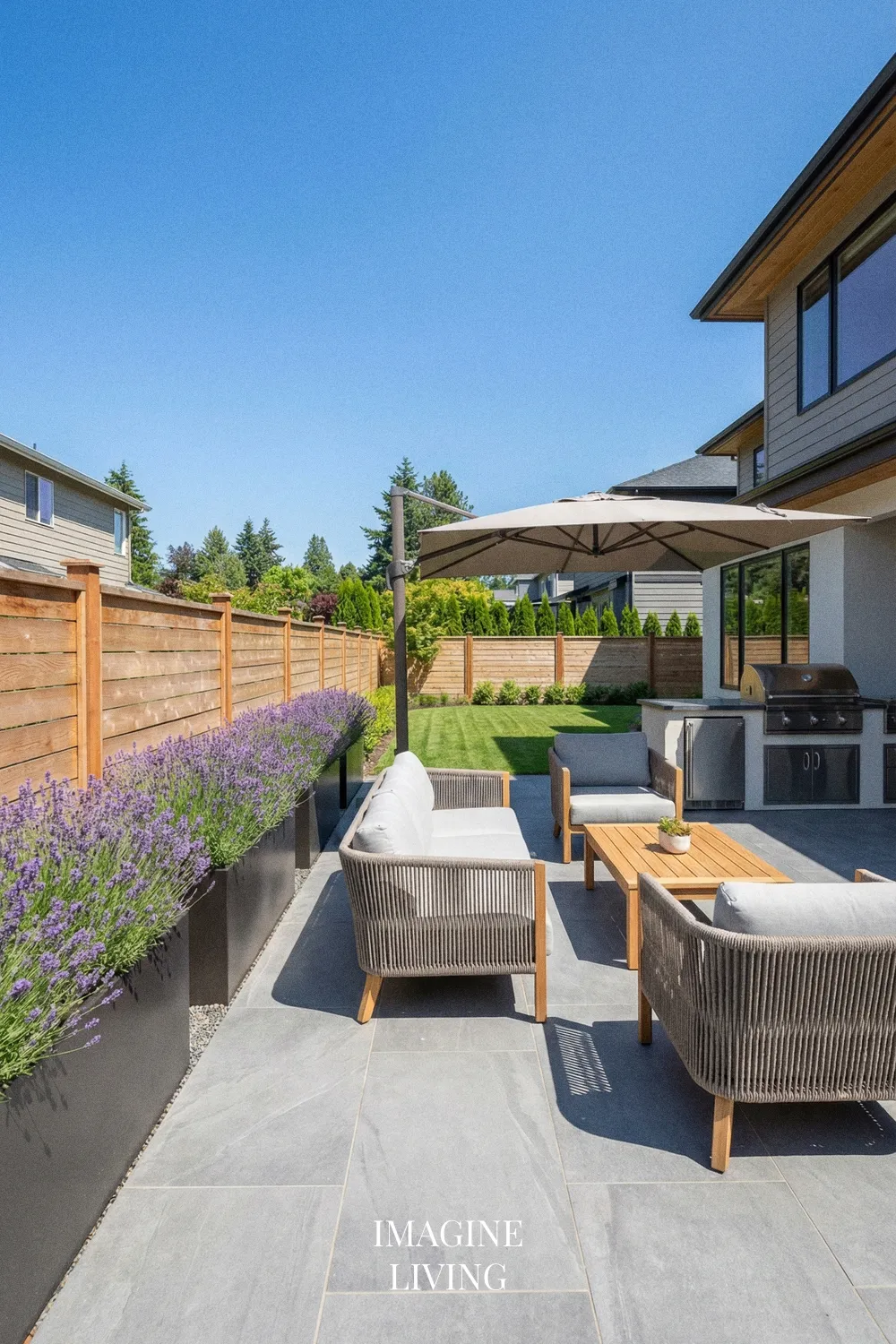
Contemporary Backyard Patio with Lavender Planters
Lavender can look surprisingly refined in contemporary spaces. When planted in clean-lined containers, it brings movement and softness to modern patios without disrupting the architecture. It is a great way to warm up sleek materials like concrete, steel, porcelain pavers, or minimalist furniture.
The benefit of using lavender in planters on a patio is control. You can place it exactly where it adds the most impact, whether that is framing a lounge area, softening a dining setup, or breaking up strong geometric lines. It also allows you to adjust soil and drainage more precisely than you could in a difficult in-ground space.
Lavender likes a bright, exposed patio, especially one that gets generous afternoon light. It thrives in heat as long as the pot drains well. What it dislikes is decorative container styling that looks beautiful but traps moisture. Always choose function along with form. A stunning planter means little if the roots stay wet.
In modern spaces, regular shaping matters. Trim back faded stems after flowering and avoid letting the plant become too woody and open in the center. Lavender responds well to light maintenance and stays much more sculptural when kept in a tidy mound.
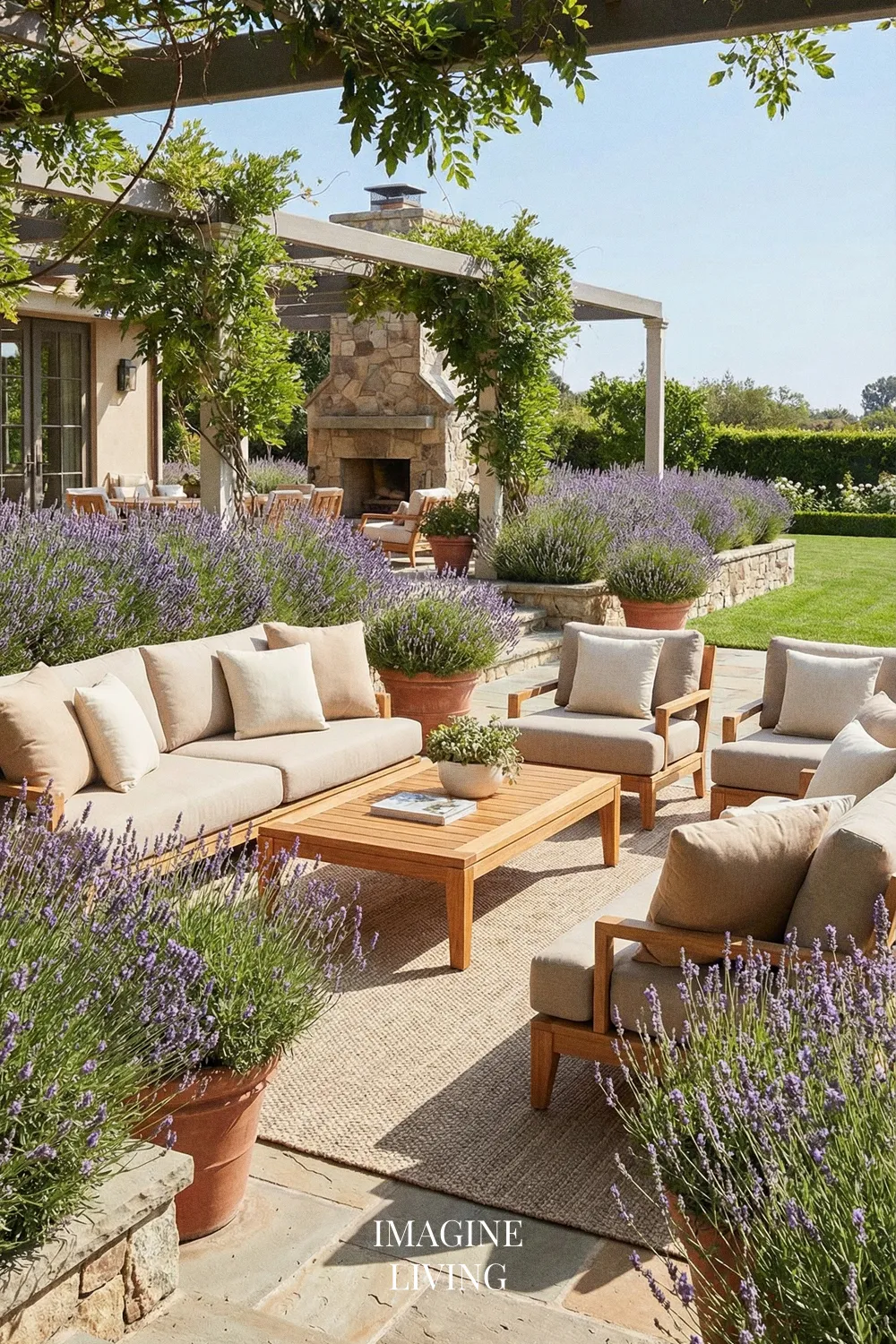
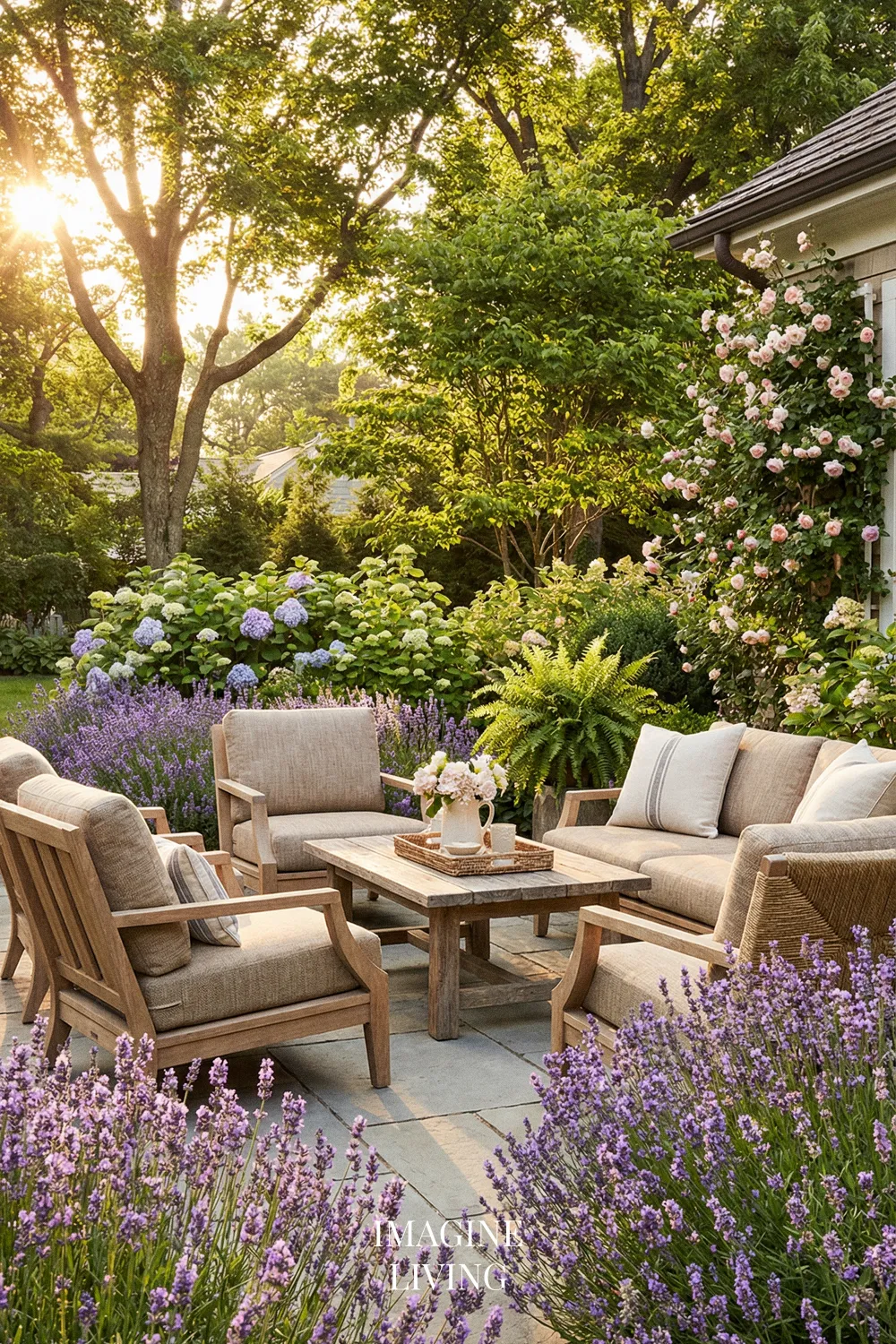
Lavender Around an Outdoor Seating Area
Planting lavender around a seating area is one of the loveliest ways to make an outdoor space feel immersive. Instead of just looking at flowers from a distance, you get to sit within the fragrance, color, and gentle movement of the planting. It turns a simple lounge area into something far more atmospheric.
This is where lavender really shows its sensory appeal. The scent becomes part of the experience, especially in warm weather when the oils are strongest. Bees love it too, which adds life to the garden, though it is often best not to plant it so close that the flowers brush directly against seating if that might bother guests.
Lavender likes open sun around seating areas, especially where air can move freely between plants and furniture. It can work in borders, raised beds, or large containers, depending on the layout. It dislikes dense, overwatered planting around the base, so keep irrigation targeted and avoid crowding it with thirsty annuals.
To care for it in these more visible locations, keep the plants shaped and remove tired blooms after the main flush. This helps maintain the clean, calming look that makes seating areas feel restful rather than overgrown.
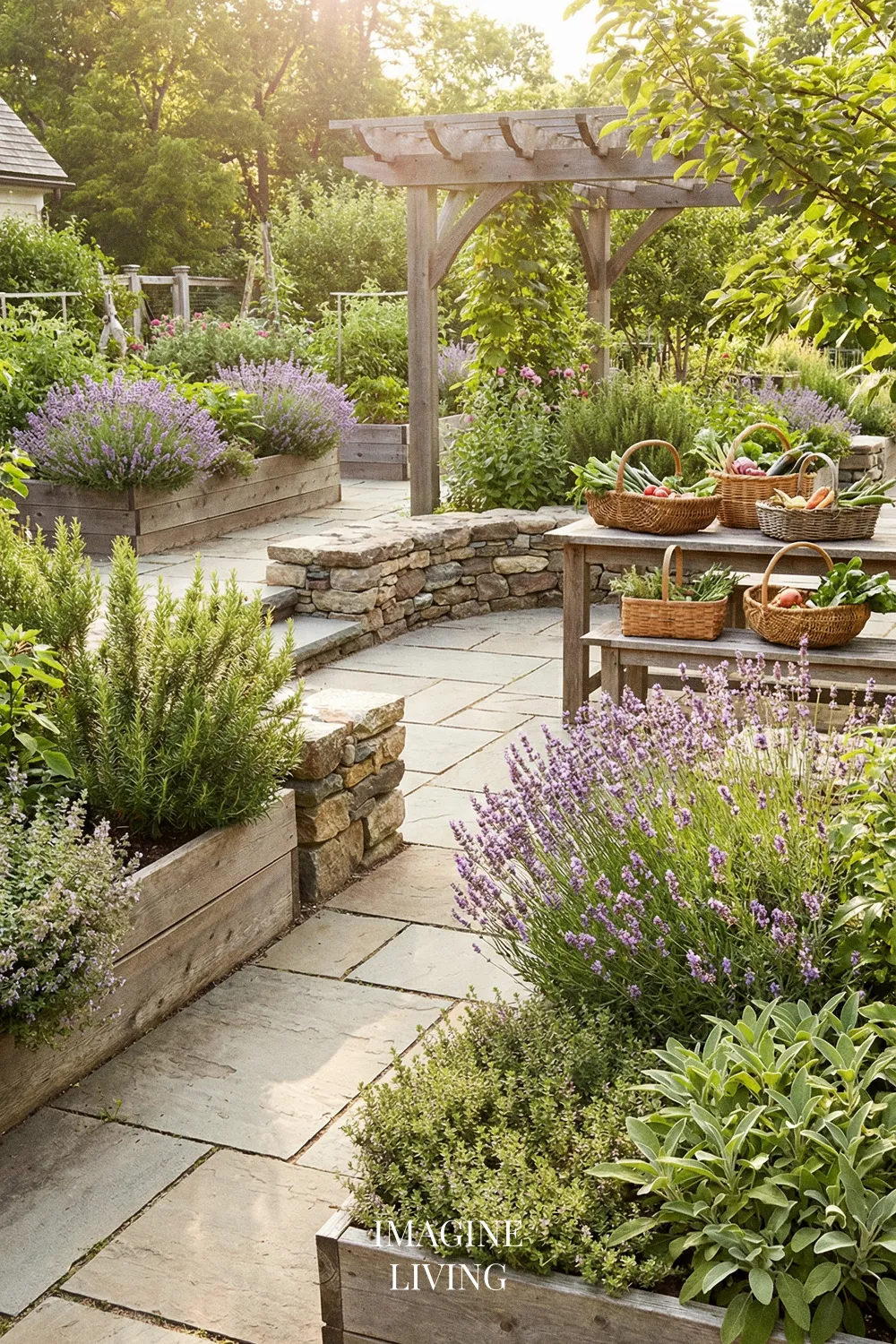
Lavender in Raised Beds for a Backyard Garden
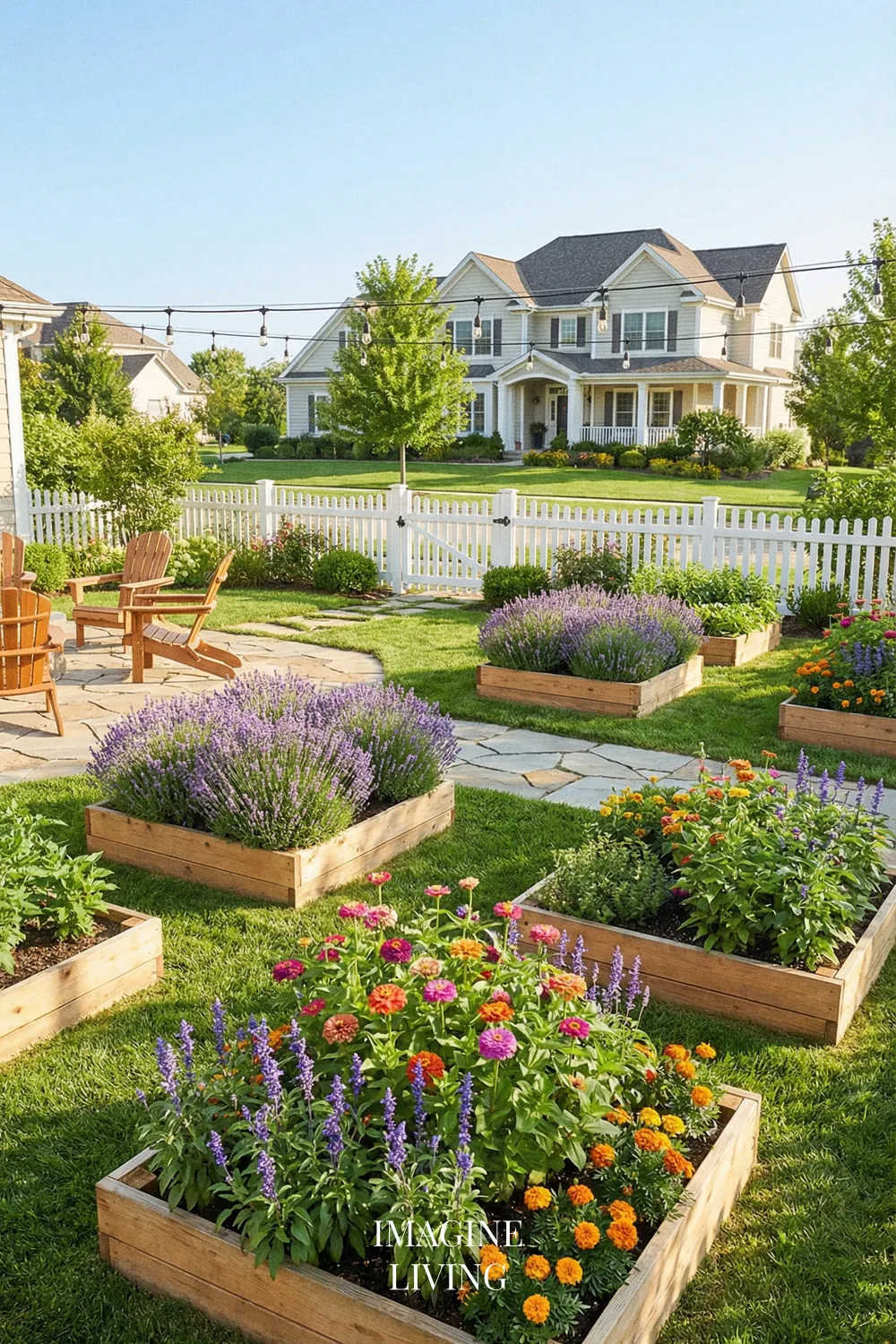
Raised beds are a smart choice for lavender because they solve one of the plant’s biggest problems: poor drainage. In gardens where soil is heavy or compacted, raising the planting level helps excess water move away from the roots more quickly. That alone can make the difference between struggling lavender and thriving lavender.
Another advantage is visual structure. Raised beds give the garden a crisp framework, and lavender’s rounded mounds and upright blooms fit beautifully into that organized format. It gives a backyard garden a more designed look while still feeling relaxed and natural in summer.
Lavender likes raised beds with gritty, well-draining soil and a full-sun exposure. If the bed sits in a low area that still collects water, drainage can still be an issue, so placement matters. It also helps not to overplant the bed too tightly. Lavender needs room for airflow and light to reach all sides.
As for care, raised beds can dry out a bit faster than ground-level beds, especially in summer, so young plants should be monitored during hot spells. Still, the goal is not constant moisture. Lavender prefers to dry slightly between waterings. Too much water is usually a bigger risk than too little.
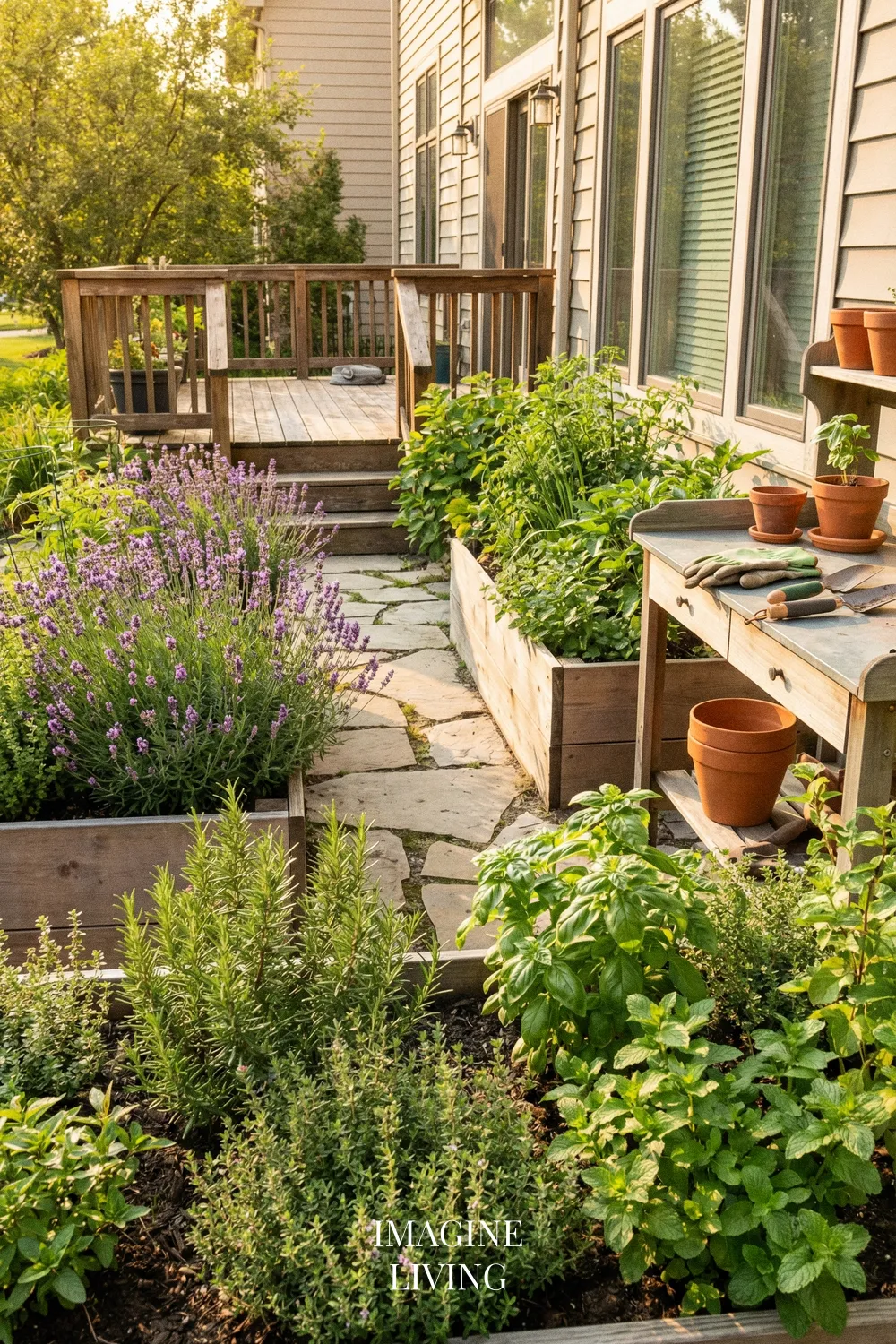
Lavender Mixed with Herbs in a Kitchen Garden
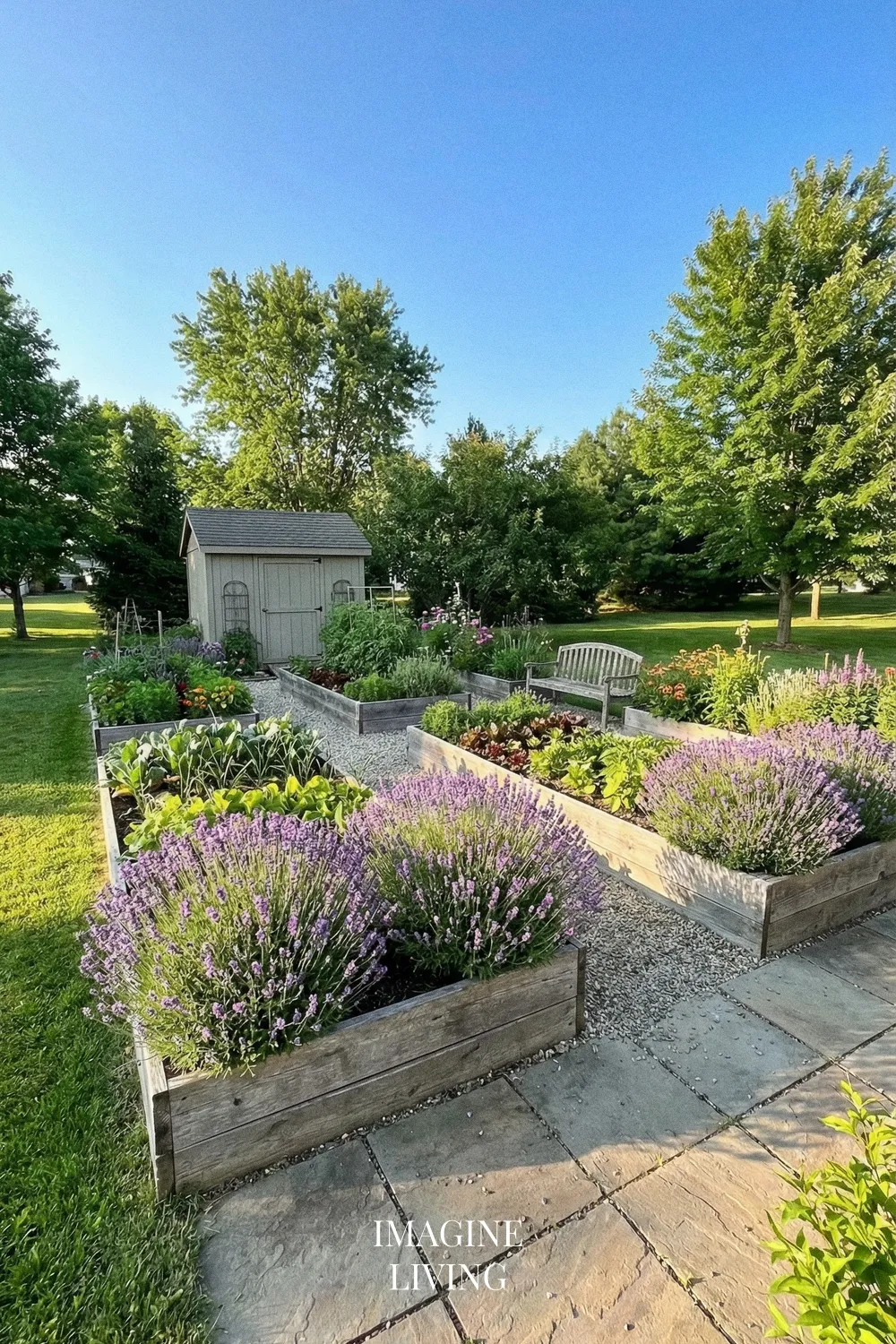
Lavender belongs naturally in an herb garden. Its Mediterranean roots make it a good companion in spirit and in growing conditions for plants like rosemary, thyme, oregano, and sage. Together they create a planting scheme that is both useful and beautiful, with fragrance, texture, and a sun-baked summer character.
This combination has practical benefits too. Many Mediterranean herbs enjoy similar care routines, which makes maintenance more intuitive. They generally prefer sunshine, lighter soil, and moderate watering. That means you are less likely to create conflicting conditions in the same bed or group of containers.
Lavender likes the brightest part of the kitchen garden, ideally somewhere that gets plenty of heat and does not stay damp after watering. It dislikes being mixed with herbs or vegetables that need rich soil and frequent irrigation. Basil, for example, often wants more moisture and fertility than lavender would enjoy.
Trim lavender to keep it compact and prevent it from becoming woody over time. Harvesting a few stems can also help shape the plant lightly during the season. Just do not cut deeply into old wood, since lavender does not always regrow well from very old, bare stems.
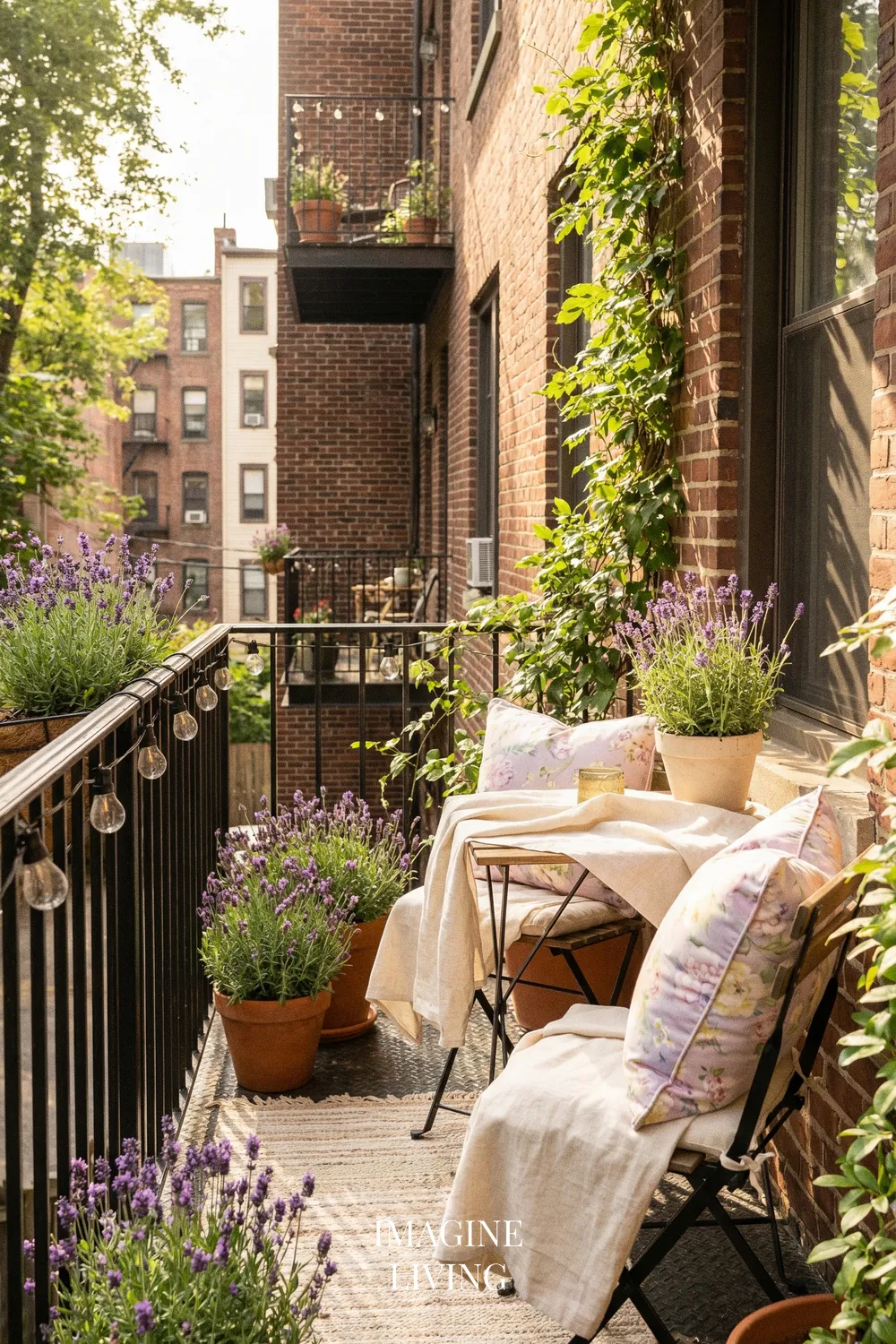
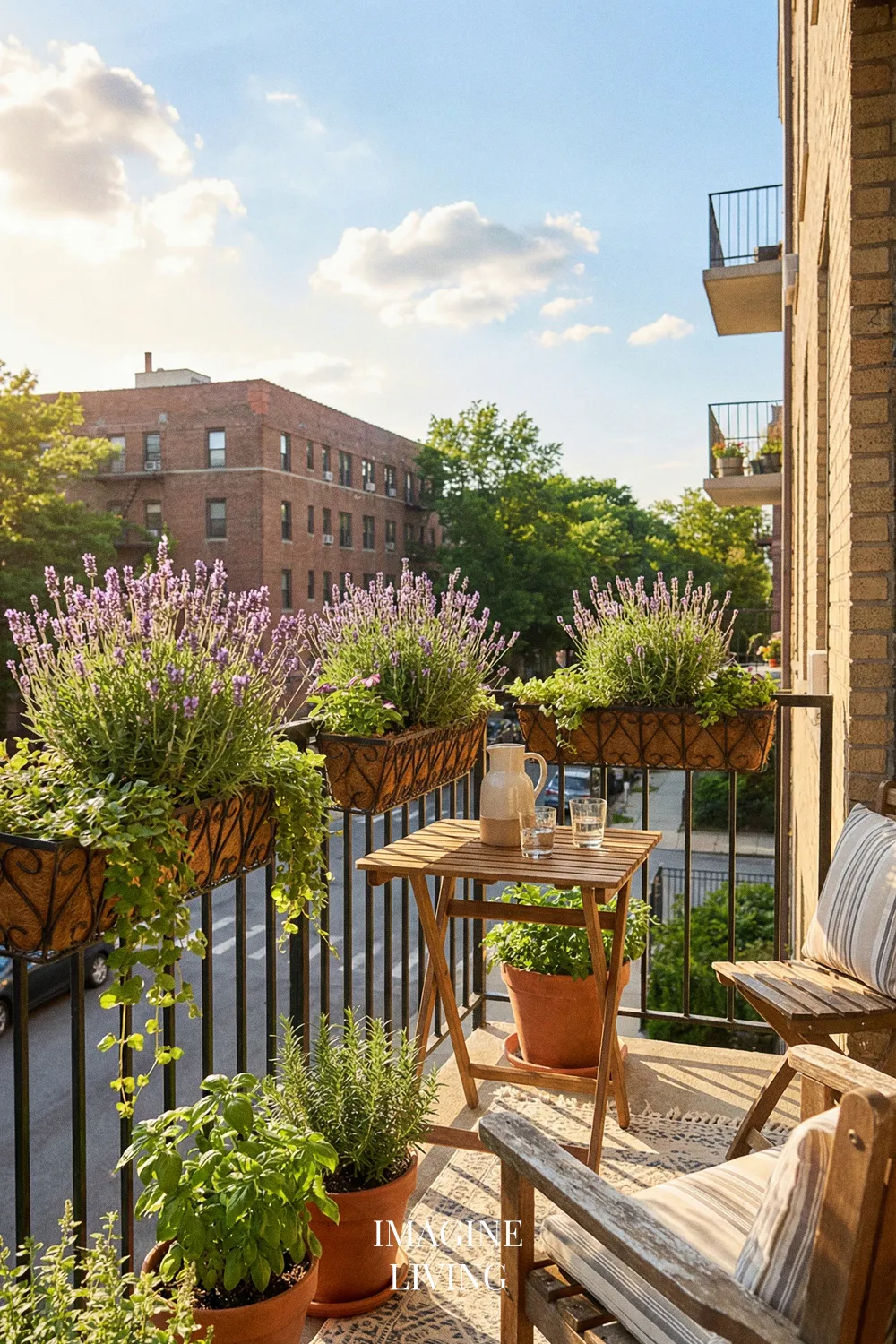
Romantic Lavender Balcony with Soft Summer Textiles
Lavender has a naturally romantic quality, and on a balcony with soft textiles, small café furniture, and gentle summer styling, it can create a very pretty outdoor retreat. It adds color and fragrance while keeping the scene grounded in something living and seasonal.
The benefit of this look is that it feels decorative without relying on too many accessories. Lavender already carries so much visual charm that a few planters can do most of the work. It also suits both classic and more feminine outdoor styling because the foliage stays muted and elegant rather than overly bright.
On balconies like this, sunlight is still the deciding factor. Lavender likes warmth and brightness far more than softness or shade. Even if the styling is delicate, the growing conditions should be bold and sunny. It dislikes dark corners hidden behind curtains, walls, or overhead covers.
To keep it healthy, choose containers with excellent drainage and avoid letting saucers stay full of water. If the balcony is very sheltered, make sure air can still circulate around the plants. Lavender does not love trapped, humid air, especially when combined with damp soil.
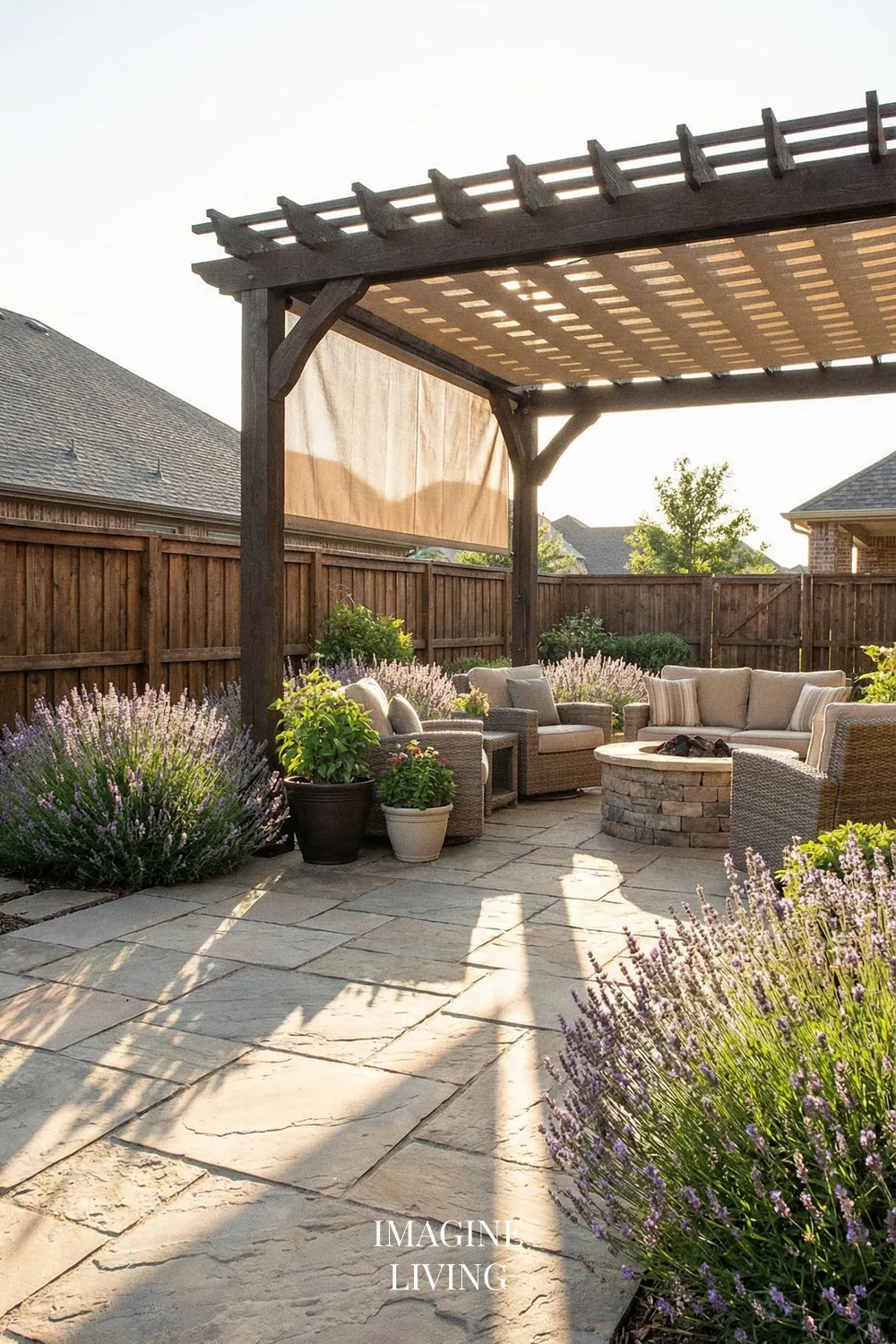
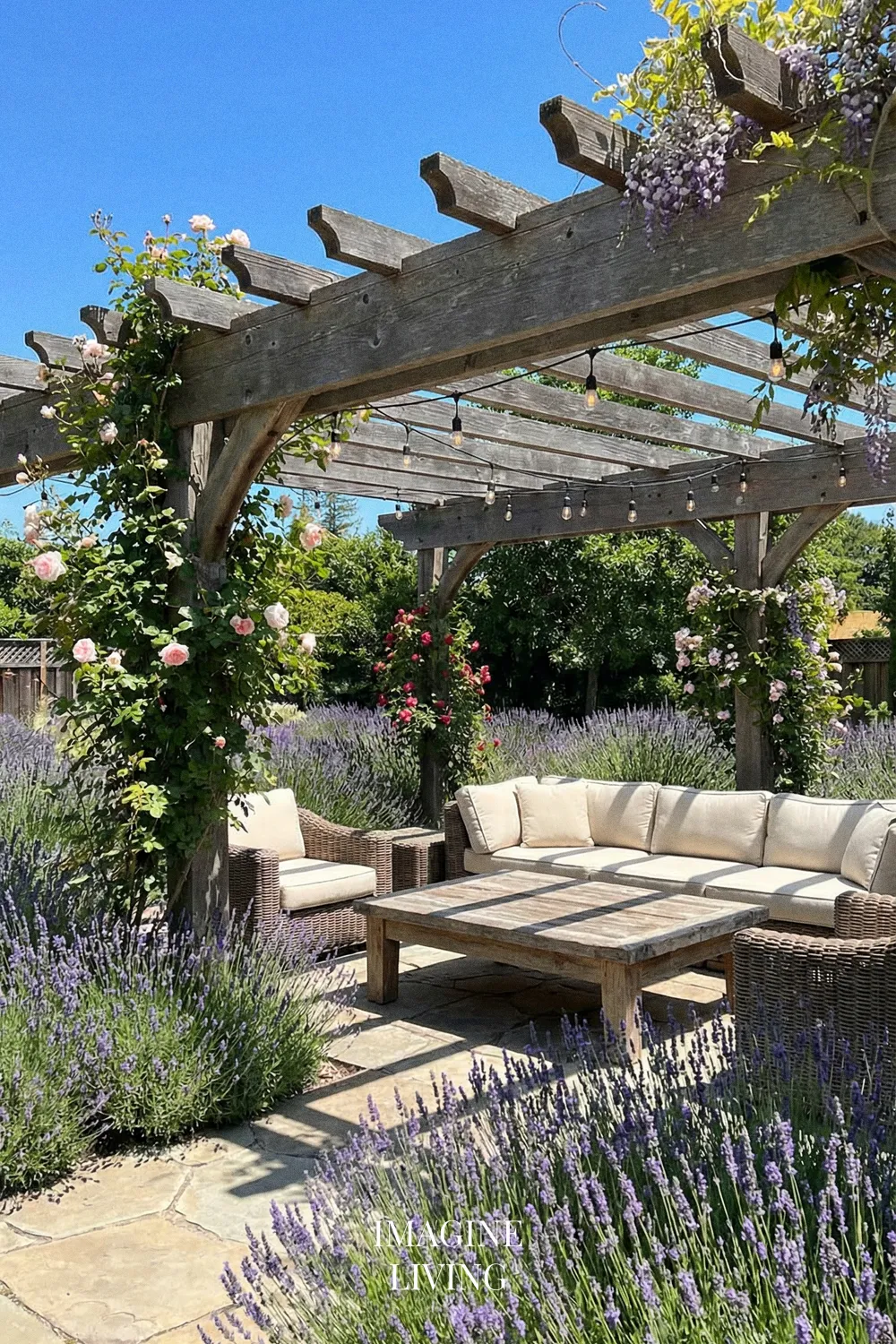
Lavender Around a Pergola in a Backyard
Lavender around a pergola feels classic for a reason. The upright vertical structure of the pergola contrasts beautifully with the softer, rounded forms of lavender below. It helps the whole backyard feel more layered and more intentional, especially in summer when outdoor living shifts into full use.
This is a great setup for entertaining areas because lavender adds scent and color without becoming too visually heavy. It can frame the space, define edges, and make paved zones feel greener and more welcoming. It also works across a range of American backyard styles, from traditional patios to more modern outdoor rooms.
Lavender likes the sunny edges around a pergola, especially if the structure is open enough to let in full light for most of the day. If the area is deeply shaded by climbing plants overhead, flowering may become weaker. Lavender dislikes prolonged shade and dampness beneath dense planting.
Care here is mostly about keeping the plant proportional to the space. Since pergolas already add strong structure, lightly pruning lavender after flowering helps preserve that clean balance. If the area is irrigated for nearby plants, be careful not to give lavender more water than it needs.
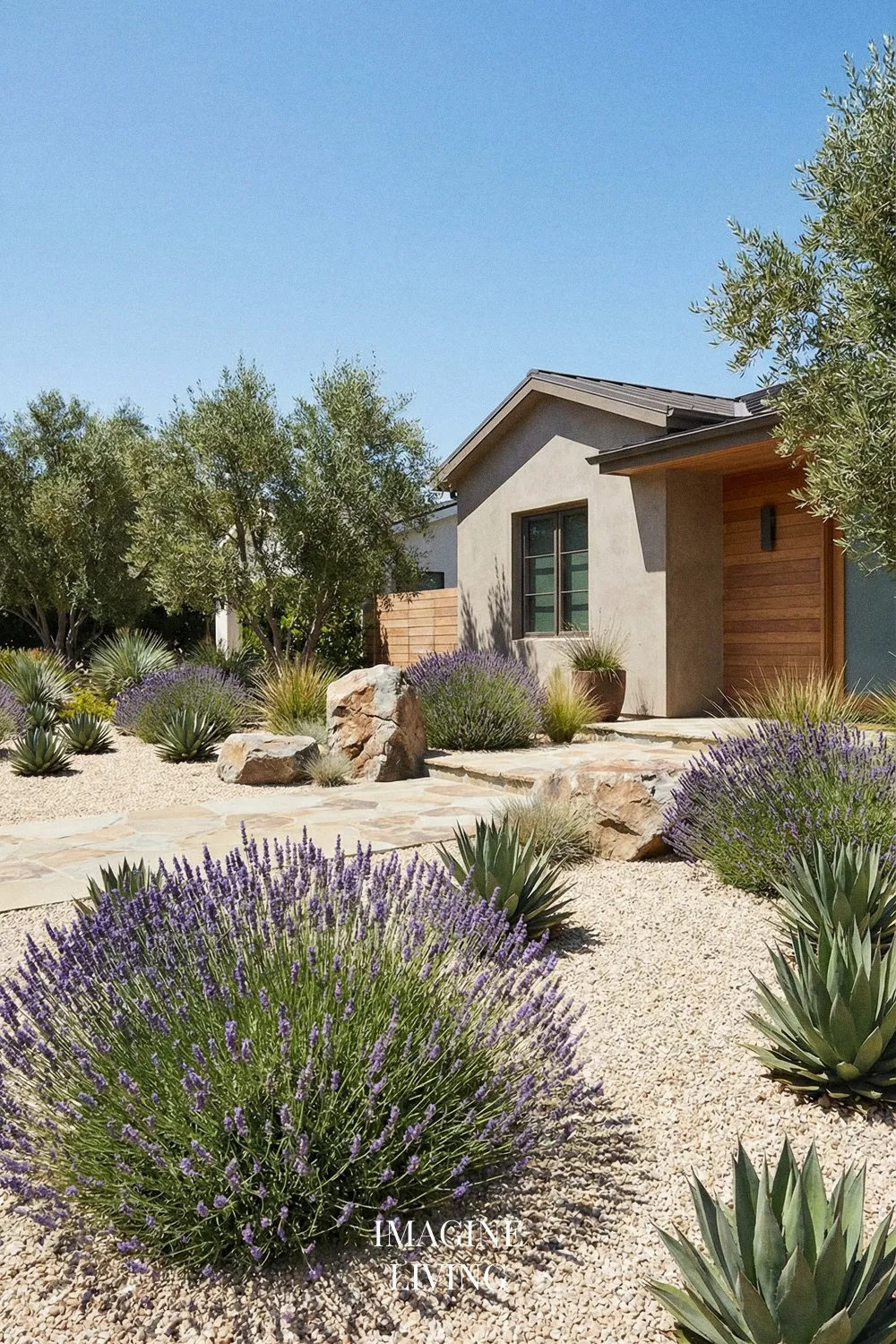
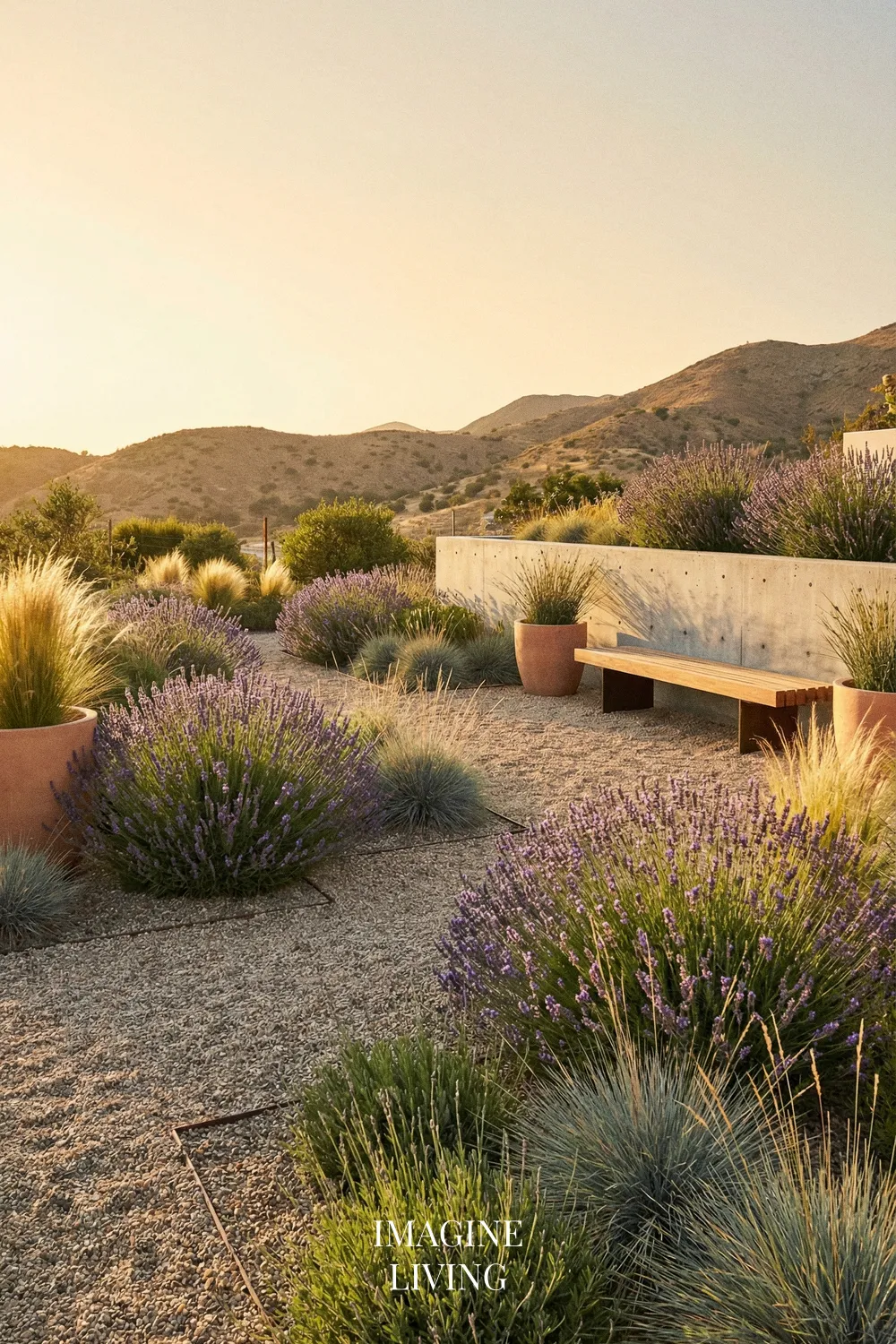
Drought-Tolerant Gravel Garden with Lavender
A gravel garden may be one of the best visual and practical settings for lavender. It reflects the plant’s Mediterranean background beautifully and supports the dry-root conditions it prefers. The combination feels airy, modern, and naturally summery, especially in hot American climates.
The advantages are clear. Gravel helps reduce splash onto foliage, can improve the feel of drainage around the crown, and visually highlights lavender’s silvery foliage and purple blooms. It also suits low-water landscaping, which makes it a strong choice for places where drought-tolerant design matters.
Lavender likes this kind of setting because it mimics the dry, open landscapes of its origin. Full sun, excellent drainage, and warmth are exactly what it wants. What it dislikes is rich, wet, heavy soil hidden beneath a gravel top layer that only looks dry on the surface. The soil underneath still needs to drain well.
In terms of care, this is often one of the easier setups once established. Water deeply but infrequently, keep weeds down while plants are young, and prune to maintain shape. In humid climates, extra spacing helps prevent the center from staying too damp.
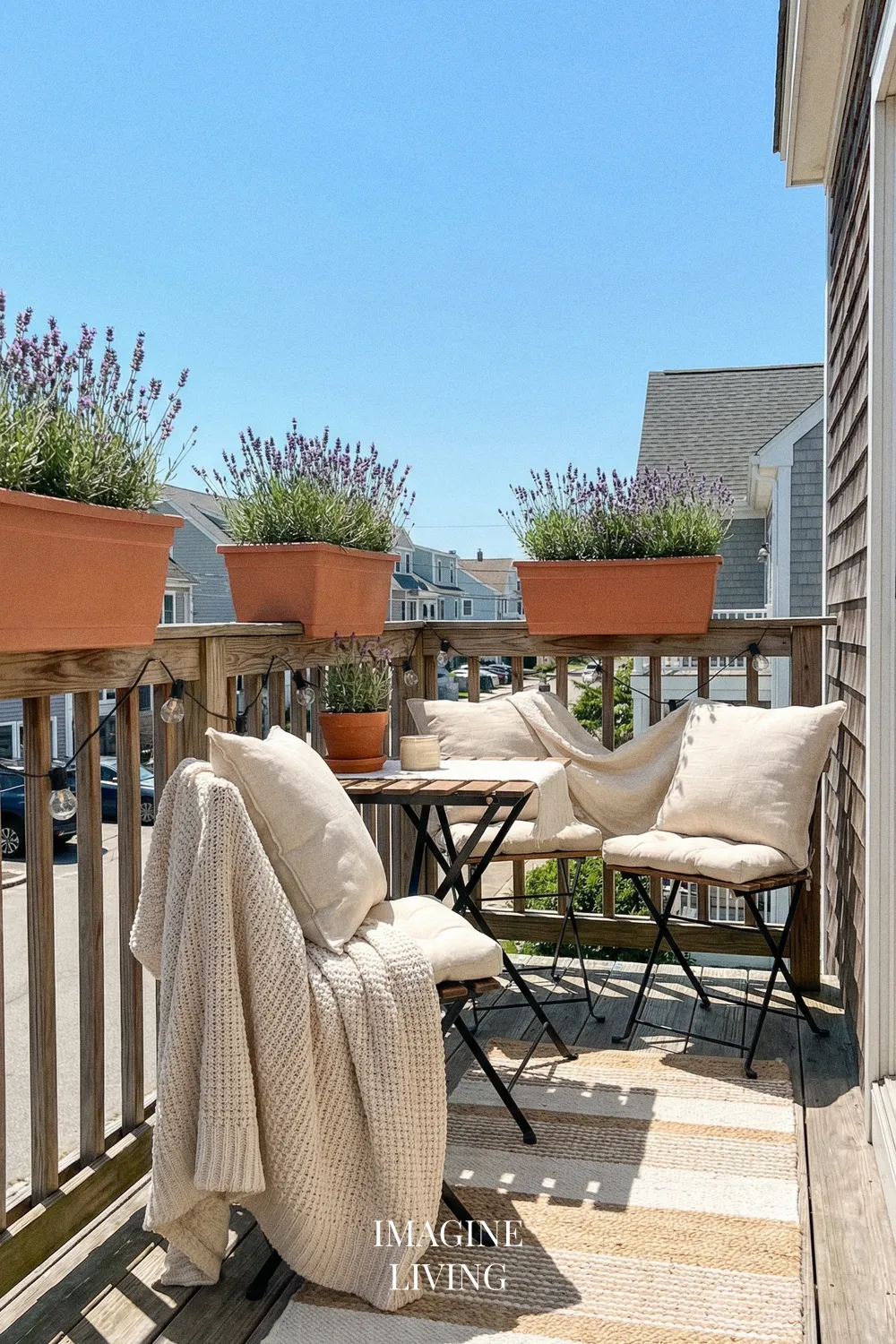
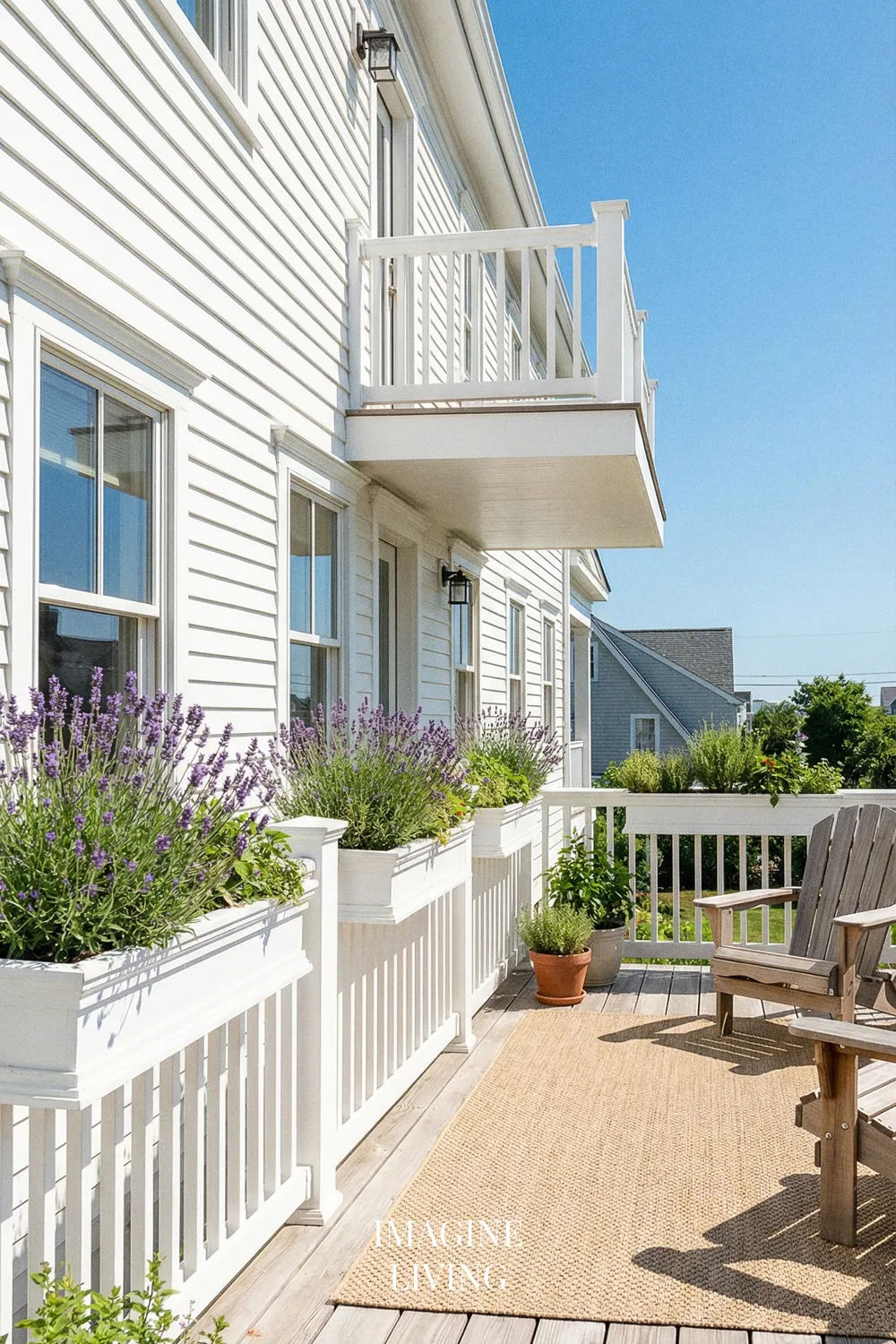
Lavender in Balcony Boxes and Deck Rail Planters
Lavender in railing planters or balcony boxes is a simple way to bring color to eye level. It makes a small outdoor area feel more generous and more lush, especially when the planting is repeated along the edge of the space. It also works well for decks and porches where ground planting is limited.
One of the best parts of this idea is visual impact. Because the planters sit higher, the flowers are easier to enjoy up close. The fragrance also travels more easily when the plants are lifted closer to seating or doors. It is a compact solution that still feels abundant in summer.
Lavender likes rail planters only if they do not dry out too fast or stay waterlogged. Smaller containers can swing between extremes, so balance is important. Use a fast-draining mix, but do not forget that shallow containers may need more regular checking in peak summer heat.
What lavender dislikes here is crowding. If too many plants are packed into one narrow box, airflow drops and roots compete. Give each plant enough space to develop into a full mound. That makes the display look better and keeps the planting healthier too.
Lavender with Natural Stone and Wood on a Patio
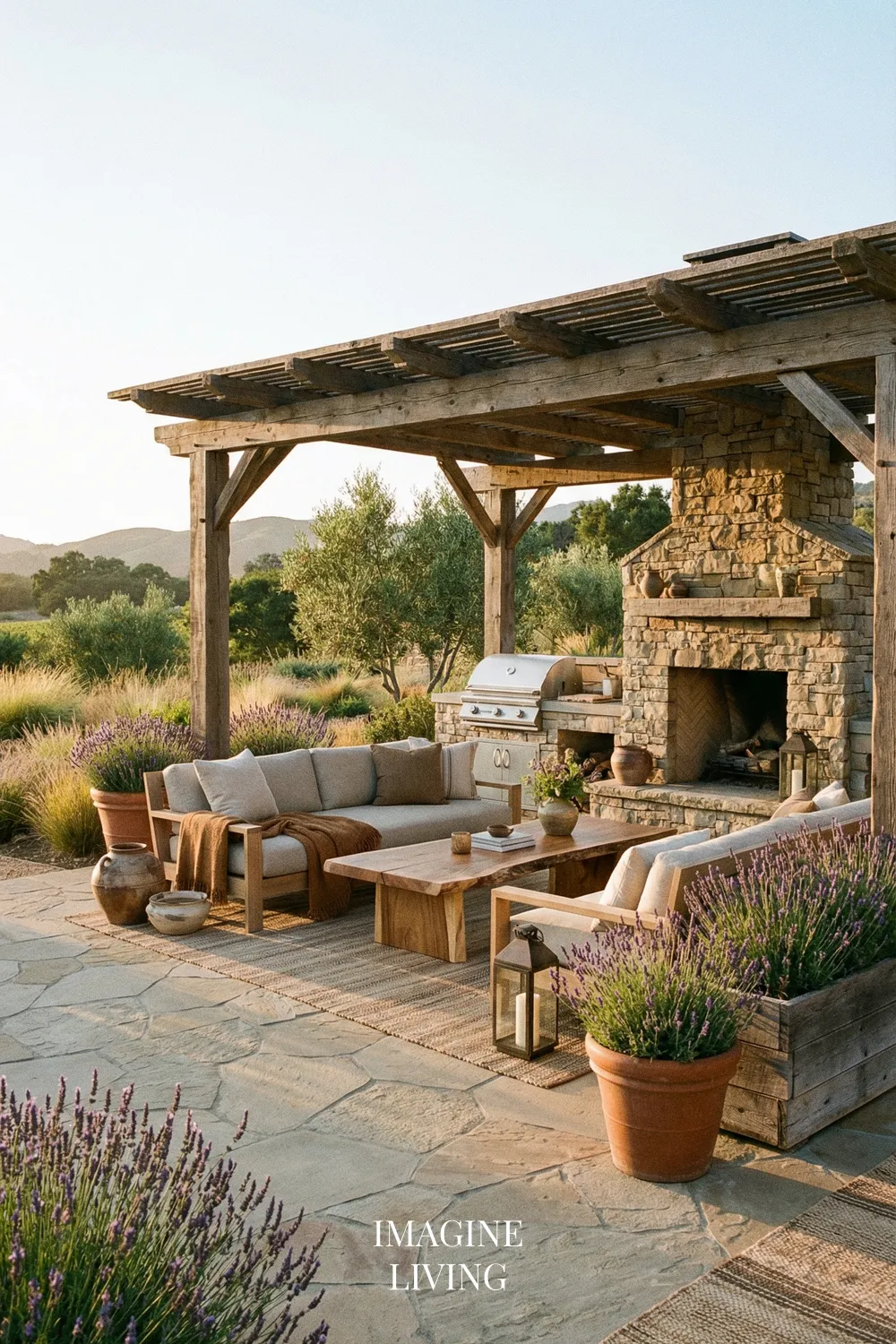
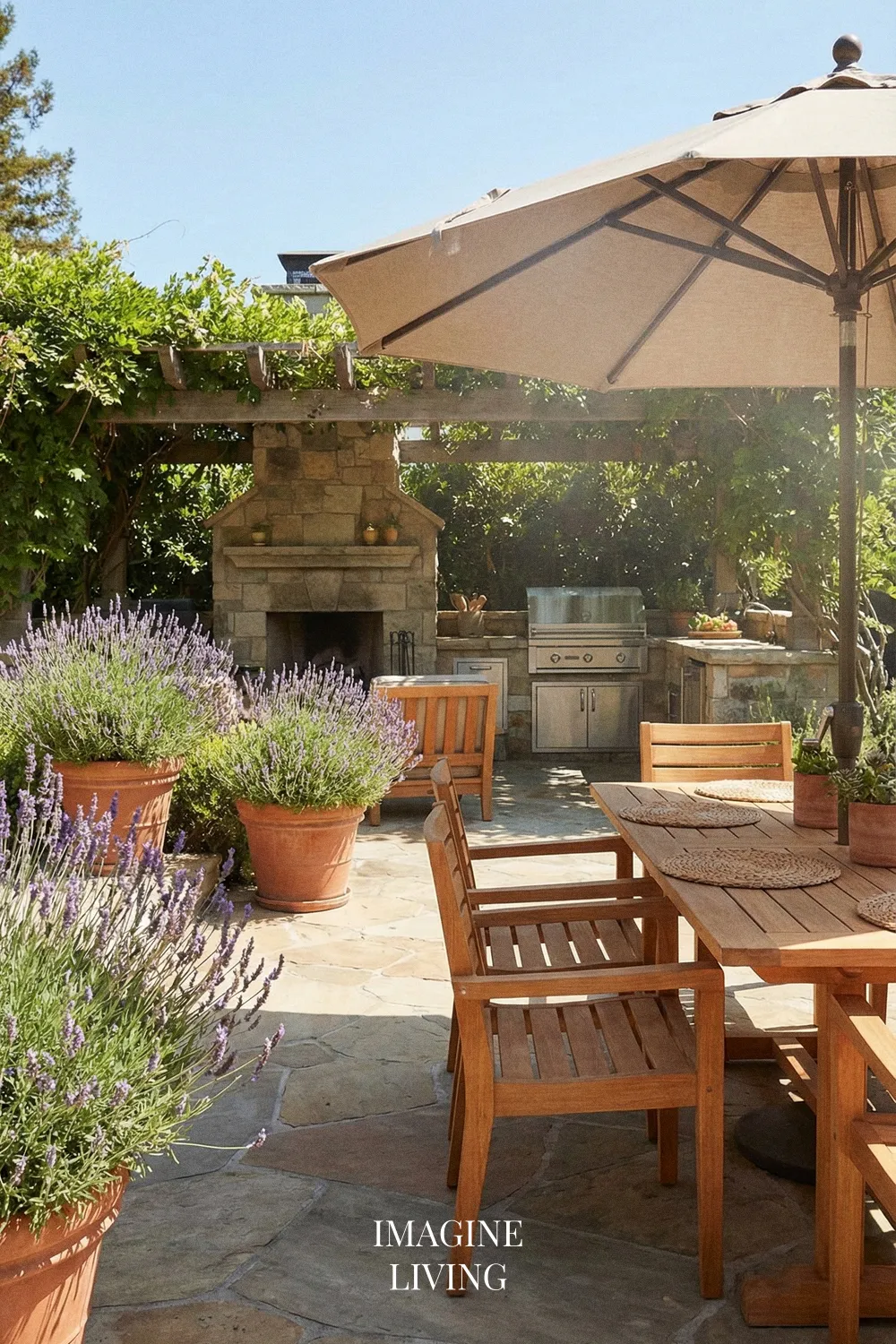
Lavender looks especially beautiful with natural stone and warm wood because all three materials share an organic, grounded quality. Together they create a patio that feels earthy, warm, and relaxed, while still having enough texture and contrast to feel visually rich.
The benefit of this combination is mood. Lavender brings movement and fragrance, stone adds permanence, and wood adds warmth. It is a strong trio for patios that want to feel calm and elevated rather than overly decorated. The plant’s muted foliage also works beautifully with tan, beige, honey, taupe, and weathered wood tones.
Lavender likes being placed where hardscape reflects light and warmth back onto the plant. A sunny patio edge, a corner near stone steps, or grouped pots beside wooden seating can all work well. It dislikes low spots where runoff collects or positions where automatic watering keeps the base consistently damp.
Care is mostly about keeping the roots healthy and the shape neat. If planted near hardscape, make sure there is enough soil depth and drainage. If planted in pots, water deeply, then allow drying time. A light annual pruning helps it stay dense and attractive against those clean natural materials.
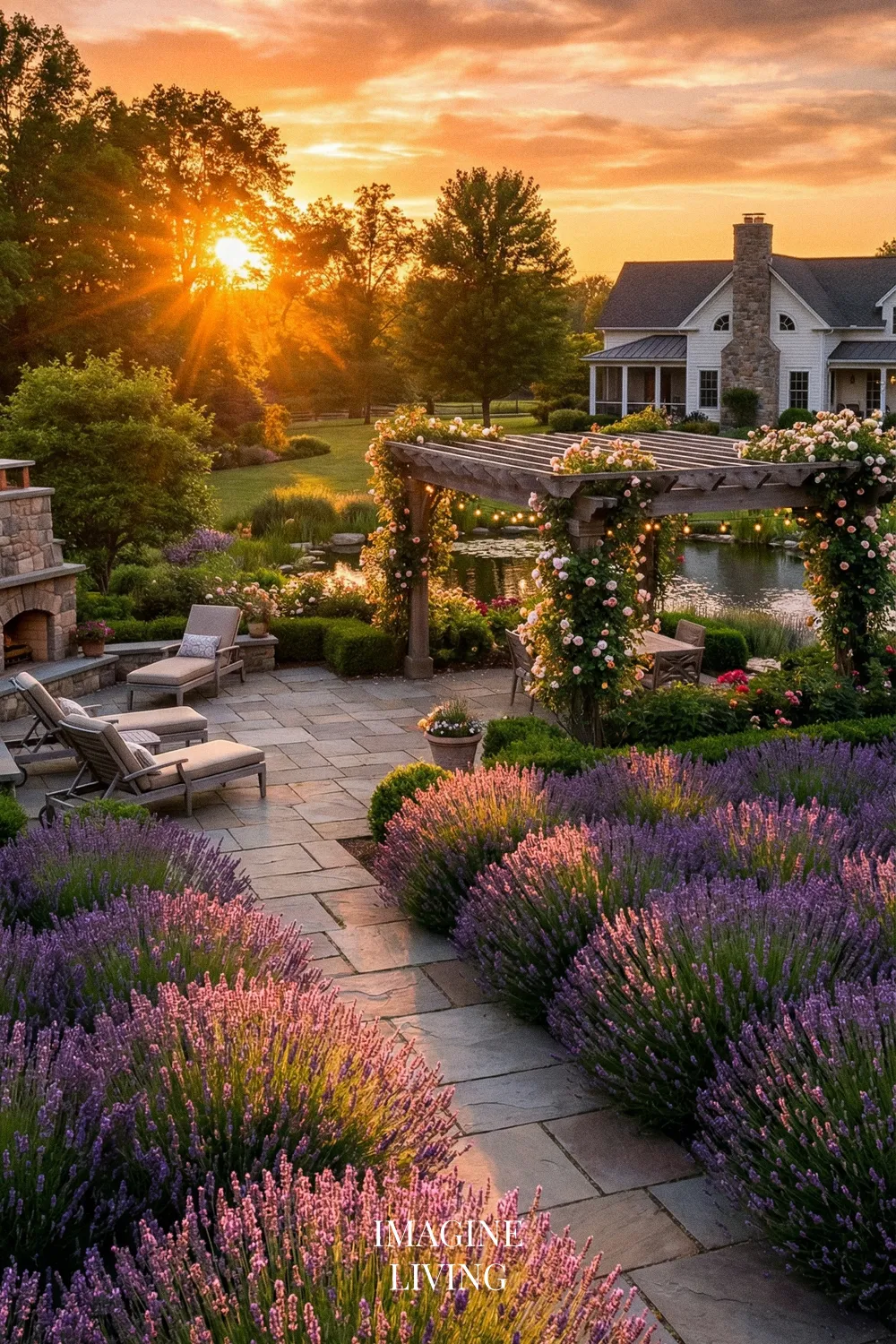
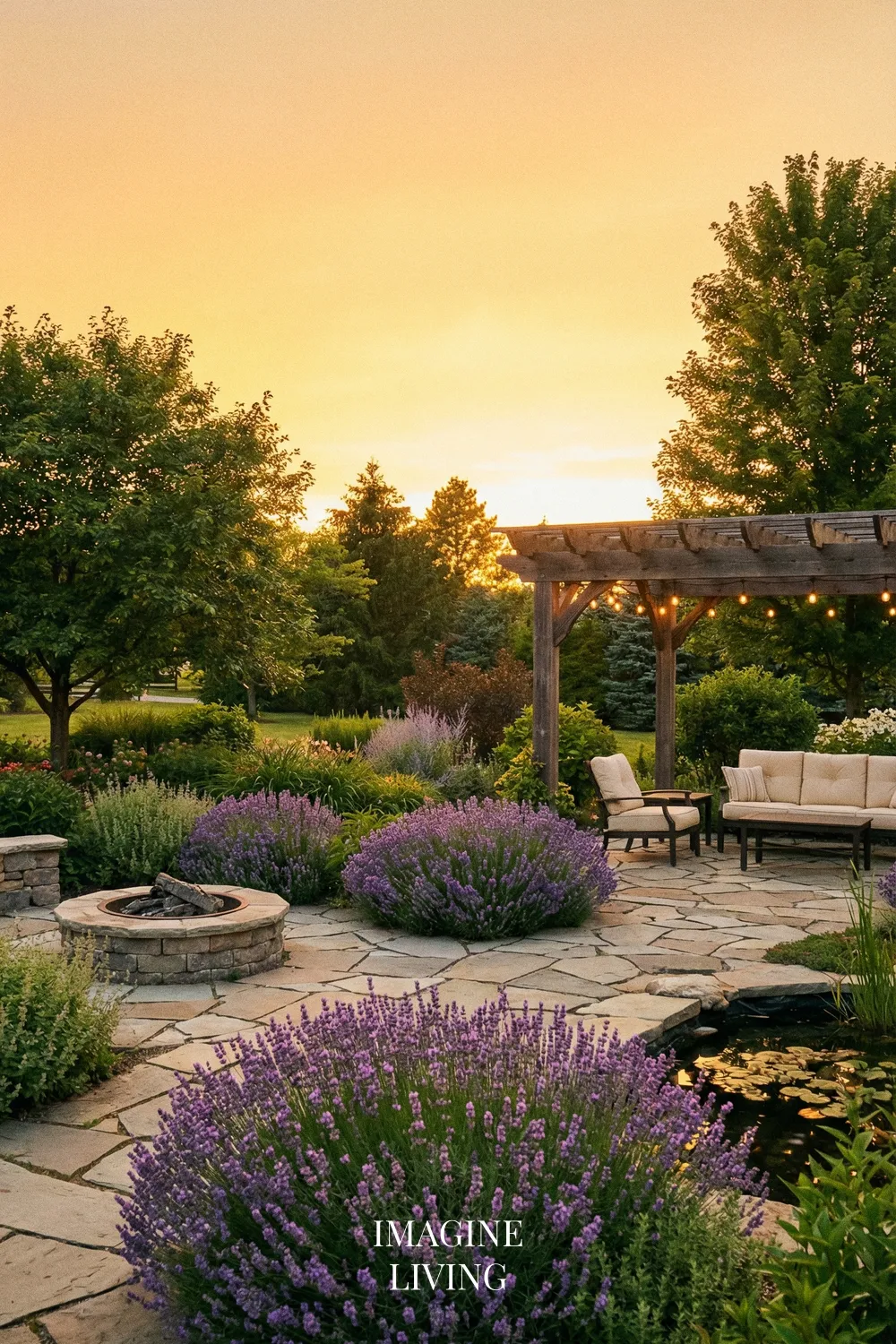
Golden Summer Backyard with Lavender at Sunset
Lavender at sunset may be the most atmospheric version of all. The flowers catch the warm light beautifully, and the entire garden seems softer and more cinematic in the evening. It is a lovely reminder that lavender is not just practical or easy to style. It also creates a feeling.
One of its biggest strengths in a summer backyard is the way it changes through the day. In the afternoon it feels bright and vivid, and by evening it becomes calmer and more romantic. That makes it ideal for outdoor spaces designed for slow dinners, quiet moments, or relaxed entertaining.
To get this kind of effect, lavender still needs the same essentials it always has: full sun through the day, excellent drainage, and a relatively dry root zone. It may look dreamy at sunset, but it is still a sun-loving Mediterranean plant at heart. It dislikes wet feet, deep shade, and overly rich soil no matter how beautiful the styling around it may be.
If you care for it well, lavender becomes one of those plants that gives back more than expected. It offers fragrance, pollinator appeal, low-water beauty, and a kind of effortless seasonal elegance that works across front yards, patios, terraces, balconies, and backyards alike.
Lavender may come from the Mediterranean, but it feels perfectly at home in all kinds of sunny American outdoor spaces. Give it the light, drainage, and restraint it loves, and it will return the favor with one of summer’s most beautiful displays.
Lavender brings a rare mix of beauty and ease to outdoor spaces. It adds color, fragrance, and a relaxed summer feeling while asking for very little in return when planted in the right spot. Whether you use it along a front path, in terrace planters, or on a small balcony, it has a way of making the space feel brighter, calmer, and more inviting. With plenty of sun, well-drained soil, and a light hand with watering, lavender can become one of the most rewarding plants in your outdoor setting. I hope these ideas inspired you to bring a little more lavender into your garden, balcony, or terrace this season.