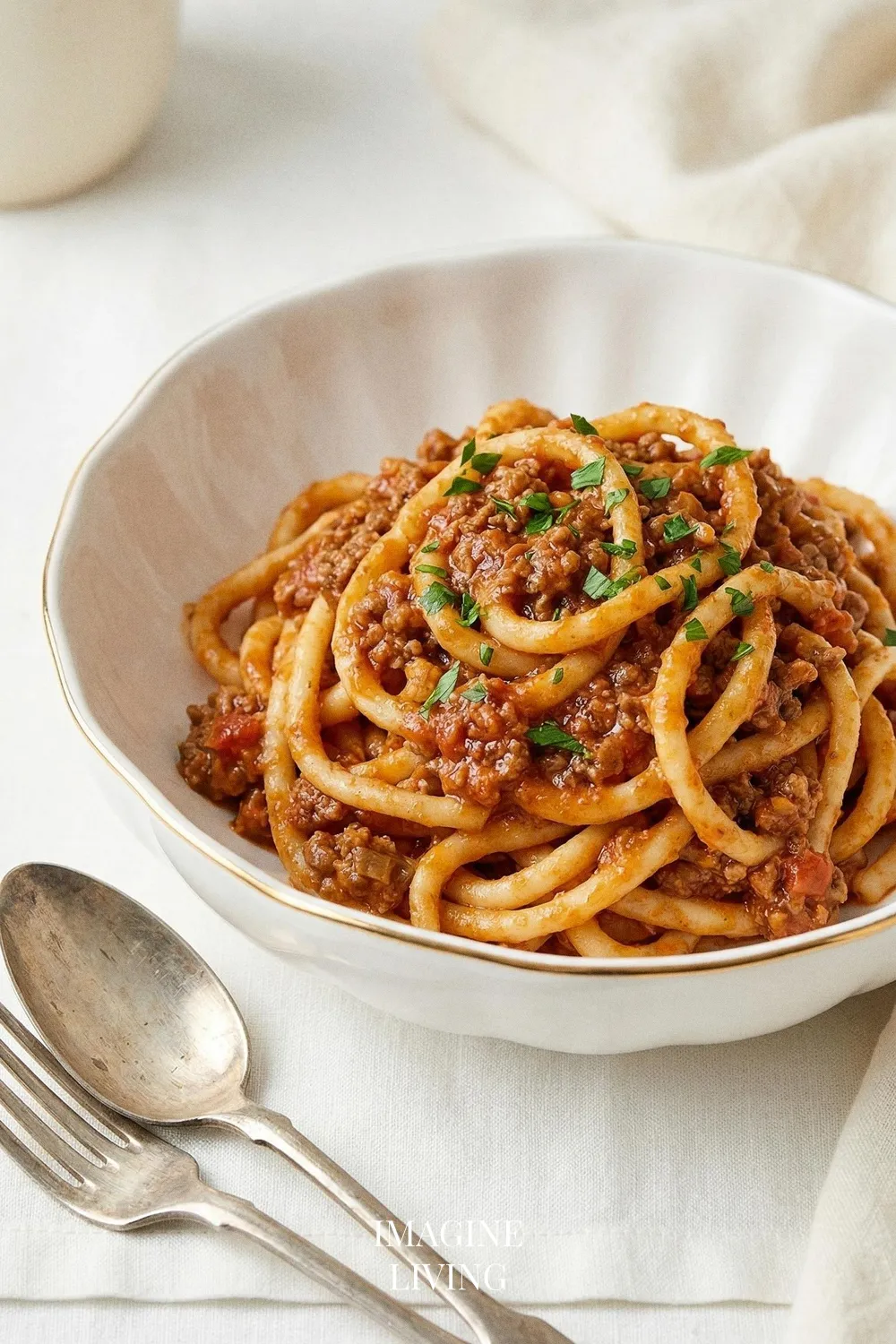
Tuscan Pici with Meat Ragù
A bowl of Tuscan Pici with Meat Ragù always feels grounding—the steam rising with that mix of tomatoes, wine, and herbs has a way of settling you right where you are. As the pasta softens under your hands, there’s a small kind of calm in the rhythm. And if homemade pasta sounds ambitious, it’s the kind of task that rewards you quickly. Besides, a little flour on the counter never hurt anyone.
Why You’ll Love This Recipe
This recipe highlights the beauty of simplicity, allowing high-quality ingredients to shine. With just a few fresh components, you can create a meal that feels luxurious yet comforting.
- Handmade pici pasta provides a delightful chewiness.
- The ragù is rich and hearty, flavored with aromatic herbs and a hint of red wine.
- Perfect for family gatherings or impressing guests on a special occasion.
- A satisfying dish that invites seconds (or thirds)!
“Bold ragù, chewy pici, and all the warmth of the Italian countryside.” Imagine Living
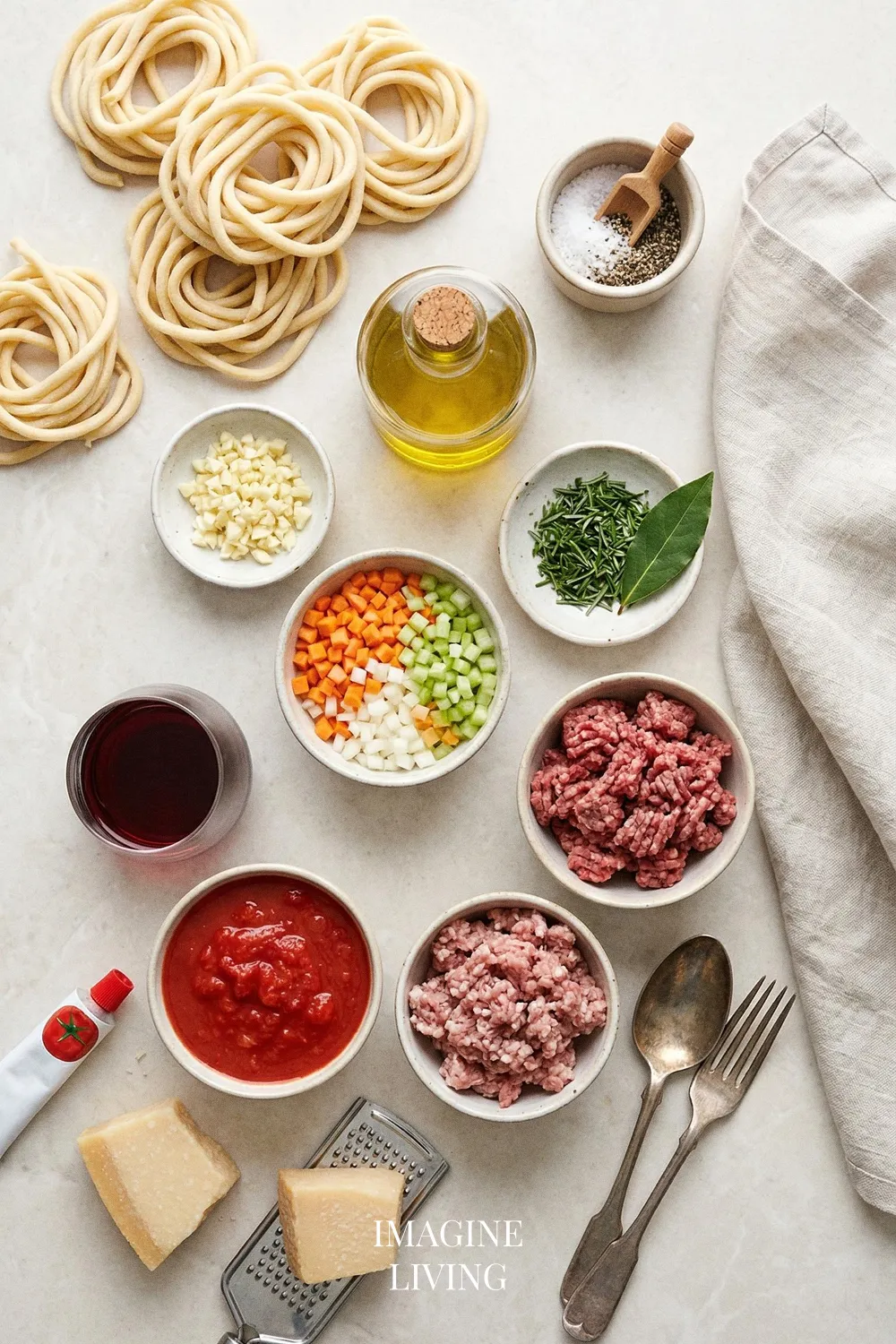
Ingredients: Homemade Pici Pasta and Rich Meat Ragù
Servings: 6
For the Pici
- 4 cups all-purpose flour (500 g), plus more for dusting
- 1/2 cup plus 1 tsp water (125 ml)
- 1 large egg
For the Ragù
- 5 tbsp olive oil (75 ml)
- 1 garlic clove, finely chopped
- 1 to 2 carrots, finely chopped (75 g / about 1/2 cup)
- 1 to 2 celery stalks, finely chopped (75 g / about 1/2 cup)
- 1/2 cup finely chopped red or white onion (75 g)
- 1 large sprig rosemary, needles picked and chopped
- 1 bay leaf
- 9 oz ground beef (250 g)
- 9 oz ground pork (250 g)
- 2/3 cup red wine, such as Chianti (150 ml)
- 1 can Italian plum tomatoes, 14 oz (400 g)
- 2 tbsp tomato paste (30 g)
- Optional: Parsley and parmesan for garnish
Options: For a gluten-free version, consider using gluten-free flour.
Equipment Needed
- Large mixing bowl
- Large skillet or saucepan
- Wooden spoon
- Chef’s knife
- Cooking pot for pasta
Step-By-Step Guide: Making Tuscan Pici with Meat Ragù
Before diving in, it helps to know the two main players here: the dough needs a bit of patience, and the ragù appreciates a slow simmer. Both are easier than they look once you settle into the pace.
Prepare the Pici
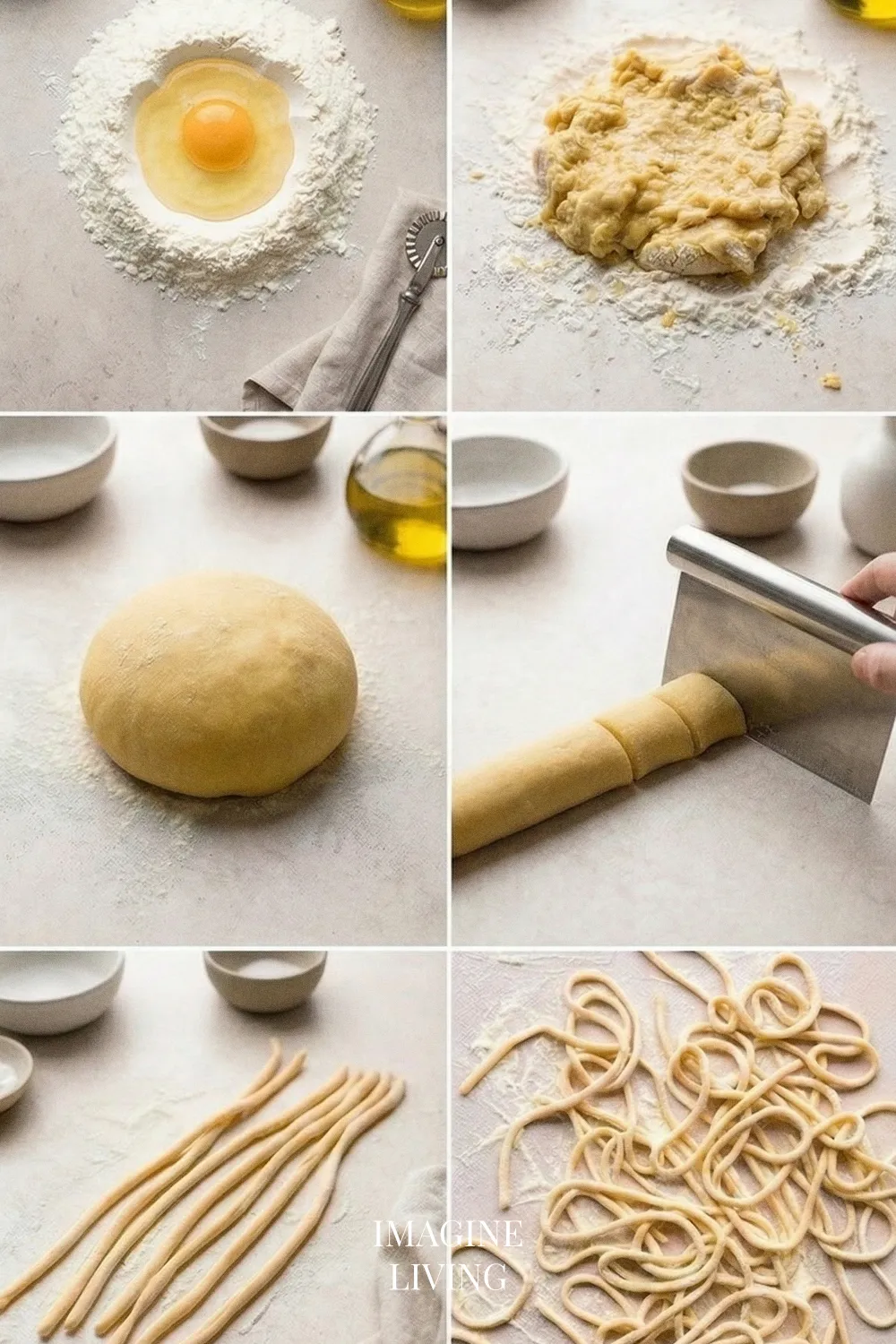
In a large mixing bowl, add the flour and make a well in the center. Crack the egg into the well, then pour in the water. Using a fork, begin mixing the egg and water together, gradually drawing in the flour from the sides until a dough starts to form. It should feel firm yet workable, not sticky.
Transfer the dough to a lightly floured surface and knead for about 5–10 minutes, until smooth and elastic. At first, the dough may seem a little stiff, but keep going—it will gradually relax and come together into a smooth ball. Wrap the dough in plastic wrap and let it rest for at least 30 minutes.
Cook the Ragù
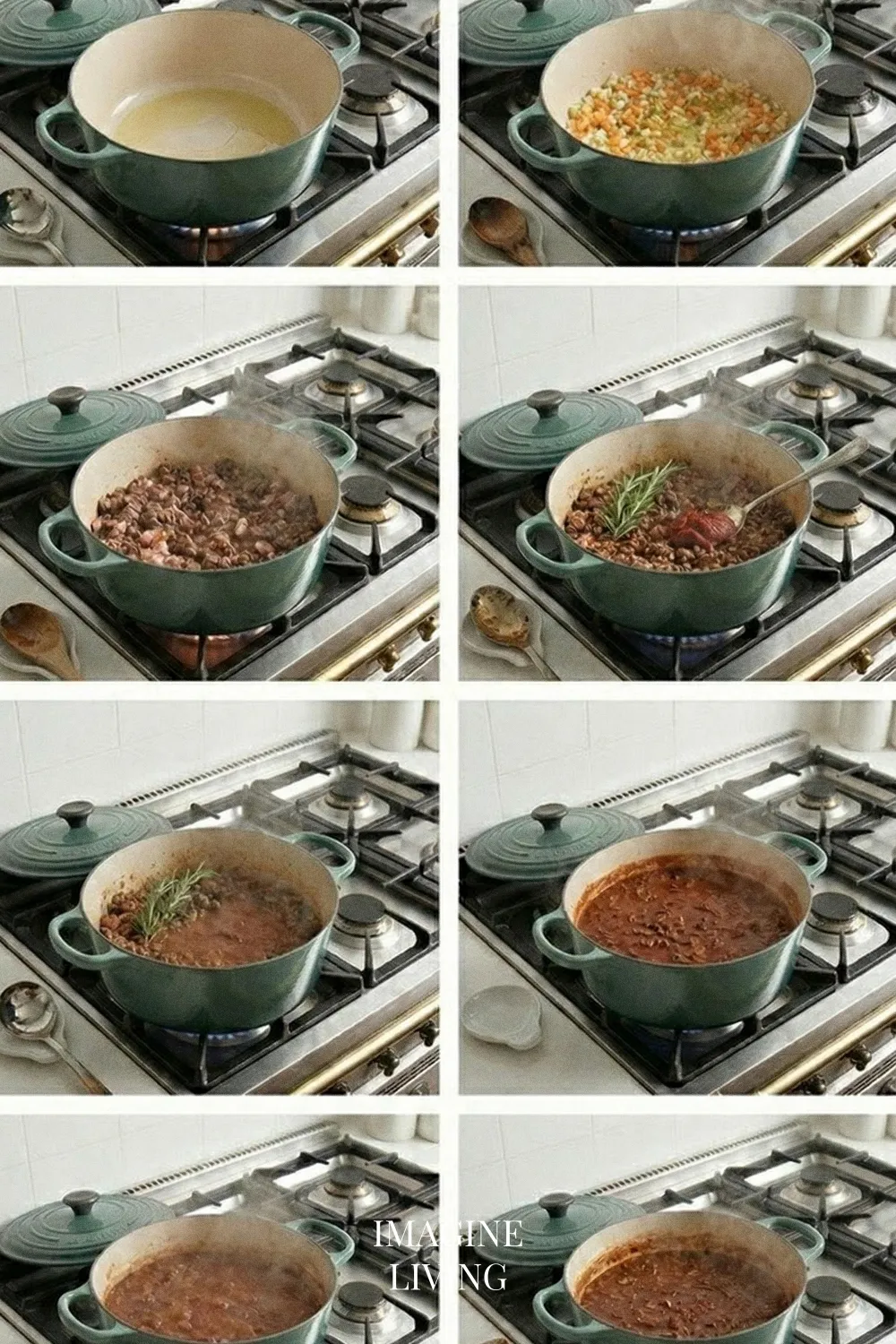
While the dough is resting, heat the olive oil in a large skillet over medium heat. Add the garlic, carrots, celery, and onion, sautéing until they become fragrant and softened, about 5–7 minutes.
Add the chopped rosemary, bay leaf, ground beef, and ground pork. Season with salt and pepper, breaking up the meat with your spoon as it cooks. Brown the meat thoroughly. — The sound shifts when it’s ready; the sizzle gets steadier.
Option note: If using ground turkey instead, cook for approximately the same time or until thoroughly cooked.
Bring it All Together
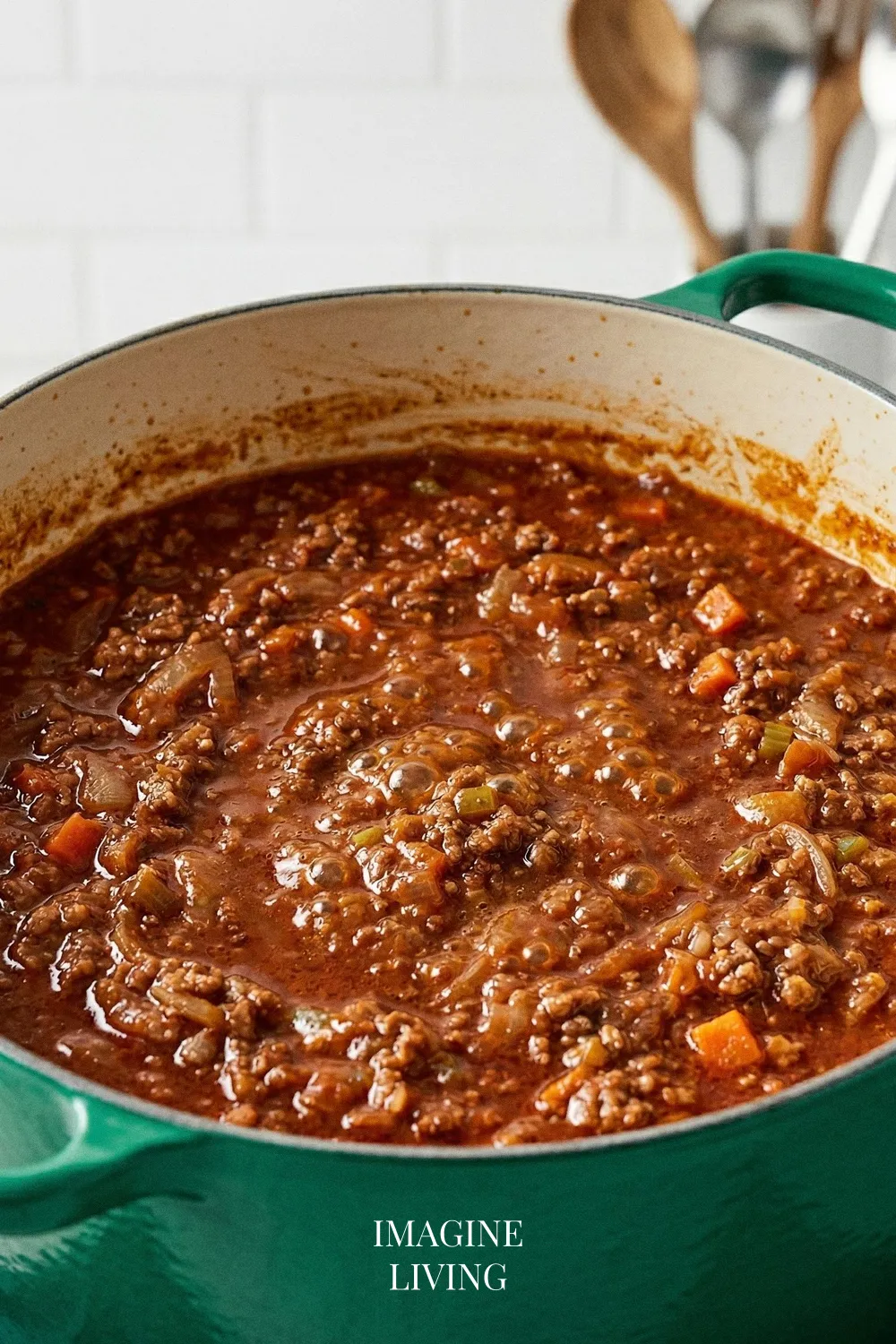
Pour in the Chianti wine, allowing it to simmer for 2–3 minutes until the alcohol cooks off. Stir in the canned tomatoes and tomato paste, mixing well. Bring the ragù to a gentle simmer, cover, and let it cook for about 1 hour, stirring occasionally. — A slow bubble is all it needs; anything more tends to rush things.
Roll Out the Pici
Once rested, divide the pici dough into smaller portions. Roll each piece into long, thin strands, about 1/4 inch thick. Sprinkle with flour to prevent sticking. Bring a large pot of salted water to a boil.
Combine and Serve
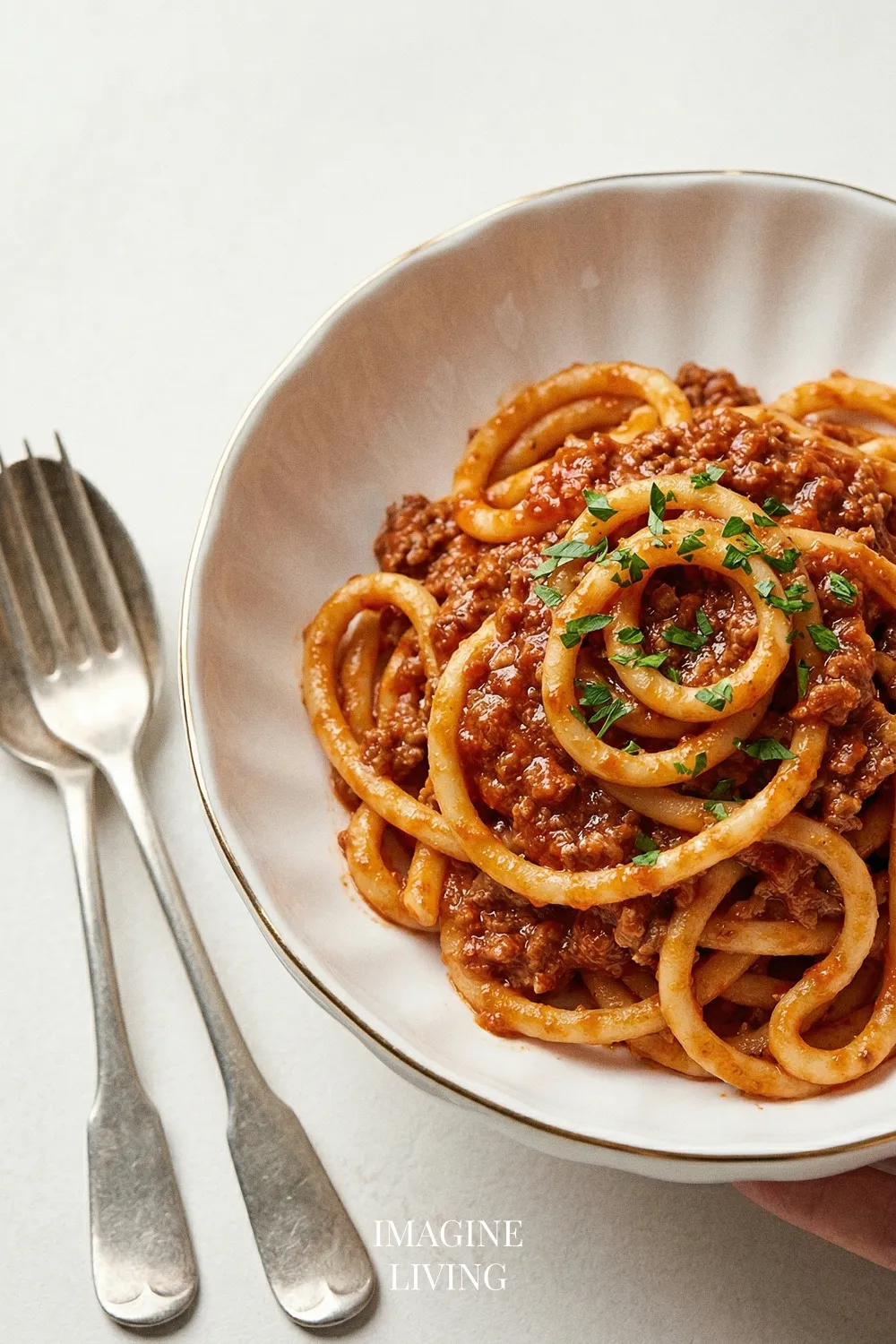
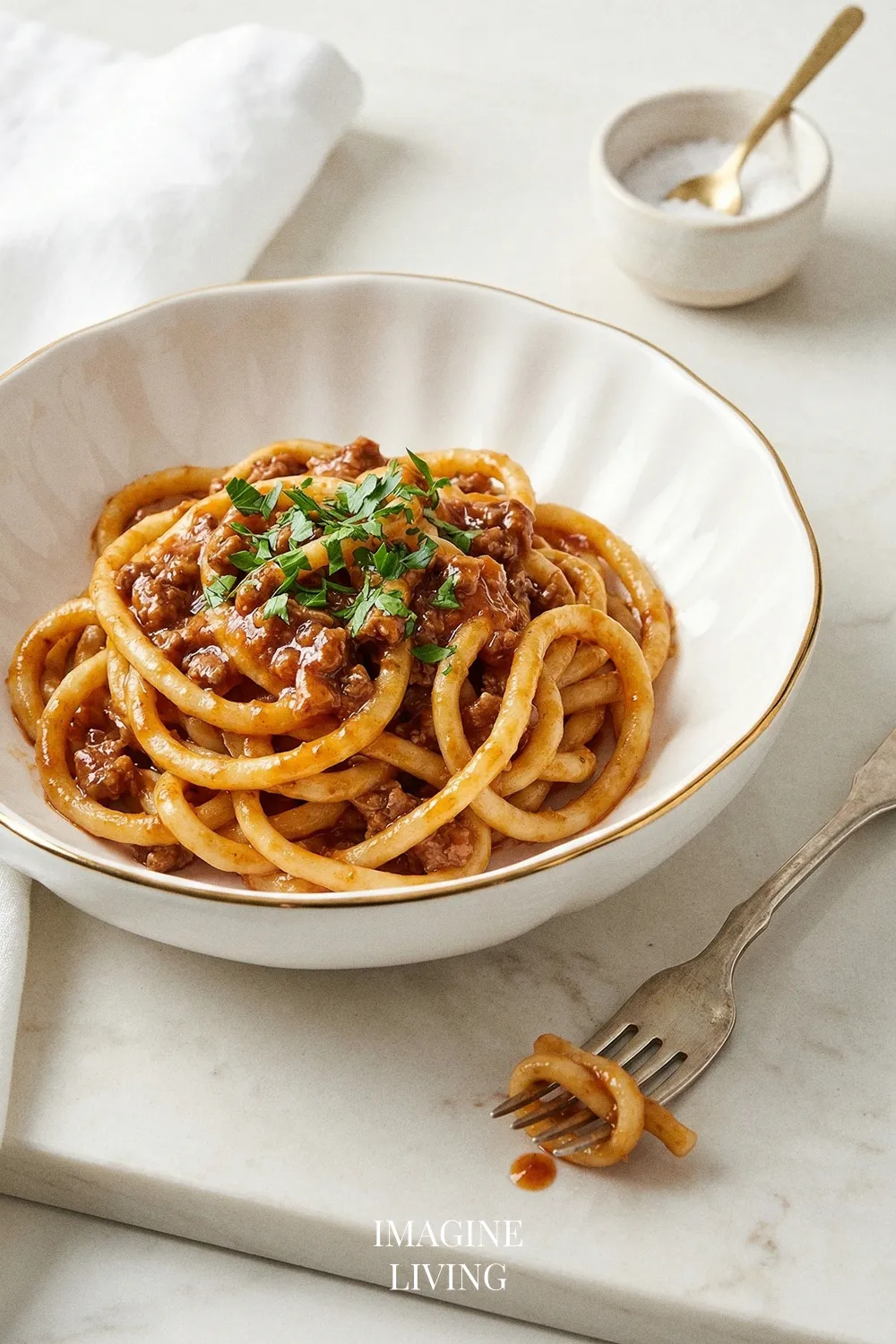
Cook the pici for about 3–4 minutes until they float to the surface. Drain the pasta and add it to the ragù, tossing to combine. Serve hot, garnished with fresh parsley and grated parmesan.
Tip: Save some pasta water to adjust the consistency of the ragù if needed.
Pro Tips for Tuscan Pici with Meat Ragù
A few small habits can make this dish feel even more effortless.
- Use high-quality olive oil for a deeper flavor in the ragù.
- Allow the ragù to simmer longer if you have time; the flavors deepen with patience.
- For a richer taste, substitute part of the ground meat with pancetta.
- Fresh herbs can brighten the dish; consider adding basil or parsley.
- Don’t be afraid to experiment with different wines.
— Just one bottle usually ends up doing double duty.
Dietary Variations & Substitutions
Gluten-Free Version
- Substitute all-purpose flour with a gluten-free all-purpose flour blend, using the same weight (500 g).
- Mix the dough just until combined; avoid overworking to maintain a tender texture.
- Cook the pici for about 4–5 minutes, as gluten-free pasta may take slightly longer.
Tip: Ensure your workplace is free of gluten cross-contamination.
Dairy-Free
- Omit parmesan cheese or use a dairy-free cheese alternative for garnish.
- Consider using a plant-based butter in place of any added fats if desired.
- Ensure that any optional ingredients, like cream in the creamy edition, are also dairy-free.
Tip: Nutritional yeast can add a cheesy flavor without dairy.
Egg-Free / Vegan
- Replace the egg in the pici dough with a flax egg (1 tbsp ground flaxseed mixed with 2.5 tbsp water, let sit for 5 minutes).
- Use a vegan meat substitute or lentils for the ragù in place of ground beef and pork.
- Adjust cooking times as needed; vegan options may cook faster.
Tip: Add extra herbs or spices to enhance flavor in the absence of meat.
Low-Sugar
- This dish is naturally low in sugars, but ensure any store-bought canned tomatoes have no added sugars.
- You can reduce any optional garnishes with sugar, like sweetened dressings or sauces.
Tip: Fresh herbs can add flavor without the need for added sugars.
Vegetarian Version
- Replace the meat in the ragù with a mix of sautéed mushrooms and lentils or a cooked plant-based ground meat.
- Consider adding more vegetables, such as bell peppers or zucchini, for extra flavor and texture.
- Simmer the ragù as you would with meat until flavors meld.
Tip: Add a splash of balsamic vinegar for depth of flavor when using vegetables.
Creative Variations: Elevating Your Pici and Ragù
Spicy Sausage Twist
Incorporate Italian sausage into the ragù for an added spice kick.
Tip: Remove the casing before cooking for a better texture.
Vegetarian Delight
Swap out the meat for sautéed mushrooms and lentils for a hearty vegetarian option.
Tip: Enhance the flavors with culinary herbs like thyme or oregano.
Seafood Fusion
Add shrimp or scallops to the ragù to celebrate the sea.
Tip: Cook seafood separately and add just before serving to avoid overcooking.
Creamy Edition
Stir in a splash of cream at the end for a luxurious, velvety texture.
Tip: Use heavy cream for richness or half-and-half for a lighter version.
Autumn Harvest
Add roasted butternut squash and sage into the ragù for a seasonal touch.
Tip: Roast the squash until caramelized to maximize sweetness.
Serving Suggestions
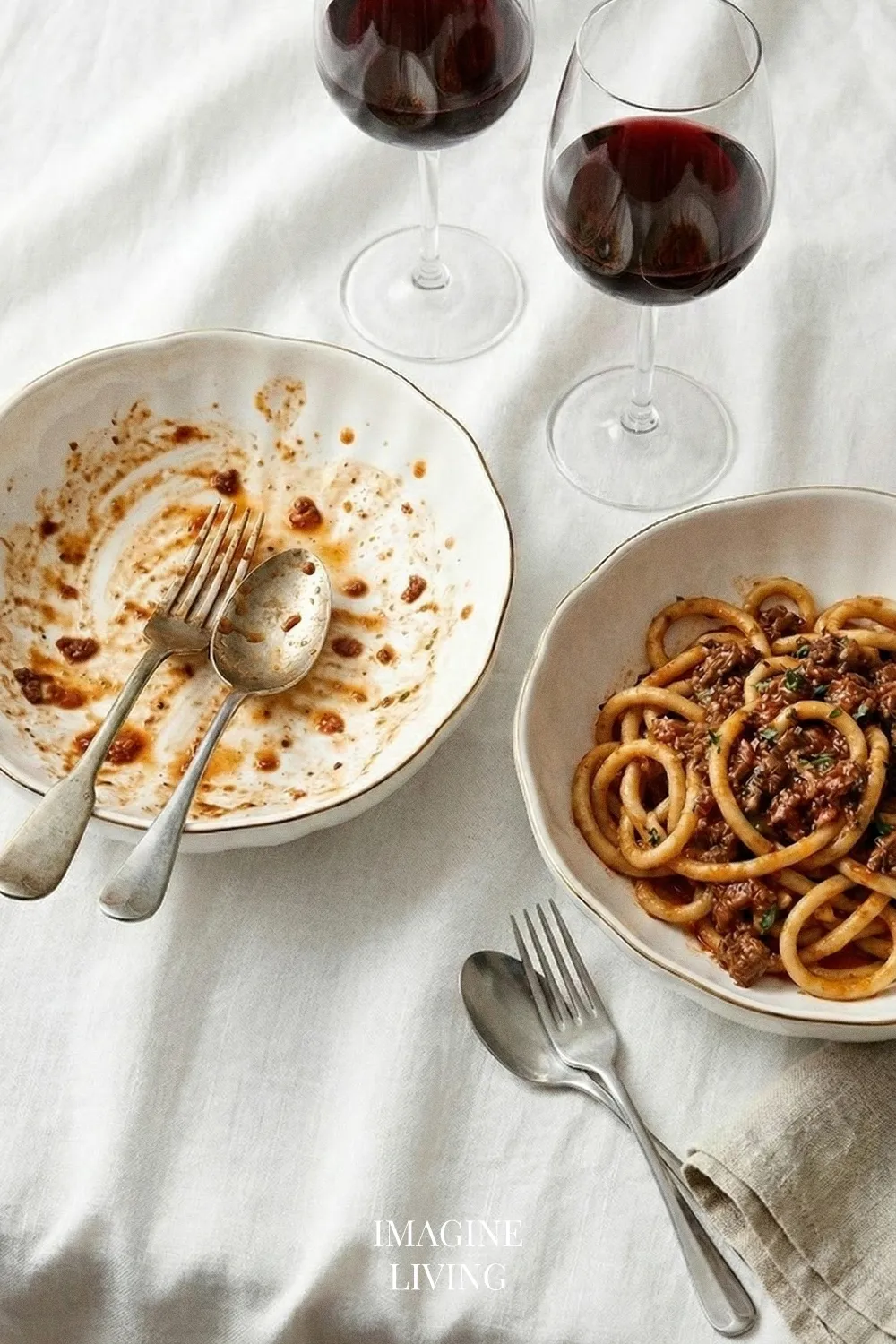
Pair this dish with a simple arugula salad dressed with lemon and olive oil, or serve alongside crusty bread for dipping into the ragù. A bold Chianti complements the flavors beautifully.
Storage and Reheating
Leftover ragù can be stored in an airtight container in the refrigerator for up to three days. Reheat on the stovetop over low heat, adding a splash of water or additional wine as needed to loosen the sauce. The pici is best enjoyed fresh, but you can refrigerate the uncooked dough for a day before rolling again.
Common Mistakes to Avoid
A few gentle reminders make the process smoother, especially the first time through.
Overworking the Dough
Excessive kneading can lead to tough pasta. Aim for a gentle touch.
Tip: Let the dough rest for a better texture.
Not Seasoning the Ragù
Neglecting to season adequately will lead to bland flavors. Taste as you go—adjusting early saves trouble later.
Cooking the Pasta Too Long
Pici cooks quickly; keep an eye on it to prevent mushiness.
Tip: Reserve some pasta water for potential adjustments.
Skipping the Wine
The wine deepens the ragù flavor significantly; don’t omit it. A small splash makes a noticeable difference.
Not Allowing the Ragù to Simmer
Rushing the cooking time can result in an unbalanced flavor profile.
Tip: A longer, slow simmer allows ingredients to meld beautifully.
FAQs
Can I make pici pasta ahead of time?
Yes, you can prepare the pici dough and store it wrapped in plastic for up to a day in the refrigerator.
Is this dish suitable for freezing?
Absolutely! The ragù freezes beautifully. Just thaw in the refrigerator overnight and reheat when ready to serve.
Can I use gluten-free flour for pici?
Yes, though the texture and taste may differ, a good quality gluten-free flour blend can work well.
What type of wine should I use for the ragù?
A medium-bodied red wine, like Chianti or Sangiovese, adds depth to the sauce.
What herbs pair well with this dish?
Rosemary and parsley complement the ragù perfectly, adding fresh notes to every bite.
Savoring the Taste of Tuscany
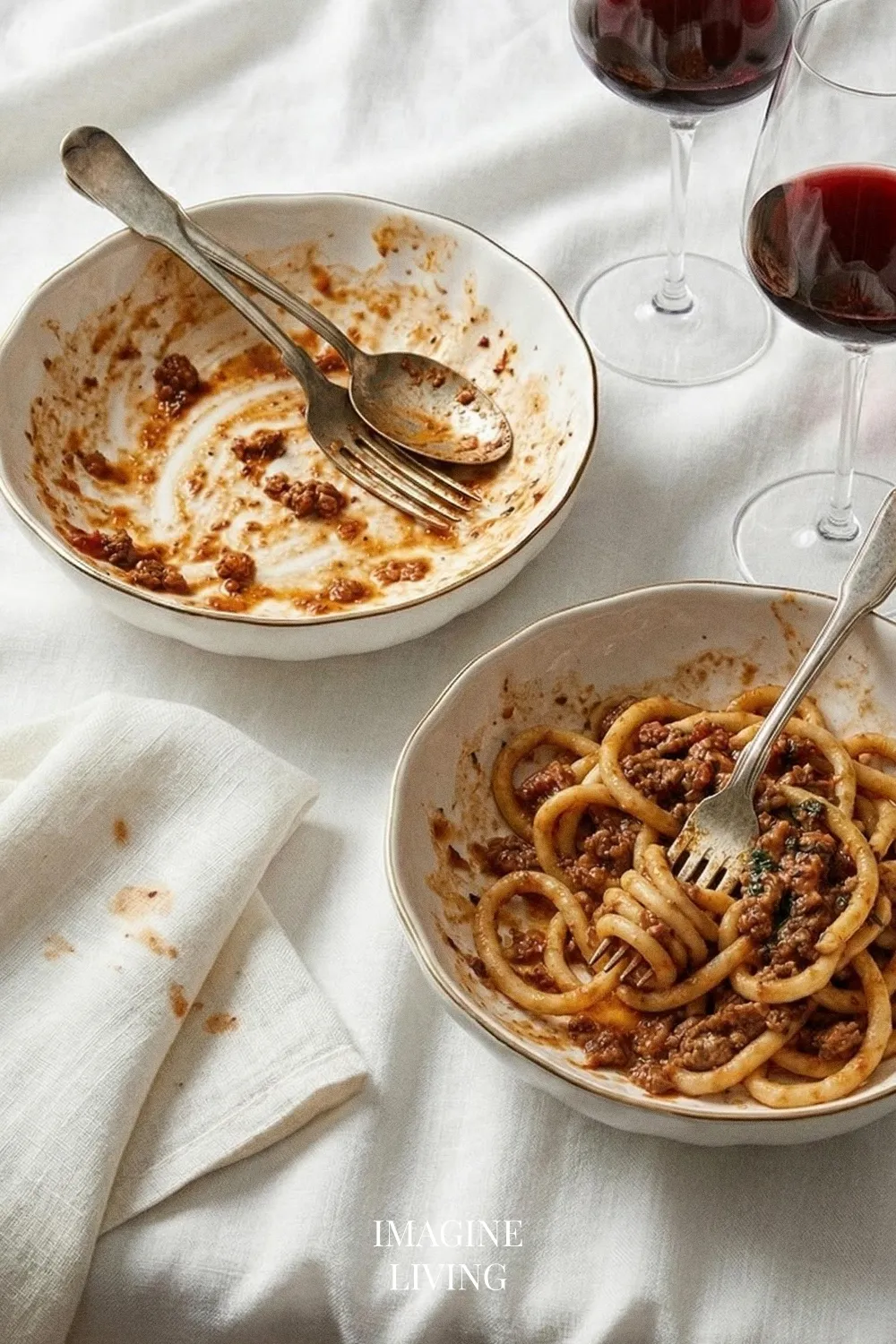
When everything comes together on the plate, it has that quiet, satisfying feel of a dish you made with your hands and a bit of patience. No hurry, no rush—just good food, cooked simply and enjoyed while it’s still warm.
Tuscan Pici with Meat Ragù
Equipment
- Large mixing bowl
- Large skillet or saucepan
- Wooden spoon
- Chef’s knife
- Cooking pot for pasta
Ingredients
For the Pici
- 4 cups all-purpose flour plus more for dusting
- 1/2 cup water plus 1 teaspoon
- 1 large egg
For the Ragù
- 5 tbsp olive oil
- 1 clove garlic finely chopped
- 1–2 carrots 75 g, finely chopped
- 1–2 stalks celery 75 g, finely chopped
- 1/2 cup red or white onion 75 g, finely chopped
- 1 large sprig rosemary needles picked and chopped
- 1 bay leaf
- 9 oz ground beef 250 g
- 9 oz ground pork 250 g
- 2/3 cup red wine 150 ml, (Chianti)
- 1 can Italian plum tomatoes 400 g
- 2 tbsp tomato paste 30 g
- Parsley, for garnish optional
- Parmesan, for garnish optional
Instructions
Prepare the Pici
- In a large mixing bowl, combine the flour and make a well in the center. Crack the egg into the well and pour in the water. Using a fork, begin mixing the egg and water together, gradually incorporating the flour from the sides until the dough starts to form. It should be soft but not sticky.
- Knead the dough on a lightly floured surface for about 5–10 minutes, until smooth and elastic. Wrap the dough in plastic wrap and let it rest for at least 30 minutes.
Cook the Ragù
- While the dough is resting, heat the olive oil in a large skillet over medium heat. Add the garlic, carrots, celery, and onion, sautéing until they become fragrant and softened, about 5–7 minutes.
- Add the chopped rosemary, bay leaf, ground beef, and ground pork. Season with salt and pepper, breaking up the meat with your spoon as it cooks. Brown the meat thoroughly.
Bring it All Together
- Pour in the Chianti wine, allowing it to simmer for 2–3 minutes until the alcohol cooks off. Stir in the canned tomatoes and tomato paste, mixing well. Bring the ragù to a gentle simmer, cover, and let it cook for about 1 hour, stirring occasionally.
Roll Out the Pici
- Once rested, divide the pici dough into smaller portions. Roll each piece into long, thin strands, about 1/4 inch thick. Sprinkle with flour to prevent sticking. Bring a large pot of salted water to a boil.
Combine and Serve
- Cook the pici for about 3–4 minutes until they float to the surface. Drain the pasta and add it to the ragù, tossing to combine. Serve hot, garnished with fresh parsley and grated parmesan.
- Tip: Save some pasta water to adjust the consistency of the ragù if needed.