Classic French Omelette Recipe You’ll Adore
A French omelette has this quiet softness to it—warm eggs meeting melted butter in a way that always feels grounding. As it cooks, there’s a gentle steam that lifts for a second when you tilt the pan. I make this when I want something simple that still feels cared for, and it’s nice to remember that a dish this elegant is really just a few minutes of paying attention. There’s a calm kind of fun in that.
Why You’ll Love This Recipe
A classic French omelette is quick and versatile, perfect for a light breakfast or an elegant brunch. Here are a few reasons to enjoy it:
- Minimal ingredients create maximum flavor.
- The creaminess is unmatched, offering a delightful bite.
- Quick to prepare, it takes less than 10 minutes to make.
- Extremely versatile; you can customize it with your favorite fillings.
This dish is a great canvas for various ingredients, allowing you to get creative based on what you have in your pantry or fridge.
“Butter, eggs, gentle heat, and love—nothing more.” Imagine Living

Ingredients: Classic French Omelette Recipe
Servings: 2
For the Omelette:
- 4 large eggs (about 240g)
- 1 tablespoon unsalted butter (14g)
- Salt and freshly ground black pepper, to taste
Optional Garnish:
- Fresh chives, finely chopped
Options: You can use dairy-free butter for a dairy-free option or add chopped vegetables for extra nutrition.
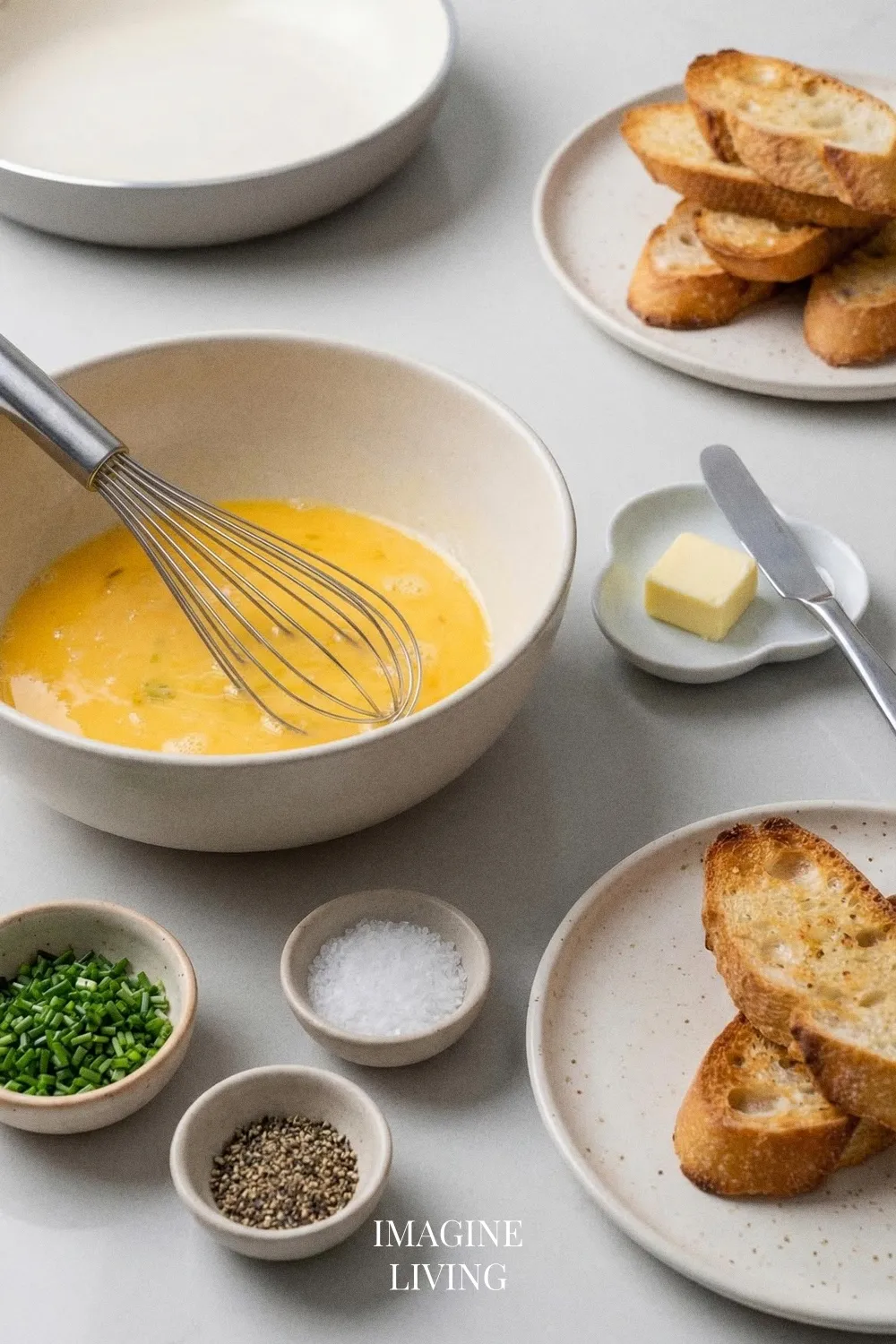
Equipment Needed
- Mixing bowl
- Whisk or fork
- Non-stick skillet
- Spatula
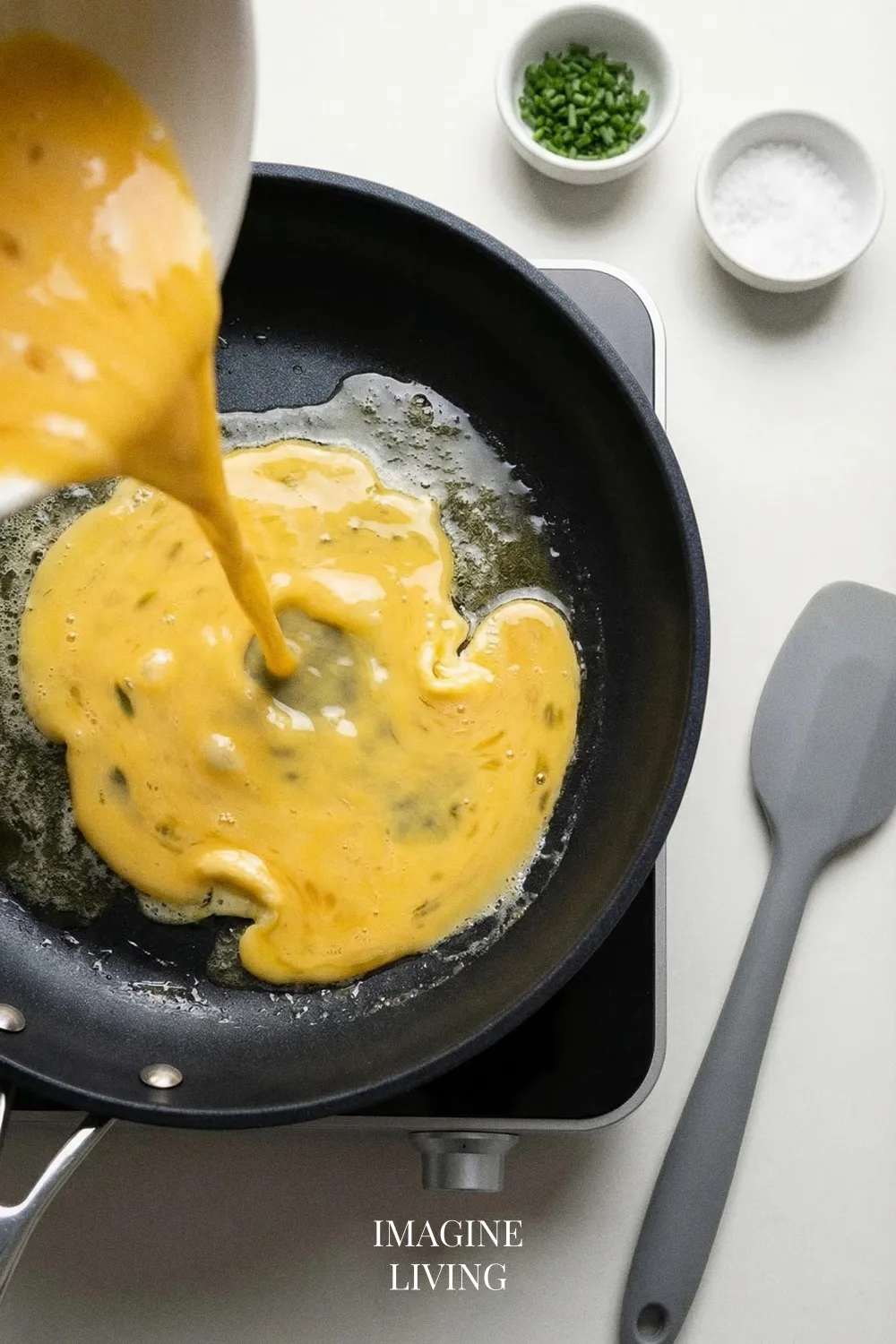
Step-By-Step Guide: How to Make a Classic French Omelette
A French omelette is mostly about timing and heat, and the good news is that both are easier to feel out than they look at first glance.
Step 1: Beat the Eggs
In a mixing bowl, crack the eggs and season them with salt and pepper. Whisk vigorously until the yolks and whites are fully combined, resulting in a foamy mixture. The more air you incorporate, the lighter your omelette will be.
Tip: Use room temperature eggs for a fluffier texture.
—The mixture will look just a little lighter when it’s ready.
Step 2: Melt the Butter
Place a non-stick skillet over medium heat and add the butter. Let it melt gently, tilting the pan to ensure it coats the surface evenly without browning.
Tip: The butter should sizzle slightly but never burn for the perfect result.
Step 3: Cook the Eggs
Pour the beaten eggs into the skillet. Allow them to sit undisturbed for a few seconds until they begin to set at the edges.
—There’s always that moment when the edges go glossy, and you know it’s time to move.
Step 4: Stir and Fold
With a spatula, gently stir the eggs from the edges to the center, creating soft curds. As the omelette starts to firm up, reduce the heat and continue to stir lightly, making sure to leave some uncooked egg on top.
Tip: Aim for a slightly runny center for a creamy texture.
Option note: If using vegetables, ensure they are chopped finely for even cooking.
Step 5: Finish and Serve
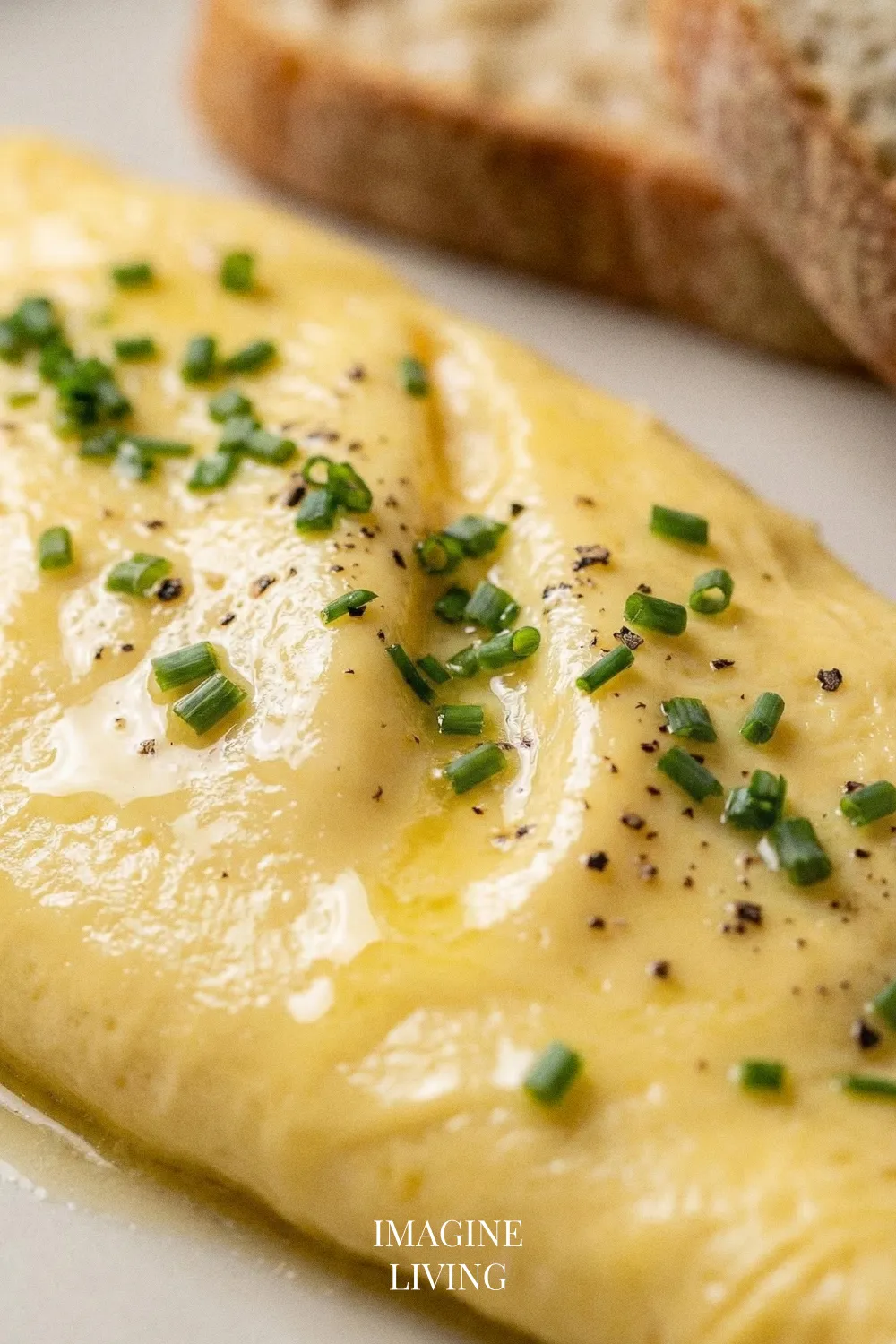
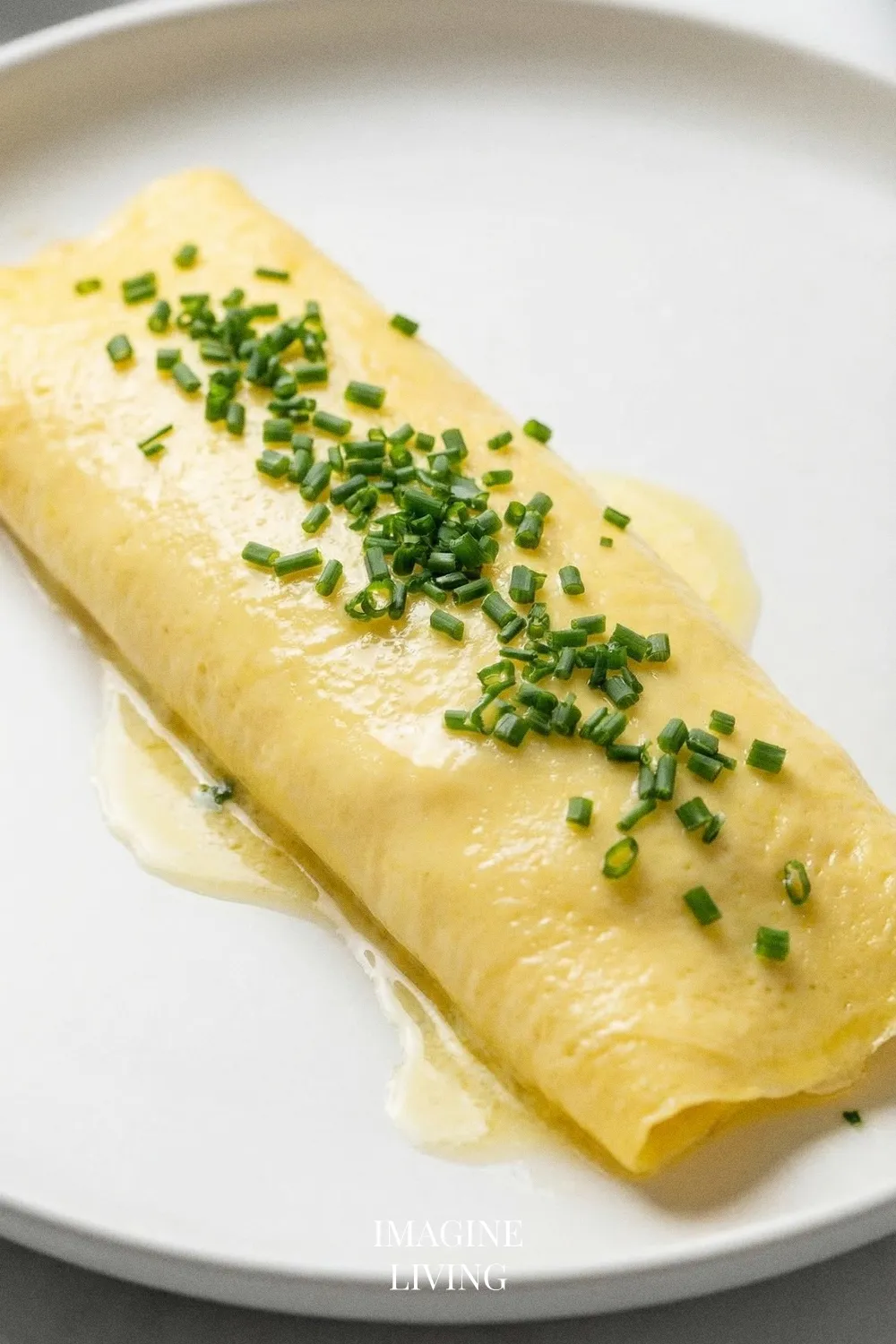
Once the outer edges are set but the central part remains soft, it’s time to fold! Gently fold the omelette in half and slide it onto a plate. Garnish with finely chopped chives for a pop of color and flavor.
This video is here as an extra source of inspiration! While it may not match this exact recipe, it offers helpful techniques, ideas, or visual guidance to enhance your cooking experience.
Pro Tips for Classic French Omelette
Here are a few small habits that tend to make the pan feel more cooperative.
- Use fresh eggs for better flavor.
- Keep the heat manageable; too high will cause the omelette to cook unevenly.
- Experiment with fillings like cheese, herbs, or sautéed vegetables, but remember to keep it light!
- Master the folding technique with practice; it takes time to perfect.
One day, the fold just suddenly feels natural.
Dietary Variations & Substitutions
Dairy-Free Version
- Replace unsalted butter with an equal amount of dairy-free butter or olive oil.
- Use a dairy-free cream alternative if you prefer a richer flavor.
- Expect a slight difference in texture; don’t overmix to maintain creaminess.
Tip: A teaspoon of nutritional yeast adds a cheesy flavor without dairy.
Egg-Free / Vegan Version
- Substitute each egg with a mixture of 1/4 cup silken tofu blended until smooth or 1/4 cup chickpea flour mixed with water until smooth.
- Cook on low heat for a more delicate texture and longer cook time (about 8–10 minutes).
Tip: Adding black salt (kala namak) can mimic the flavor of eggs.
Low-Sugar Version
- No direct sugar ingredients are present, making the recipe inherently low-sugar.
- If adding toppings or fillings, choose options that are naturally low in sugar, such as spinach and herbs.
Tip: Use fresh herbs as a flavorful garnish without added sugar.
Gluten-Free Version
- This recipe is naturally gluten-free as it contains no flour or gluten ingredients.
- When adding any fillings, ensure that they are certified gluten-free, particularly processed items.
Tip: Fresh herbs or spices can enhance the flavor without compromising gluten-free requirements.
Creative Variations: Classic French Omelette with a Twist
Herb Omelette
Add a handful of fresh herbs like parsley or tarragon for an aromatic boost.
Tip: Mix the herbs into the eggs before cooking for even flavor distribution.
Cheese Omelette
Incorporate your favorite cheese, such as goat cheese or Gruyère, for a creamy twist.
Tip: Add the cheese just before folding the omelette to ensure it melts perfectly.
Veggie Omelette
Sautéed spinach, mushrooms, or bell peppers can add color and nutrition.
Tip: Pre-cook the vegetables for more flavor, draining any excess moisture.
Smoked Salmon Omelette
A sophisticated choice, top with thin slices of smoked salmon and a dollop of crème fraîche.
Tip: This adds a luxurious touch; serve with a wedge of lemon.
Spanish Omelette
Add diced potatoes and onions to the mix for a filling option.
Tip: Ensure potatoes are precooked to achieve the best texture.
Serving Suggestions
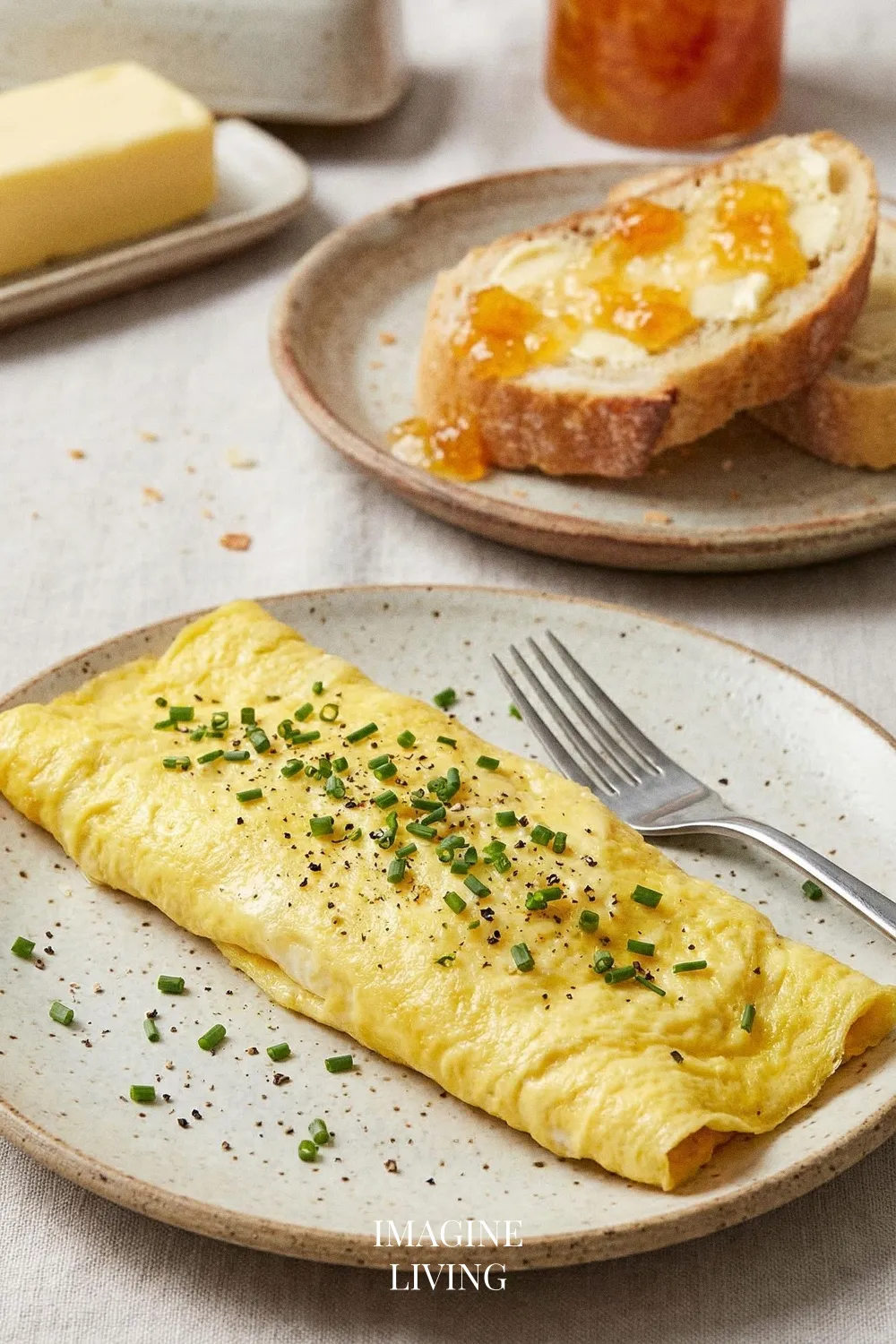
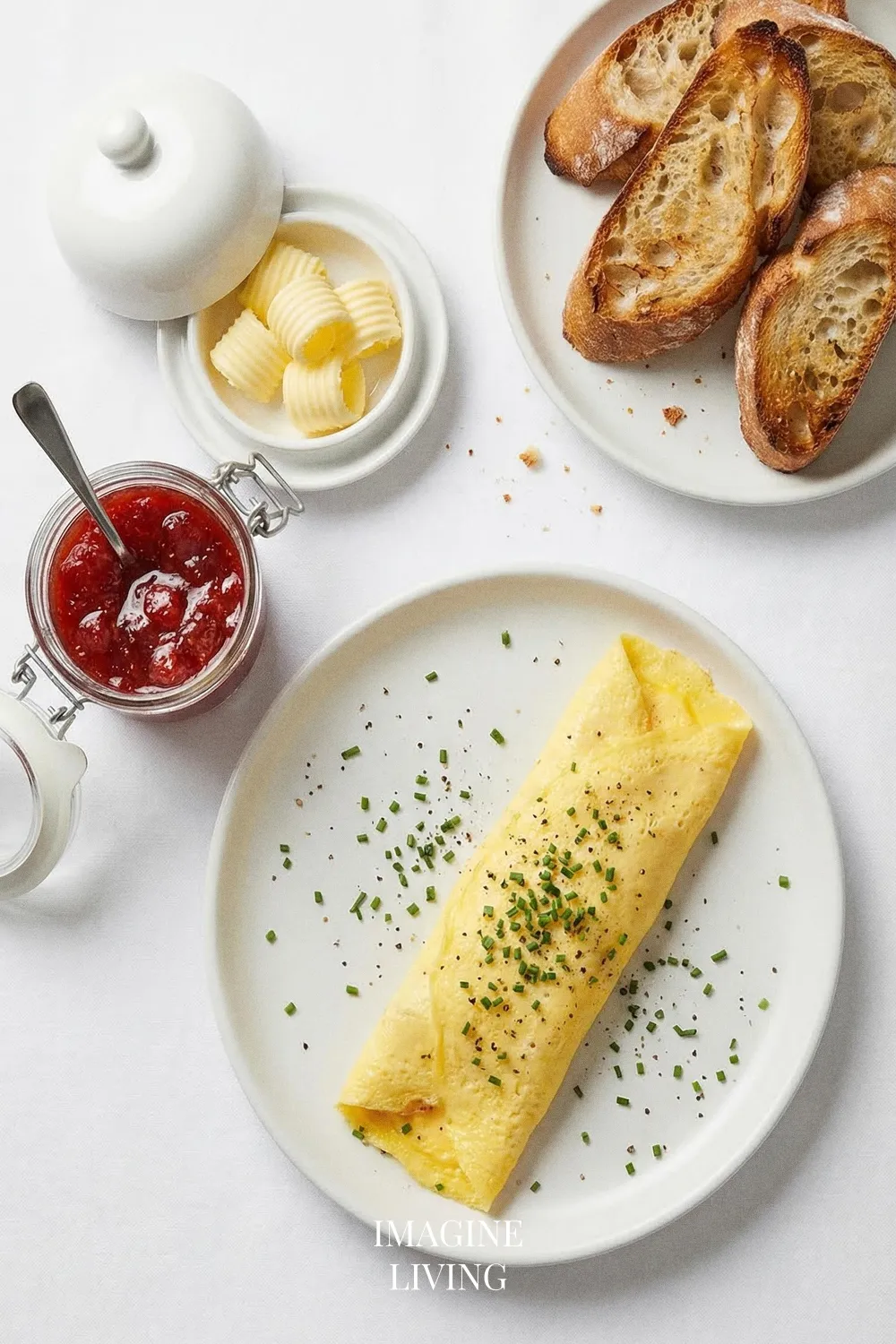
Pair your classic French omelette with crusty French bread, a simple green salad, or fresh fruit for a balanced meal. A light drizzle of olive oil or a sprinkle of sea salt can elevate the dish.
Storage and Reheating
Omelettes are best served fresh but can be stored in the refrigerator for up to 2 days. To reheat, gently warm in a skillet over low heat, adding a splash of water to create steam and restore moisture.
Common Mistakes to Avoid
It’s normal to miss the sweet spot once or twice—eggs move quickly, and that’s part of the charm.
Overcooking
Overcooking the eggs can lead to a dry omelette.
Tip: Remove from heat while the center is still slightly runny.
Not Using Enough Butter
Butter not only adds flavor but also prevents sticking.
Tip: If you’re using a non-stick skillet, don’t skip the butter.
Skipping the Whisking
Failing to whisk thoroughly can result in uneven cooking.
Tip: Whisk until frothy for the lightest omelette.
Using Cold Eggs
Using cold eggs can disrupt the cooking process.
Tip: Let your eggs sit at room temperature for about 15 minutes before use.
Skimping on Seasoning
Under-seasoned eggs lack flavor.
Tip: Season well with salt and pepper before cooking.
FAQs
What type of pan is best for making an omelette?
A non-stick skillet provides the best results for easy release and even cooking.
Can I make an omelette ahead of time?
While best fresh, you can make it ahead and store it in the refrigerator for a quick meal.
How do I know when my omelette is done?
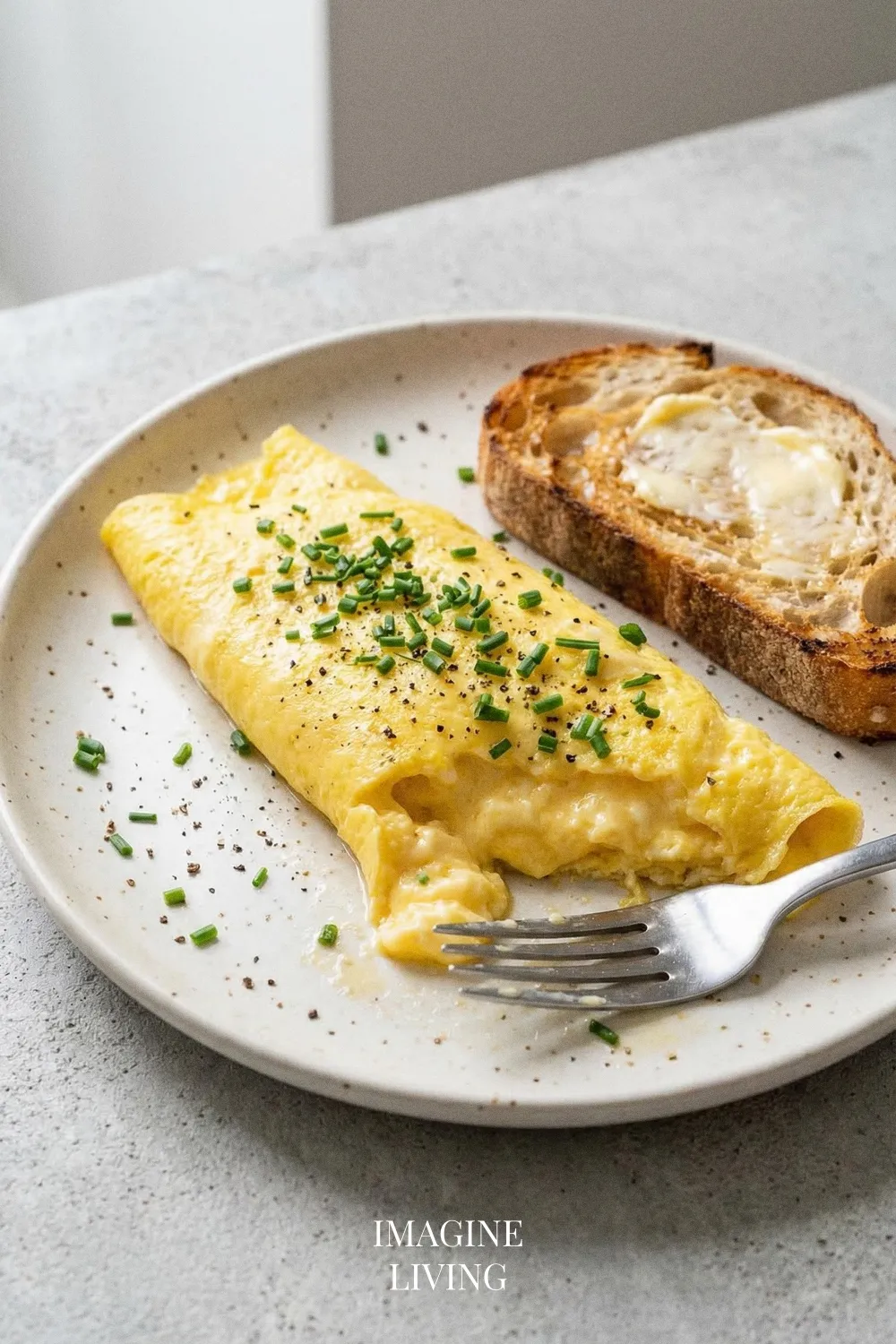
It should be set on the edges and slightly runny in the center.
Can I freeze an omelette?
It’s not recommended to freeze omelettes as they can lose their texture.
What is the difference between a French omelette and a regular omelette?
A French omelette is cooked slowly and folded gently, resulting in a silky texture, while a regular omelette is often browned and filled with various ingredients.
Embrace the Art of the Classic French Omelette
This omelette comes together quickly, but it has a way of slowing the moment down. A few ingredients, a warm pan, and a bit of attention—sometimes that’s all a good meal needs. Enjoy it while it’s still soft and warm from the skillet.

Classic French Omelette
Equipment
- Mixing bowl
- Whisk or fork
- Non-stick skillet
- Spatula
Ingredients
For the Omelette
- 4 large eggs (about 240g)
- 1 tablespoon unsalted butter (14g)
- Salt and freshly ground black pepper to taste
Optional Garnish
- Fresh chives finely chopped
Instructions
Step 1: Beat the Eggs
- In a mixing bowl, crack the eggs and season them with salt and pepper. Whisk vigorously until the yolks and whites are fully combined, resulting in a foamy mixture.
- Tip: Use room temperature eggs for a fluffier texture.
Step 2: Melt the Butter
- Place a non-stick skillet over medium heat and add the butter. Let it melt gently, tilting the pan to ensure it coats the surface evenly without browning.
- Tip: The butter should sizzle slightly but never burn for the perfect result.
Step 3: Cook the Eggs
- Pour the beaten eggs into the skillet. Allow them to sit undisturbed for a few seconds until they begin to set at the edges.
Step 4: Stir and Fold
- With a spatula, gently stir the eggs from the edges to the center, creating soft curds. As the omelette starts to firm up, reduce the heat and continue to stir lightly, making sure to leave some uncooked egg on top.
- Tip: Aim for a slightly runny center for a creamy texture.
Step 5: Finish and Serve
- Once the outer edges are set but the central part remains soft, it’s time to fold! Gently fold the omelette in half and slide it onto a plate. Garnish with finely chopped chives for a pop of color and flavor.
Notes
- Use fresh eggs for better flavor.
- Keep the heat manageable; too high will cause the omelette to cook unevenly.
- Experiment with fillings like cheese, herbs, or sautéed vegetables, but remember to keep it light!
- Master the folding technique with practice; it takes time to perfect.