Amatriciana: A Taste of Lazio’s Heart
The first sizzle of guanciale has a way of waking up the kitchen, and it always makes me pause for a second—there’s a brightness to it that feels grounding. As the tomatoes warm and soften, everything starts to fall into place, and you realize this dish looks far fussier than it really is. If you’ve got the ingredients, you’ve already done the hard part. And somewhere between the sauce thickening and the pasta finishing, there’s a small, quiet moment where it all just feels easy—almost suspiciously so.
Why You’ll Love This Recipe
Amatriciana isn’t just a meal; it’s a celebration of Italian culinary tradition. Here’s why this recipe will become a staple in your home:
- Richness of Flavors: The savory guanciale and tangy tomato sauce create a perfect balance.
- Quick Cooking Time: This dish comes together in under 30 minutes, perfect for busy weeknights.
- Simplicity: With few ingredients, this dish is a testament to the beauty of traditional Italian cooking.
“One of Italy’s greatest pasta sauces, straight from Lazio.” Imagine Living
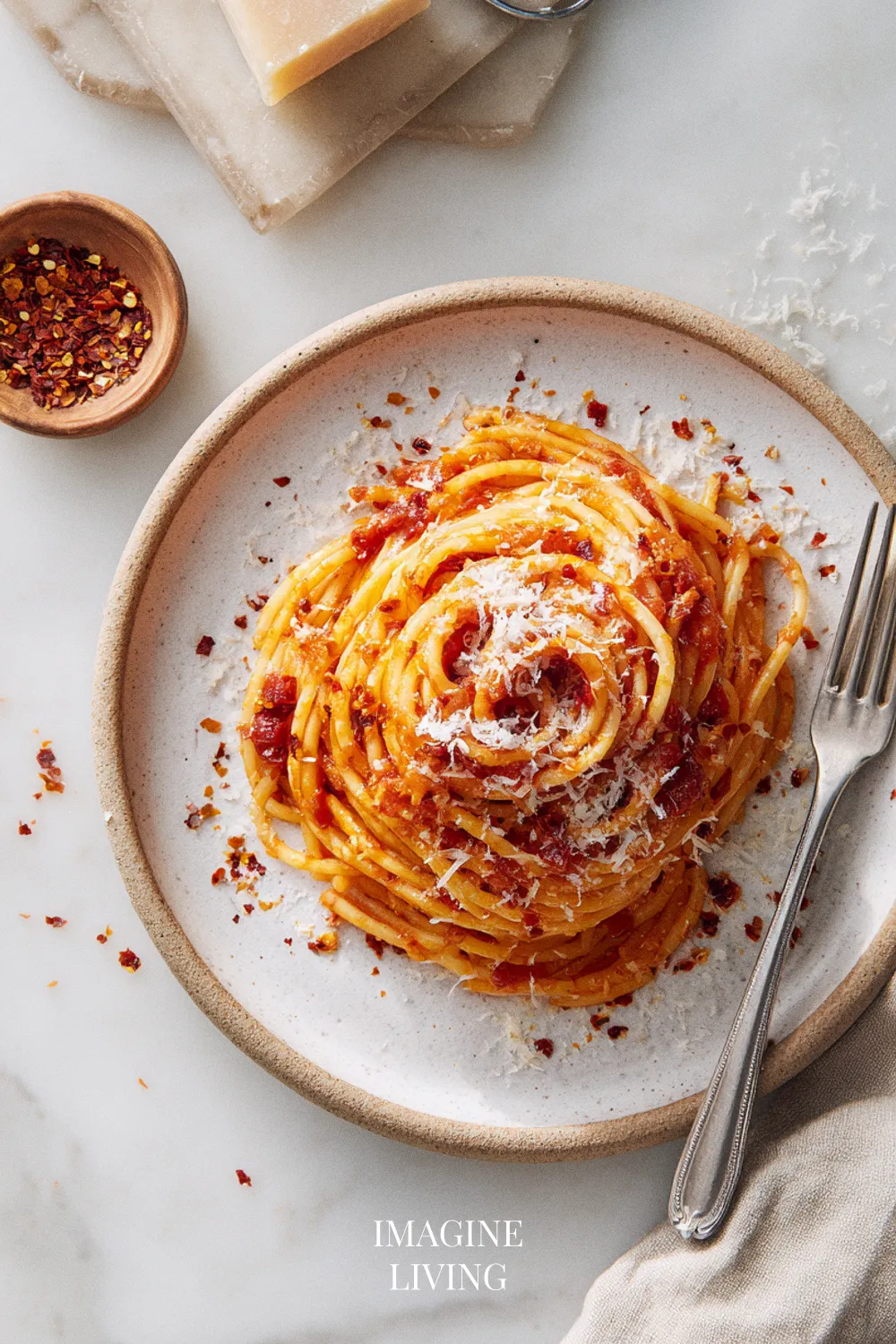
Ingredients: Amatriciana Recipe for Four Servings
Servings: 4
For the Sauce
- 2 tablespoons olive oil
- 4 ounces guanciale (or pancetta), diced
- 1 can (14 ounces) crushed tomatoes (400 g)
- Salt, to taste
- Freshly cracked black pepper, to taste
- 1 cup Pecorino Romano cheese, grated (100 g)
For the Pasta
- 12 ounces spaghetti or bucatini (340 g)
- Fresh basil leaves, for garnish (optional)
Options: Substitute guanciale with pancetta for a milder flavor or use whole wheat pasta for added fiber.
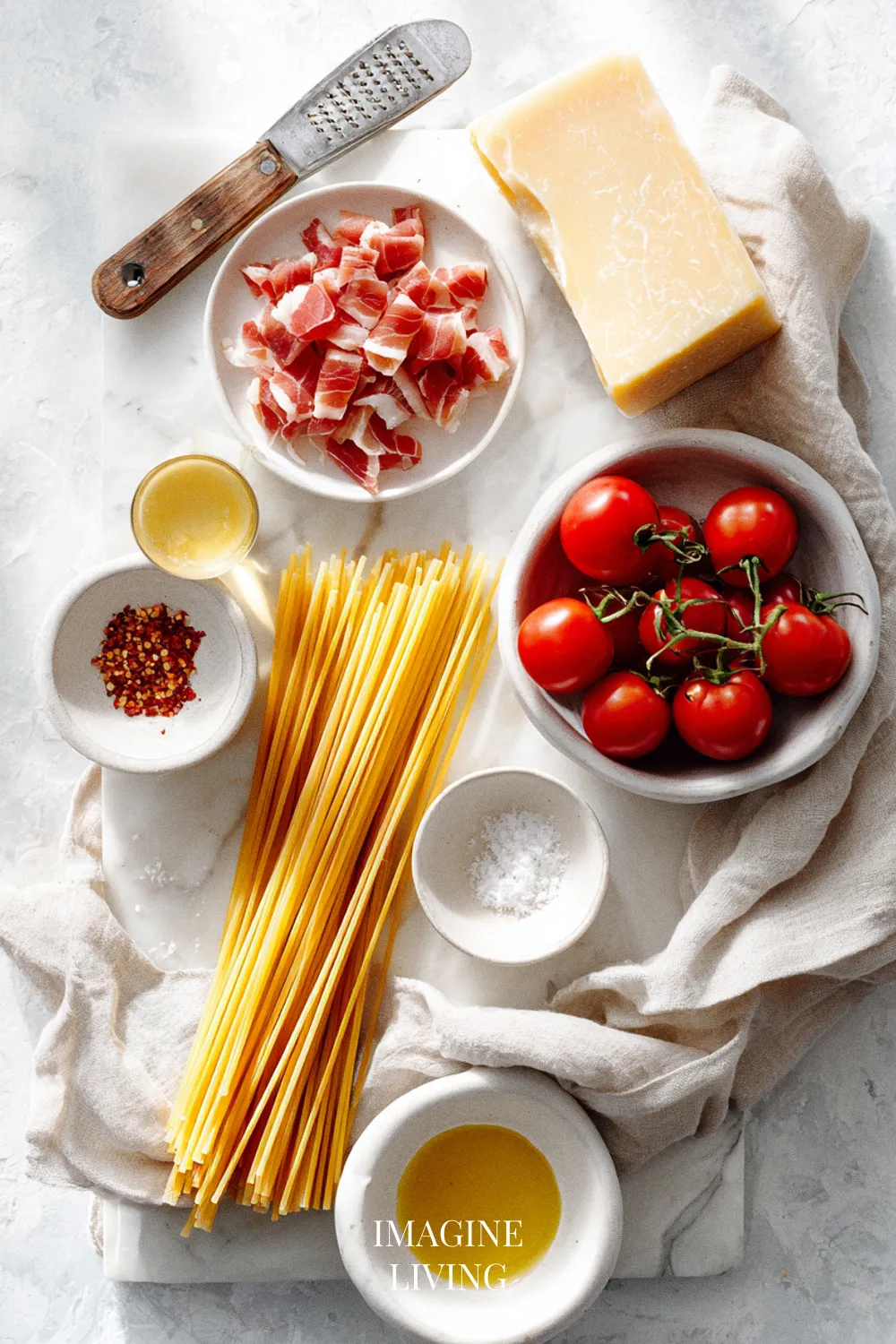
Equipment Needed
- Large pot for boiling pasta
- Skillet for the sauce
- Large serving bowl
- Wooden spoon
- Colander
Step-By-Step Guide: How to Make Amatriciana
This recipe is really about timing and heat control—once those are in hand, everything else falls neatly into place. The steps move quickly, but not in a way that asks too much of you.
Prepare the Pasta
Bring a large pot of salted water to a boil. Add the spaghetti and cook according to package instructions until al dente. Reserve a cup of the pasta water before draining.
Tip: Cooking your pasta to al dente ensures it retains a slight bite, making it perfect for holding the sauce.
Every so often, give the pasta a small stir—just enough to keep it from clinging to itself.
Cook the Guanciale
In a skillet over medium heat, add olive oil. Once hot, add the guanciale and cook until it’s crispy and golden, about 5–7 minutes. The fat will render, creating a luscious base for your sauce.
Tip: Don’t rush this step; slow cooking will deepen the flavor of the guanciale.
There’s a moment when the edges turn just the right shade of amber—easy to miss if you look away too long.
Make the Sauce
Stir in the crushed tomatoes, and season with salt and pepper. Simmer for 10 minutes until the sauce thickens slightly. If it becomes too thick, add a splash of reserved pasta water.
You’ll see the bubbles shift from quick pops to slower, heavier ones—usually a good sign it’s settling into the right texture.
Combine Pasta and Sauce
Add the drained pasta to the skillet, tossing it in the sauce. If it’s dry, add more reserved pasta water until you achieve your desired consistency. Remove from heat and mix in the grated Pecorino Romano until creamy.
Tip: Save a bit of cheese for garnishing on top before serving!
Option note: If using gluten-free pasta, ensure you adjust the cooking time as needed.
The sauce clings just a little better when you toss it more slowly—almost like it’s catching up to the heat.
This video is here as an extra source of inspiration! While it may not match this exact recipe, it offers helpful techniques, ideas, or visual guidance to enhance your cooking experience.
Pro Tips for Amatriciana
A few small details can make this dish feel even smoother to cook.
- Use high-quality guanciale for the best flavor; it makes a noticeable difference.
- Pecorino Romano adds a salty tang that completes the dish.
- Experiment with adjusting the amount of crushed tomatoes for your preferred sauce consistency.
- Serve immediately for the best texture and flavor.
A little restraint with the cheese at first helps—you can always add more, but taking it out is another story.
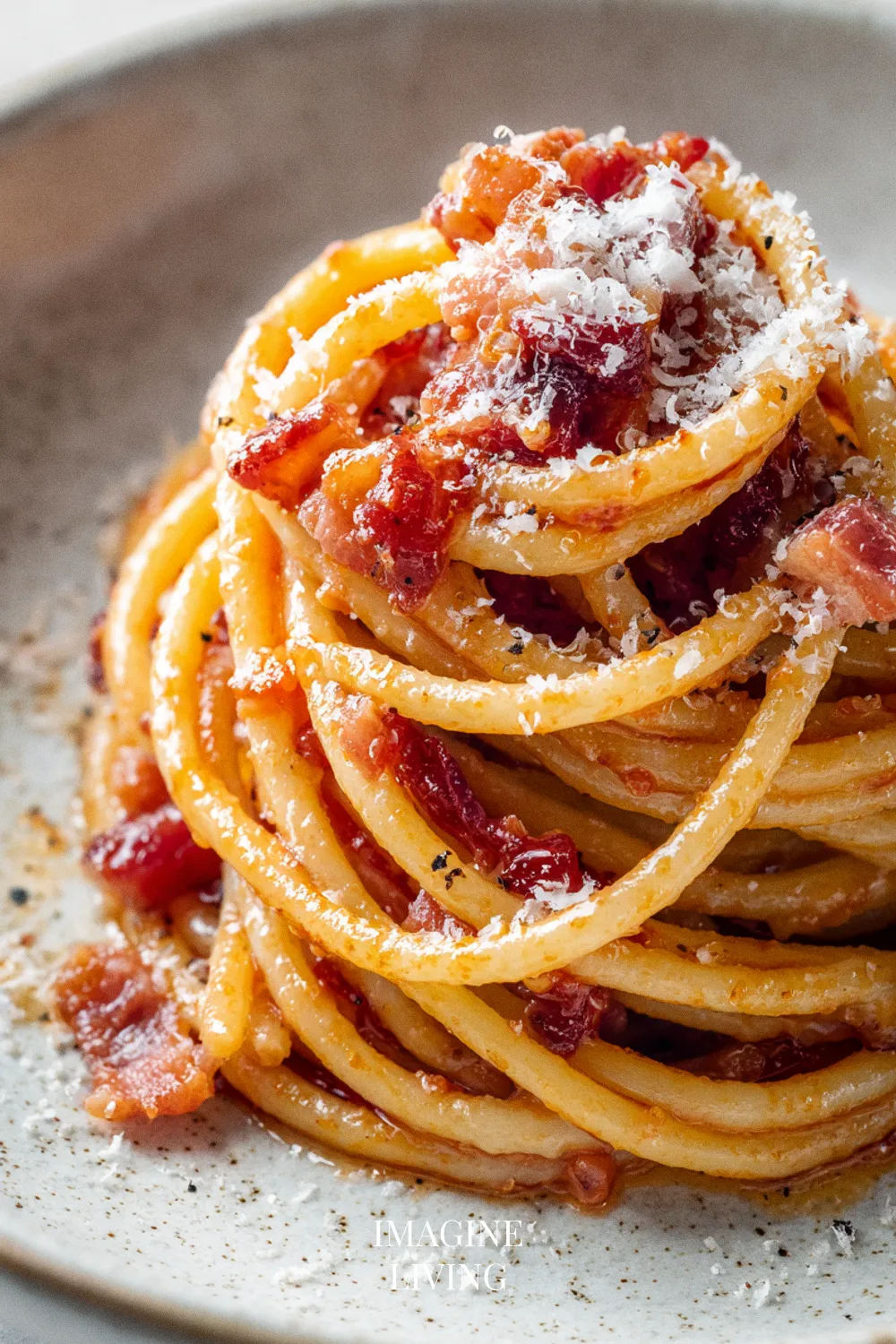
Dietary Variations & Substitutions
Gluten-Free Version
- Use gluten-free spaghetti or bucatini in place of regular pasta (1:1 substitution).
- Check cooking time as gluten-free pasta may require shorter cooking duration.
- Ensure that all ingredients, particularly cured meats and cheese, are certified gluten-free to avoid cross-contamination.
Tip: Rinse gluten-free pasta briefly in cold water after cooking to prevent it from sticking.
Dairy-Free
- Substitute Pecorino Romano cheese with a dairy-free cheese alternative (1:1).
- Swap out the guanciale with a plant-based bacon for a similar savory flavor.
- You may need to add a little more salt to balance the flavors since dairy-free alternatives can be less salty.
Tip: A sprinkle of nutritional yeast can enhance the savory element in place of cheese.
Egg-Free / Vegan
- Replace Pecorino Romano cheese as above and use a plant-based bacon option.
- Ensure that any added ingredients (if using vegetarian alternatives) do not contain eggs.
- Follow the same cooking instructions, but ensure all replacements are cooked thoroughly to maintain flavor.
Tip: Adding a dash of smoked paprika can replicate the rich flavor of guanciale in a vegan dish.
Low-Sugar
- No need for sugar in this recipe, keep all the ingredients as they are.
- Enjoy the natural sweetness of tomatoes without added sugars.
Tip: Enhance flavor with fresh herbs instead of sweetening the dish.
High-Protein
- Add cooked lentils or chickpeas (about 1 cup) to the sauce as a protein booster without altering the cooking method.
- Opt for whole grain pasta, which typically has higher protein compared to regular white pasta (1:1 swap).
Tip: Consider topping with nutritional yeast for additional protein and a cheesy flavor.
Creative Variations: Amatriciana Inspired Dishes
Add Vegetables
Incorporate sautéed zucchini or mushrooms for an earthy twist.
Tip: Use seasonal vegetables to keep your dish fresh and vibrant.
Spicy Amatriciana
Add crushed red pepper flakes for a spicy kick that will elevate the traditional flavors.
Tip: Start with a small amount and adjust to your heat preference.
Amatriciana with Seafood
Swap guanciale for shrimp or calamari for a coastal version.
Tip: Cook seafood just until opaque to prevent overcooking and maintain tenderness.
White Wine Addition
Deglaze the skillet with a splash of dry white wine after cooking the guanciale for added depth.
Tip: Use a wine you would enjoy drinking to enhance the overall flavor.
Amatriciana with Arugula
Top your dish with fresh arugula for a peppery contrast and vibrant color.
Tip: Toss the arugula in right at the end to keep it crisp.
Serving Suggestions
Serve your Amatriciana with a side of crusty Italian bread to soak up the sauce. A simple green salad with a light vinaigrette perfectly complements the richness of the pasta. Pair with a glass of Chianti or your favorite Italian red wine for a complete dining experience.
Storage and Reheating
Store any leftovers in an airtight container in the fridge for up to three days. To reheat, add a splash of water or broth to the skillet and warm over low heat. Stir gently until heated through to retain the pasta’s texture.
Common Mistakes to Avoid
A few pitfalls can sneak up on even confident cooks, but none are hard to fix.
Overcooking the Pasta
Ensure you do not cook the pasta beyond al dente to maintain its bite.
Tip: Test the pasta for doneness a minute before the package time.
If it’s firm in the center, you’re right where you need to be.
Ignoring the Salt
Under-seasoning can make your dish bland. Taste as you go!
Tip: Remember that cheese and guanciale also add saltiness.
A tiny pinch can shift the whole dish forward.
Skipping the Pasta Water
Pasta water helps bind the sauce to the pasta; don’t forget to reserve some!
Even a couple of tablespoons can make a surprising difference.
Cooking on High Heat
Cooking guanciale on too high heat can burn it before it renders its flavor.
Tip: Sizzle it gently for the best results.
Not Tossing the Pasta
Failing to combine the sauce and pasta thoroughly results in an uneven flavor.
A quick, steady toss ensures everything comes together smoothly.
FAQs
Can I use bacon instead of guanciale?
While bacon works in a pinch, guanciale offers a unique flavor profile that’s worth finding.
How do I know when the sauce is thick enough?
The sauce should coat the back of a spoon but not be overly thick.
Can I make Amatriciana vegetarian?
Yes! Substitute guanciale with sautéed mushrooms or diced eggplant for a hearty alternative.
Is Amatriciana gluten-free?
To make a gluten-free version, use gluten-free pasta.
What can I substitute for Pecorino Romano?
Grana Padano can be used, but the flavor will differ slightly.
A Comforting Classic for Every Kitchen
In the end, Amatriciana settles into that rare place where a dish feels both simple and deeply satisfying. Once everything is on the plate and the steam softens a bit, it’s easy to appreciate how a handful of ingredients can create something so complete.
Amatriciana
Equipment
- Large pot for boiling pasta
- Skillet for the sauce
- Large serving bowl
- Wooden spoon
- Colander
Ingredients
For the Sauce
- 2 tablespoons olive oil
- 4 ounces guanciale or pancetta, diced
- 1 can (14 ounces) crushed tomatoes (400 g)
- Salt to taste
- Freshly cracked black pepper to taste
- 1 cup Pecorino Romano cheese grated (100 g)
For the Pasta
- 12 ounces spaghetti or bucatini (340 g)
- Fresh basil leaves for garnish (optional)
Instructions
Prepare the Pasta
- Bring a large pot of salted water to a boil. Add the spaghetti and cook according to package instructions until al dente. Reserve a cup of the pasta water before draining.
- Tip: Cooking your pasta to al dente ensures it retains a slight bite, making it perfect for holding the sauce.
Cook the Guanciale
- In a skillet over medium heat, add olive oil. Once hot, add the guanciale and cook until it’s crispy and golden, about 5-7 minutes. The fat will render, creating a luscious base for your sauce.
- Tip: Don’t rush this step; slow cooking will deepen the flavor of the guanciale.
Make the Sauce
- Stir in the crushed tomatoes, and season with salt and pepper. Simmer for 10 minutes until the sauce thickens slightly. If it becomes too thick, add a splash of reserved pasta water.
Combine Pasta and Sauce
- Add the drained pasta to the skillet, tossing it in the sauce. If it’s dry, add more reserved pasta water until you achieve your desired consistency. Remove from heat and mix in the grated Pecorino Romano until creamy.
- Tip: Save a bit of cheese for garnishing on top before serving!