Classic Potato & Cheese Pierogi
The scent of warm dough and potatoes has a way of settling the mind, almost before you notice it. As you mix and fold, there’s this small, steady rhythm that makes the kitchen feel grounded. And if you’ve never made pierogi before, don’t worry—each step is more forgiving than it looks, with room for small adjustments along the way. A little dough on your counter never hurt anyone.
Why You’ll Love This Recipe
Homemade pierogi bring a calm kind of satisfaction—the kind that shows up when simple ingredients meet a bit of hands-on time. This recipe stays approachable, even if you’re new to dumpling-making.
- Perfect for a cozy dinner or gathering with friends.
- Easily customizable with various toppings.
- Declared a family favorite, sure to bring smiles all-around.
“Classic pierogies that taste like home.” Imagine Living

Ingredients: Classic Potato & Cheese Pierogi (Serves 4)
Servings: 4
For the Dough
- 2 cups (250g) all-purpose flour
- 1 large egg
- 1/2 teaspoon salt
- 1/2 cup (120ml) water
For the Filling
- 2 large russet potatoes, peeled and cubed (about 1 pound or 450g)
- 1 cup (240g) cottage cheese or farmer’s cheese
- 1/4 cup (60ml) sour cream
- 1 teaspoon salt
- Freshly ground black pepper, to taste
Options: Substitute with gluten-free flour for a gluten-free alternative.
Equipment Needed
- Large mixing bowl
- Pot for boiling
- Rolling pin
- Round cutter (3-4 inches in diameter)
- Frying pan for sautéing (optional)
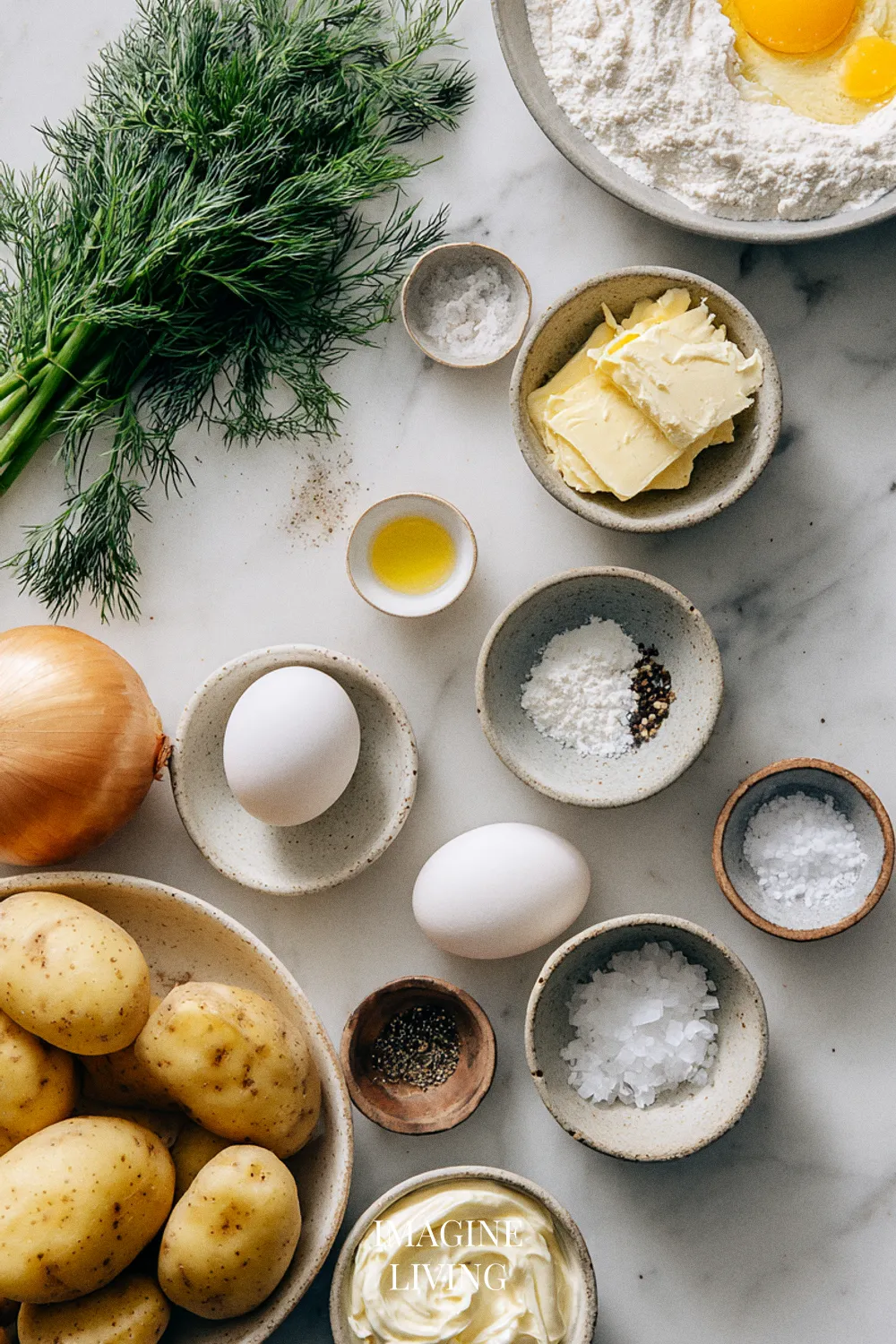
Step-By-Step Guide: Classic Potato & Cheese Pierogi
Prepare the Dough
Start by combining the flour and salt in a large mixing bowl. It’s a simple beginning—quiet, even.
Tip: Make a well in the center before adding the egg and water to help blend the ingredients smoothly.
Mix until a soft dough forms, then knead on a floured surface for about 5 minutes until it’s smooth and elastic. Wrap it in plastic wrap and let it rest for 30 minutes. The dough relaxes a bit here—so do you.
Cook the Potatoes
Boil the cubed potatoes in salted water until tender, about 15–20 minutes. Drain and let them cool slightly before mashing until smooth.
Tip: Use a potato ricer for an extra fluffy filling that will melt in your mouth.
There’s a moment when the potatoes steam just enough to fog your glasses—comes with the territory.
Make the Filling
Combine the mashed potatoes, cottage cheese, sour cream, salt, and pepper. Taste and adjust as needed. Let the mixture cool completely. A cooler filling behaves better—always a small relief.
Shape the Pierogi
Roll out the dough on a floured surface until it’s about 1/8 inch thick. Cut circles with your cutter and place a teaspoon of filling in the center of each.
Tip: Make sure to seal the edges tightly to avoid any leaks during cooking.
Sometimes one tries to sneak open—just pinch again, no big deal.
Cooking the Pierogi
Bring a large pot of salted water to a gentle boil. Add pierogi in batches, giving them space. Cook for about 3–4 minutes after they float. Lift them out with a slotted spoon.
Tip: For added texture, sauté the boiled pierogi in butter until golden brown before serving.
A little sizzle in the pan can be oddly satisfying.
Extra (Optional Frying Step)
After boiling, heat butter in a pan over medium heat and fry the pierogi until lightly golden and crisp on both sides. This adds extra flavor and a satisfying texture.
“Food is symbolic of love when words are inadequate.” Alan D. Wolfelt
This video is here as an extra source of inspiration! While it may not match this exact recipe, it offers helpful techniques, ideas, or visual guidance to enhance your cooking experience.
Pro Tips for Classic Potato & Cheese Pierogi
A few extra notes can make the process smoother without adding fuss.
- Use cold potatoes for the filling for a creamier texture.
- Don’t rush the dough resting time; it makes a difference in elasticity.
- Experiment with different cheeses to find your perfect flavor profile.
- To freeze, lay uncooked pierogi in a single layer on a baking sheet, then transfer to a bag once frozen.
A small freezer stash never hurts.

Dietary Variations & Substitutions
Gluten-Free Version
- Swap all-purpose flour with a gluten-free flour blend in equal measure (2 cups).
- The dough may require an extra tablespoon of water to achieve the right consistency.
- Ensure to rest the dough for at least 30 minutes to maintain elasticity.
Tip: Check for cross-contamination on your gluten-free flour to avoid any gluten residue.
Dairy-Free
- Use dairy-free cream cheese or silken tofu blended until smooth in place of cottage cheese.
- Substitute sour cream with a dairy-free yogurt (same amount).
- Adjust salt to taste as dairy-free alternatives can vary in savoriness.
Tip: A splash of lemon juice can enhance the creaminess and flavor of the filling.
Egg-Free / Vegan
- Replace the egg in the dough with 1/4 cup unsweetened applesauce.
- Follow dairy-free swaps for the filling as mentioned above.
- Allow for a slightly longer cooking time as vegan filling may take longer to heat through.
Tip: Adding a tablespoon of vinegar in the dough can improve overall texture when omitting eggs.
Low-Sugar
- No sugar is used in this recipe, making it suitable for low-sugar diets.
- If you are adding toppings, opt for unsweetened options to maintain low sugar levels.
Tip: Fresh herbs or spices can enhance flavor without the need for added sweetness.
Vegetarian
- This recipe is naturally vegetarian with the use of potatoes and cheese.
- Choose vegetarian-friendly cheese alternatives if swapping for dairy-free options.
Tip: Look for locally sourced cheese to support sustainable agriculture while maintaining a vegetarian diet.

Creative Variations: Flavorful Pierogi Twists
Sauerkraut and Mushroom Filling
Add sauerkraut and sautéed mushrooms for a tangy twist.
Tip: Drain sauerkraut well to prevent a soggy filling.
Spinach and Feta
Mix in fresh spinach and crumbled feta for a Mediterranean flair.
Tip: Squeeze out excess moisture from spinach before mixing.
Bacon and Cheddar
Incorporate crispy bacon bits and cheddar cheese for a savory delight.
Tip: Add a pinch of smoked paprika for extra depth.
Sweet Pierogi
Fill with sweetened cottage cheese and berries for a dessert version.
Tip: Dust with powdered sugar before serving.
Garlic and Herb Infusion
Add minced garlic and herbs to the filling for a fresh flavor.
Tip: Sauté the garlic first to enhance its sweetness.
“To eat is a necessity, but to eat intelligently is an art.” Francois de la Rochefoucauld
Serving Suggestions
Top your pierogi with sautéed onions, a dollop of sour cream, or fresh herbs. They sit nicely alongside a simple salad or a warm broth, depending on your mood.
Storage and Reheating
Store cooked pierogi in an airtight container in the refrigerator for up to 3 days. For freezing, place uncooked pierogi in a single layer on a baking sheet, freeze until firm, then transfer to a freezer-safe bag for up to 3 months.
To reheat, boil or sauté until warmed through.

Common Mistakes to Avoid
Overmixing the Dough
Overworking the dough can lead to tough pierogi.
Tip: Mix just until combined. A gentle hand is enough.
Forgetting to Seal
Leaving gaps when sealing can cause leaks.
Tip: Pinch tightly and ensure no air is trapped. Easy to fix on the spot.
Overcrowding the Pot
Too many pierogi at once can cook unevenly.
Tip: Cook in small batches for best results.
Using Too Much Filling
Overfilling can cause pierogi to burst.
Tip: Stick to about one teaspoon of filling.
Skipping the Resting Period
Rushed dough can fight back.
Tip: Let the dough relax—it pays off quickly.

FAQs
Can I make the dough ahead of time?
Yes! The dough can be made a day in advance and stored in the refrigerator.
Can I add more flavors to the filling?
Absolutely! Feel free to experiment with different cheeses, herbs, or spices to enhance the flavor.
How do I know when the pierogi are done?
Pierogi are done once they float to the top and have cooked for an additional 2–3 minutes.
Can I bake instead of boil?
While traditional pierogi are boiled, baking can also create a delicious dish—just brush with butter before baking.
What’s the best way to reheat frozen pierogi?
Boil them straight from the freezer, or sauté them for a crispy texture once cooked.

The Heartfelt Comfort of Homemade Pierogi
When everything comes together—the soft dough, the warm filling, the steady pace of shaping and cooking—you’re left with a meal that feels quietly satisfying. No rush, no fuss, just something good on the plate. Enjoy that simplicity.

Classic Potato & Cheese Pierogi
Equipment
- Large mixing bowl
- Pot for boiling
- Rolling Pin
- Round cutter (3-4 inches in diameter)
- Frying pan for sautéing Optional
Ingredients
For the Dough
- 2 cups all-purpose flour
- 1 large egg
- 1/2 teaspoon salt
- 1/2 cup water
For the Filling
- 2 large russet potatoes peeled and cubed, about 1 pound or 450g
- 1 cup cottage cheese or farmer’s cheese
- 1/4 cup sour cream
- 1 teaspoon salt
- Freshly ground black pepper to taste
Instructions
Prepare the Dough
- Start by combining the flour and salt in a large mixing bowl to create a cozy base for your pierogi.
- Tip: Make a well in the center before adding the egg and water to help blend the ingredients smoothly.
- Mix until a soft dough forms, then knead on a floured surface for about 5 minutes until it’s smooth and elastic. Wrap it in plastic wrap and let it rest for 30 minutes while the flavors meld.
Cook the Potatoes
- Boil the cubed potatoes in a pot of salted water until tender, about 15-20 minutes. Drain and let them cool slightly before mashing them until smooth.
- Tip: Use a potato ricer for an extra fluffy filling that will melt in your mouth.
Make the Filling
- In a bowl, combine the mashed potatoes, cottage cheese, sour cream, salt, and black pepper. Taste and adjust the seasoning as needed. Allow the mixture to cool completely.
Shape the Pierogi
- Roll out the dough on a floured surface until it’s about 1/8 inch thick. Cut out circles using your round cutter. Place a teaspoon of the potato and cheese filling in the center of each circle.
- Tip: Make sure to seal the edges tightly to avoid any leaks during cooking.
Cooking the Pierogi
- Bring a large pot of salted water to a gentle boil. Add pierogi in batches, ensuring not to overcrowd the pot. Cook for about 3-4 minutes after they float to the surface. Remove with a slotted spoon.
- Tip: For added texture, sauté the boiled pierogi in butter until golden brown before serving.