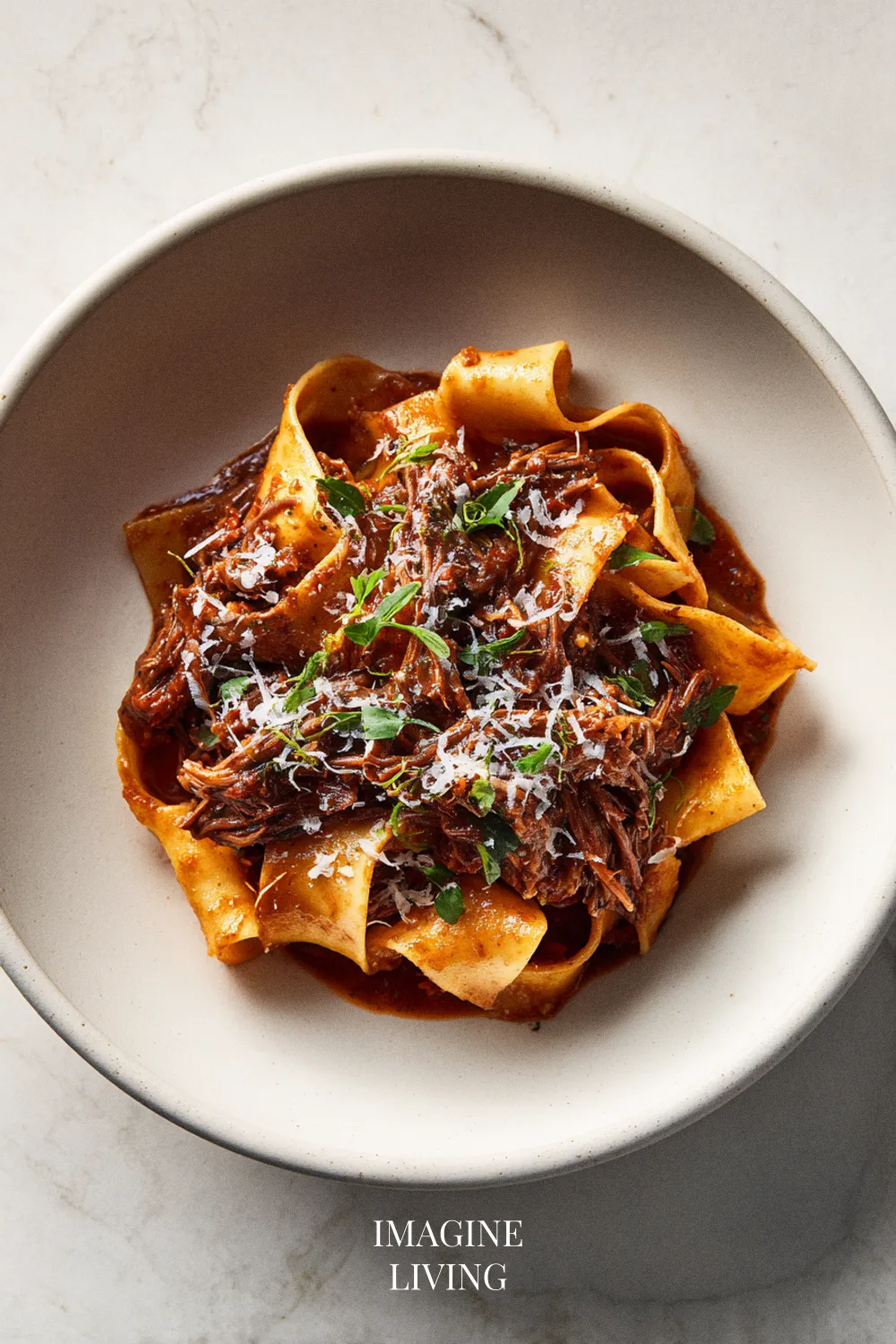
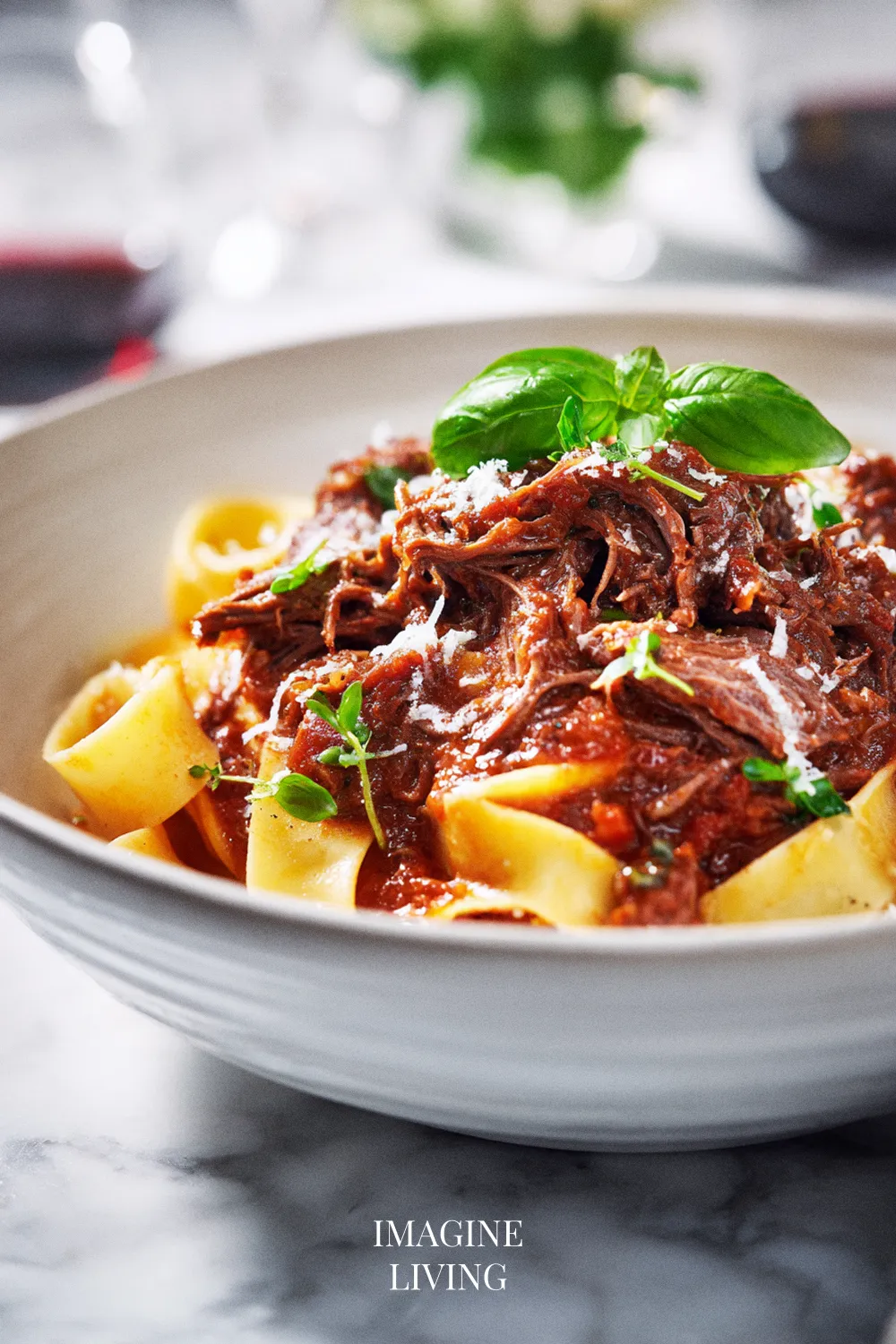
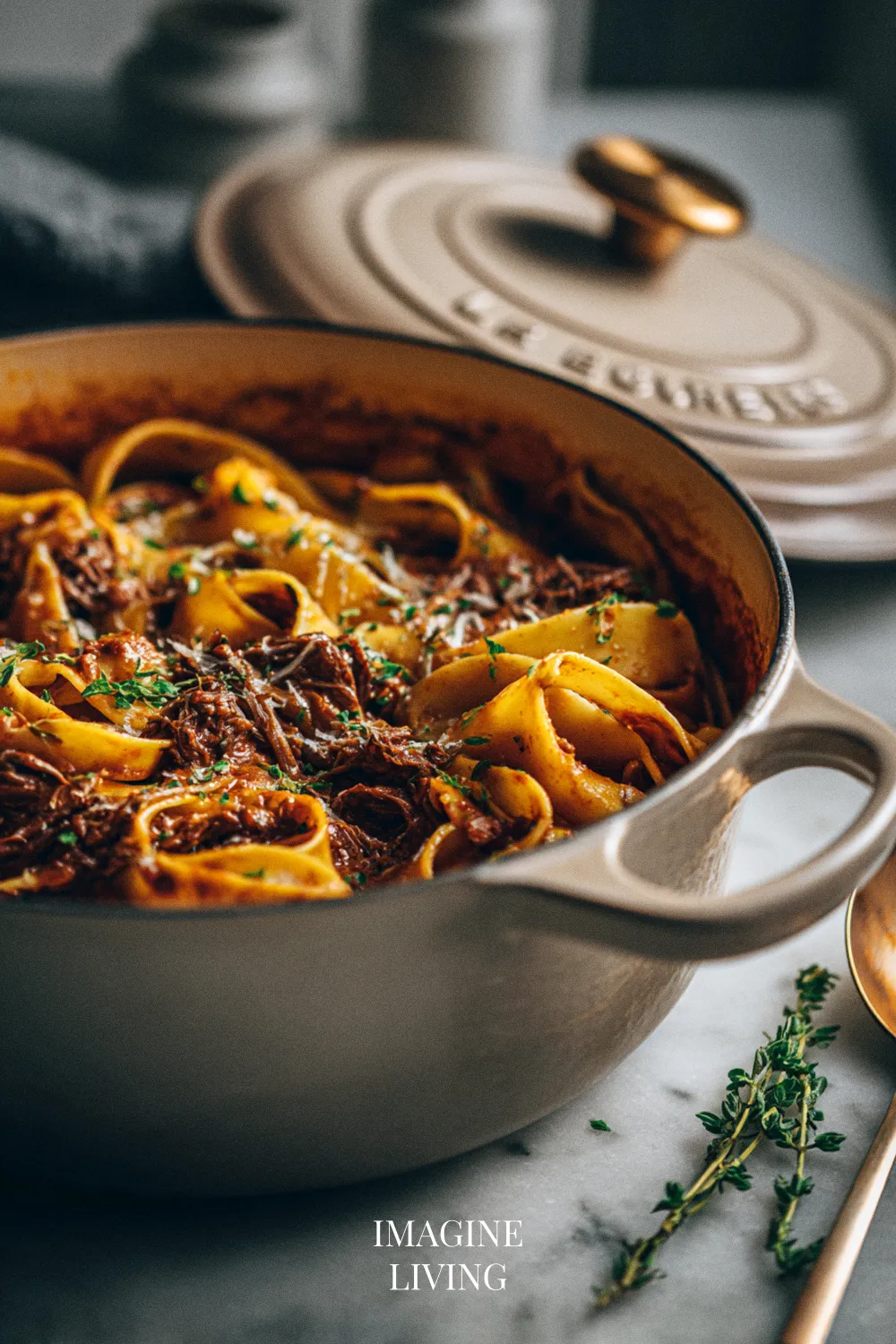
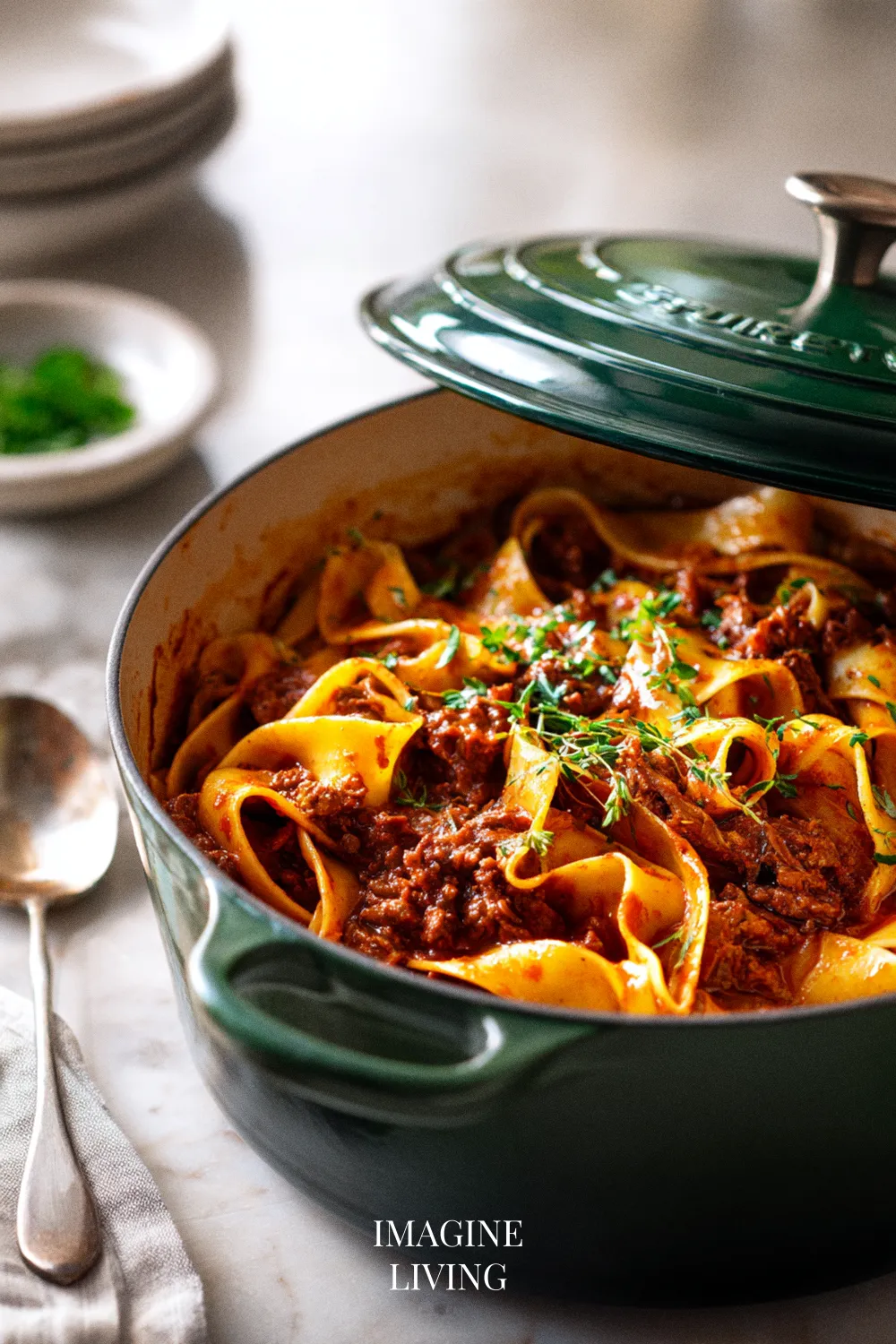
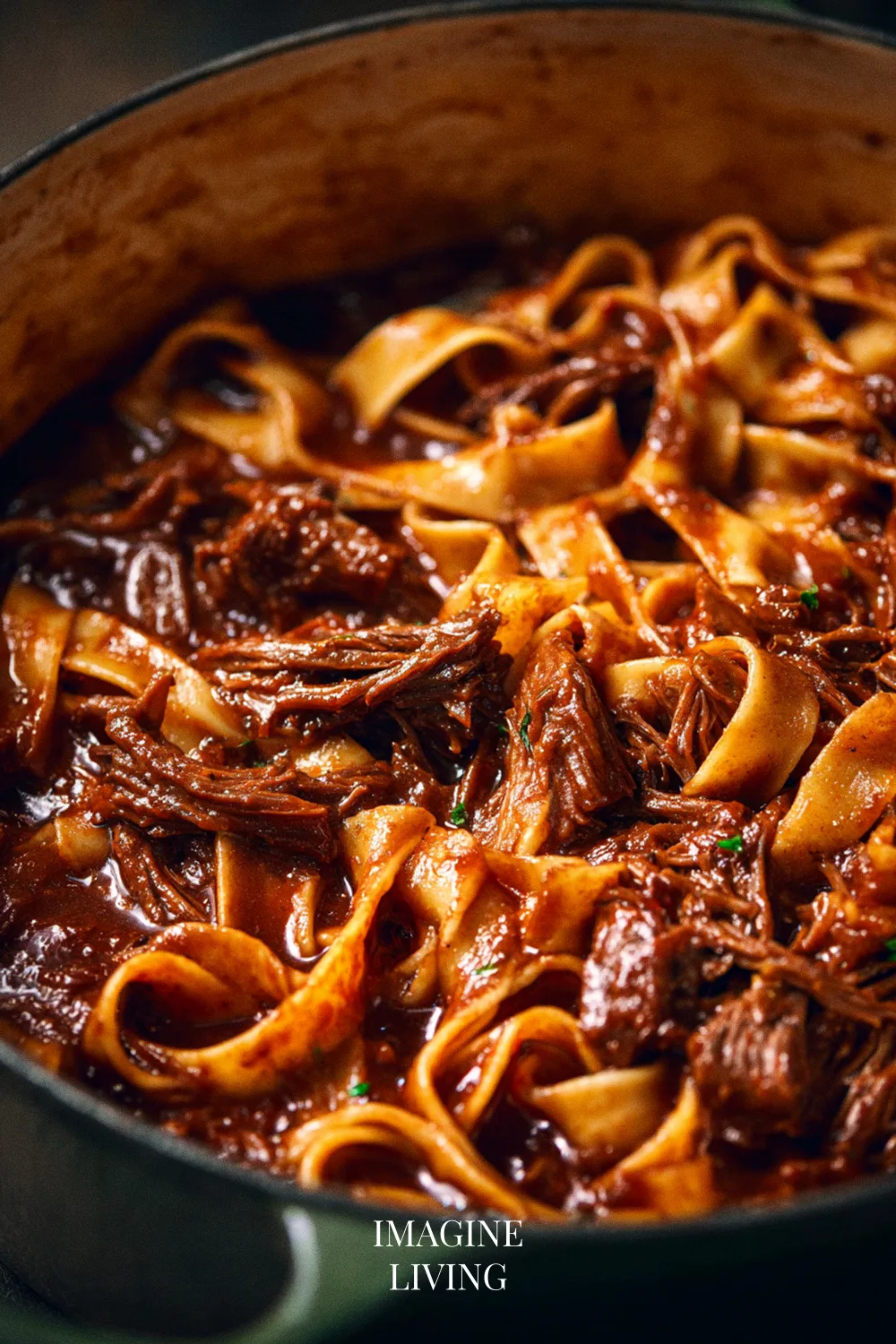
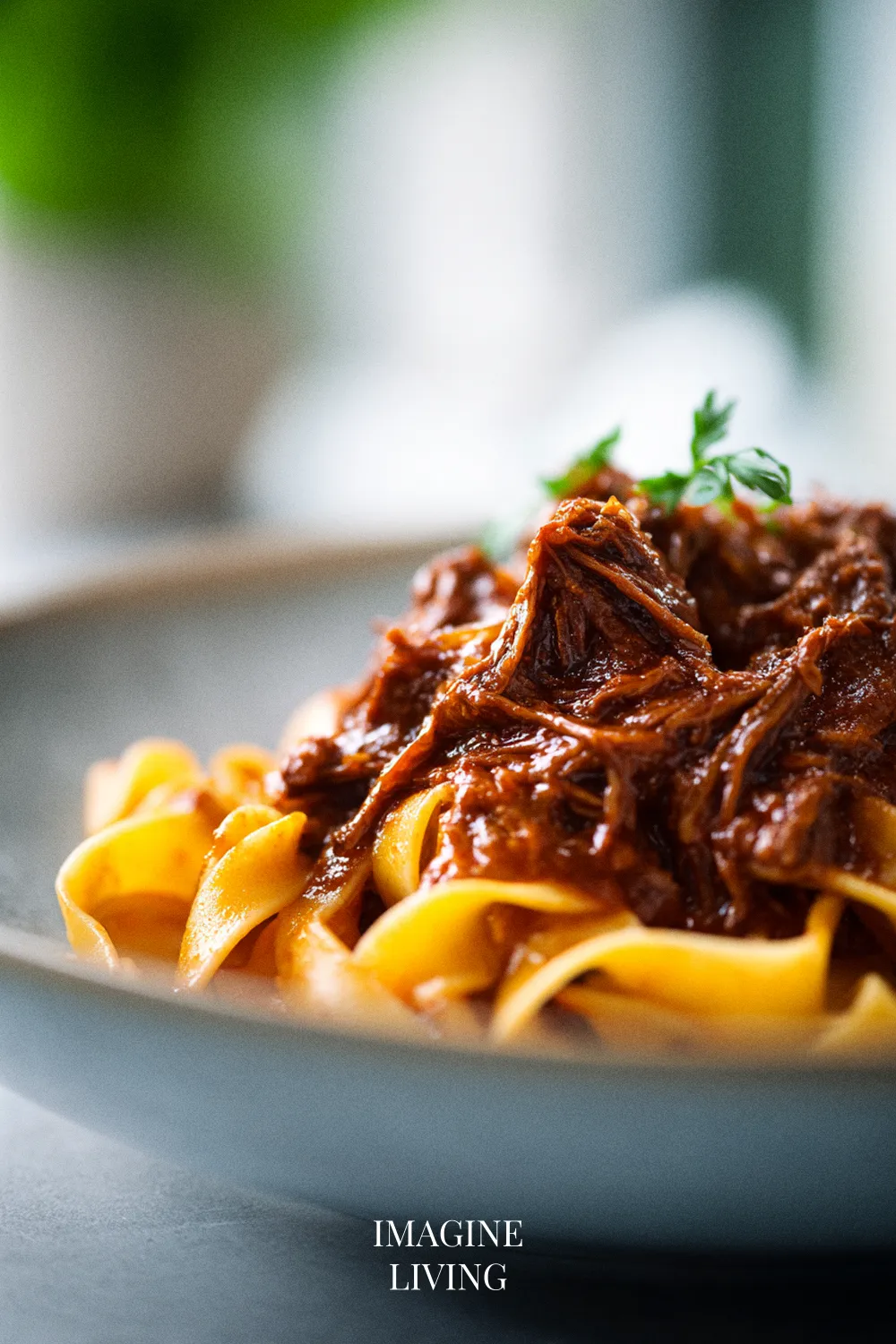
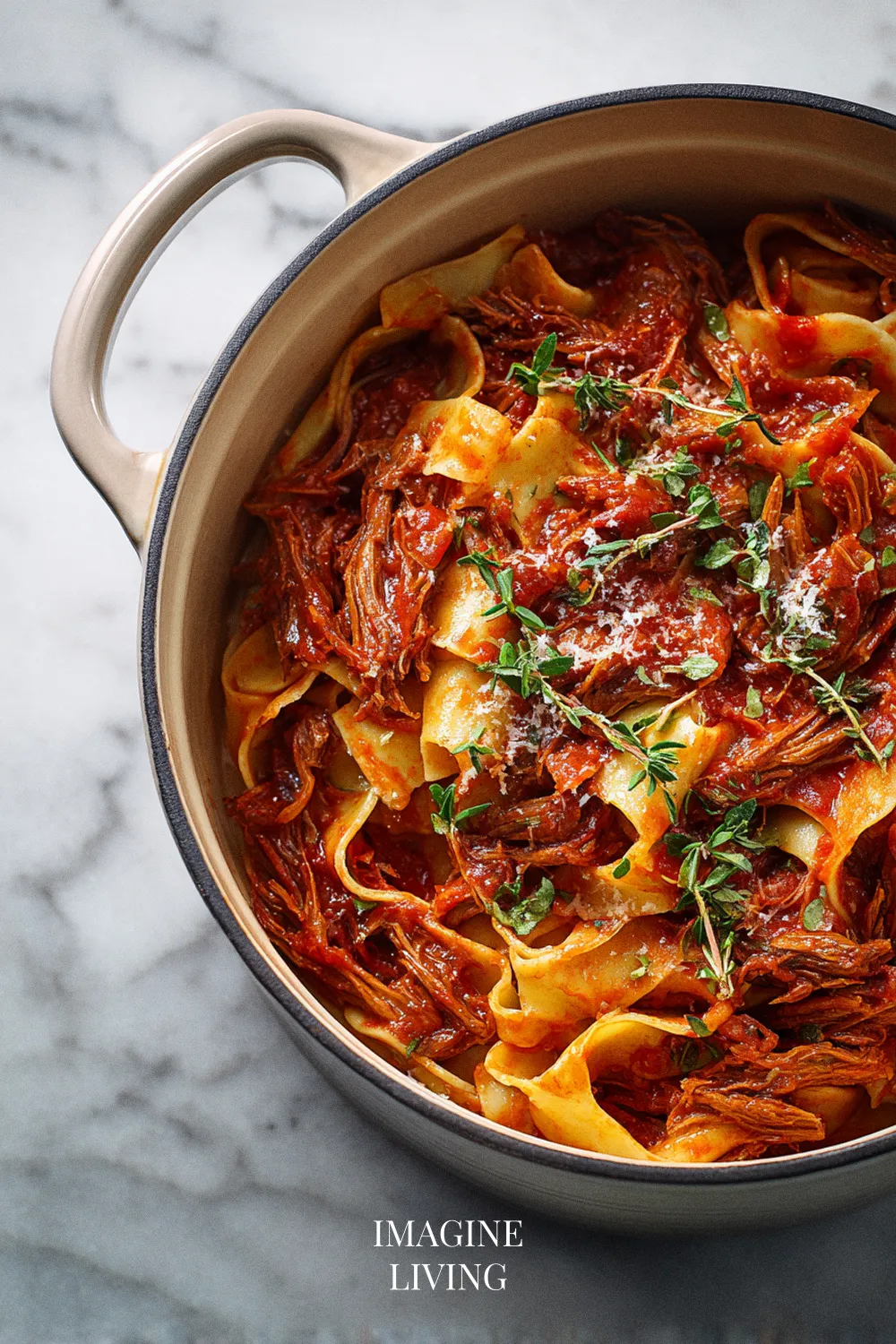
I first discovered the charm of slow‑cooked beef ragu on a drizzly Sunday, when the aroma of garlic and tomato simmering in olive oil turned my tiny kitchen into a trattoria‑like haven. Watching the meat soften into silky ribbons is pure joy, and the pappardelle embraces the sauce like a long‑lived hug. (It’s the only time I get to brag that my slow cooker is the family’s secret weapon.)
Why You’ll Love This Slow‑Cooked Beef Ragu
This dish turns a humble cut of beef into a low‑effort feast that feels like you spent hours in the kitchen. It’s the kind of meal that pairs beautifully with a crisp glass of red and a sprinkle of grated parmesan, turning any dinner into an instant celebration.
Quick weeknight win with minimal prep
Slow cooker keeps everything tender and savory
Versatile enough for a casual dinner or a special occasion
People who love to eat are always the best people.
Julia Child
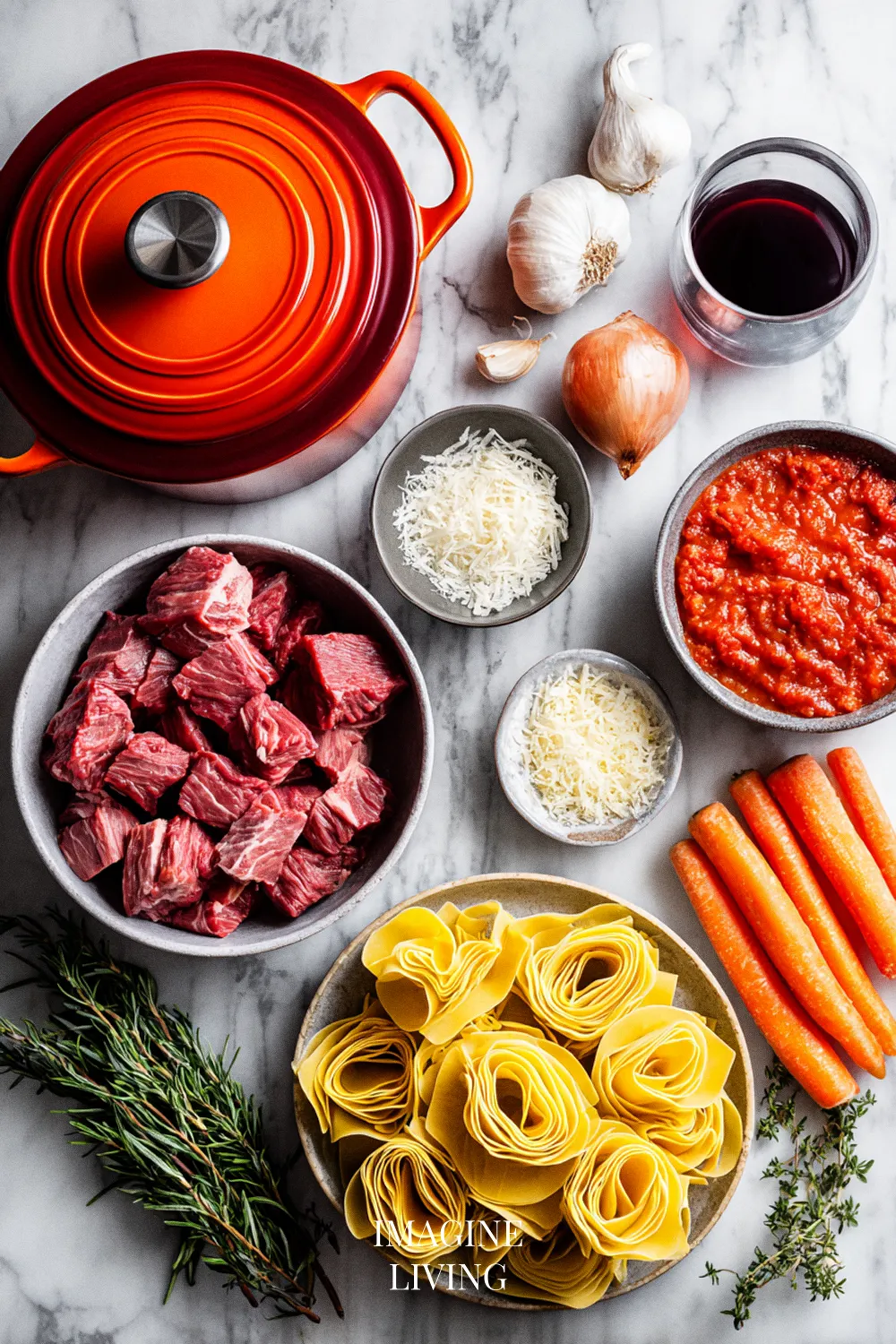
Ingredients: The Cozy Blend Behind This Ragu
Servings: 6
For the Beef Mixture
2 lb (900 g) chuck steak, cut into 1 in (2.5 cm) cubes
2 tbsp (30 mL) olive oil
1 large onion, finely diced
3 cloves garlic, minced
1 tsp (5 mL) dried oregano
1 tsp (5 mL) dried basil
Salt and pepper to taste
For the Sauce
1 can (28 oz / 794 g) whole peeled tomatoes, crushed by hand (or 4 fresh ripe tomatoes, peeled & chopped)
1 cup (240 mL) beef broth
2 tbsp (30 mL) tomato paste
1 tbsp (15 mL) balsamic vinegar
1 tbsp (15 mL) chopped fresh parsley
1 tbsp (15 mL) chopped fresh basil
1 tsp (5 mL) red wine (optional)
For the Pasta
1 lb (450 g) pappardelle, cooked al dente
Fresh grated Parmesan, for serving
Options: Use low‑sodium beef broth or omit wine for a wine‑free version.
Tools to Make It Happen
1 large slow cooker (6‑qt or 7‑qt)
Skillet (non‑stick or cast iron)
Wooden spoon
Cutting board and knife
Measuring spoons and cups
Step‑by‑Step: Building Your Slow‑Cooked Beef Ragu
Here’s how I turn a humble cut of chuck into a flavor‑laden masterpiece.
Step 1: Sear the Beef Heat the skillet over medium‑high. Add olive oil, then brown the beef cubes on all sides. Remove and set aside.
Tip: Use a quick sear to lock in flavor without cooking through.
Step 2: Saute Aromatics In the same skillet, add onion and garlic. Cook until translucent, about 4 minutes. Transfer to the slow cooker.
Step 3: Layer the Ingredients Place the browned beef on top of the aromatics. Sprinkle oregano, basil, salt, and pepper. This is where I lean in for that first whiff—your kitchen smells like a trattoria.
Step 4: Build the Sauce Pour in crushed tomatoes, beef broth, tomato paste, balsamic vinegar, parsley, basil, and wine. Stir gently to combine.
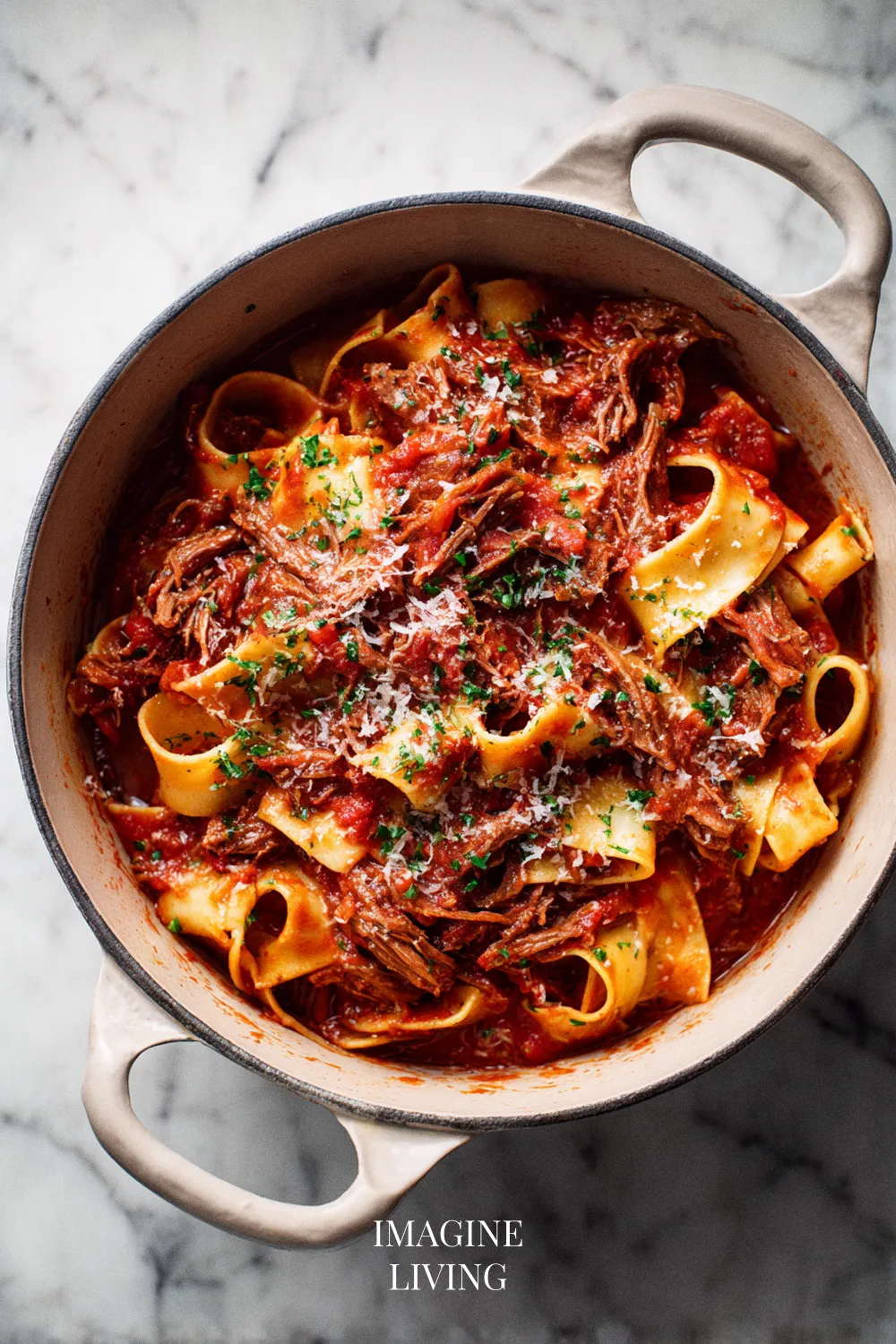
Step 5: Slow Cook Cover and cook on low for 8–10 hours or on high for 4–5 hours, until the beef is melt‑in‑your‑mouth tender.
Tip: The longer the cook, the deeper the flavor; try adding a splash of red wine halfway through for complexity.
Option note: If you choose a wine‑free version, add an extra tablespoon of broth to keep the sauce bright.
Step 6: Finish the Pasta Meanwhile, boil water, add a pinch of salt, and cook pappardelle until al dente. Drain, reserving a splash of pasta water.
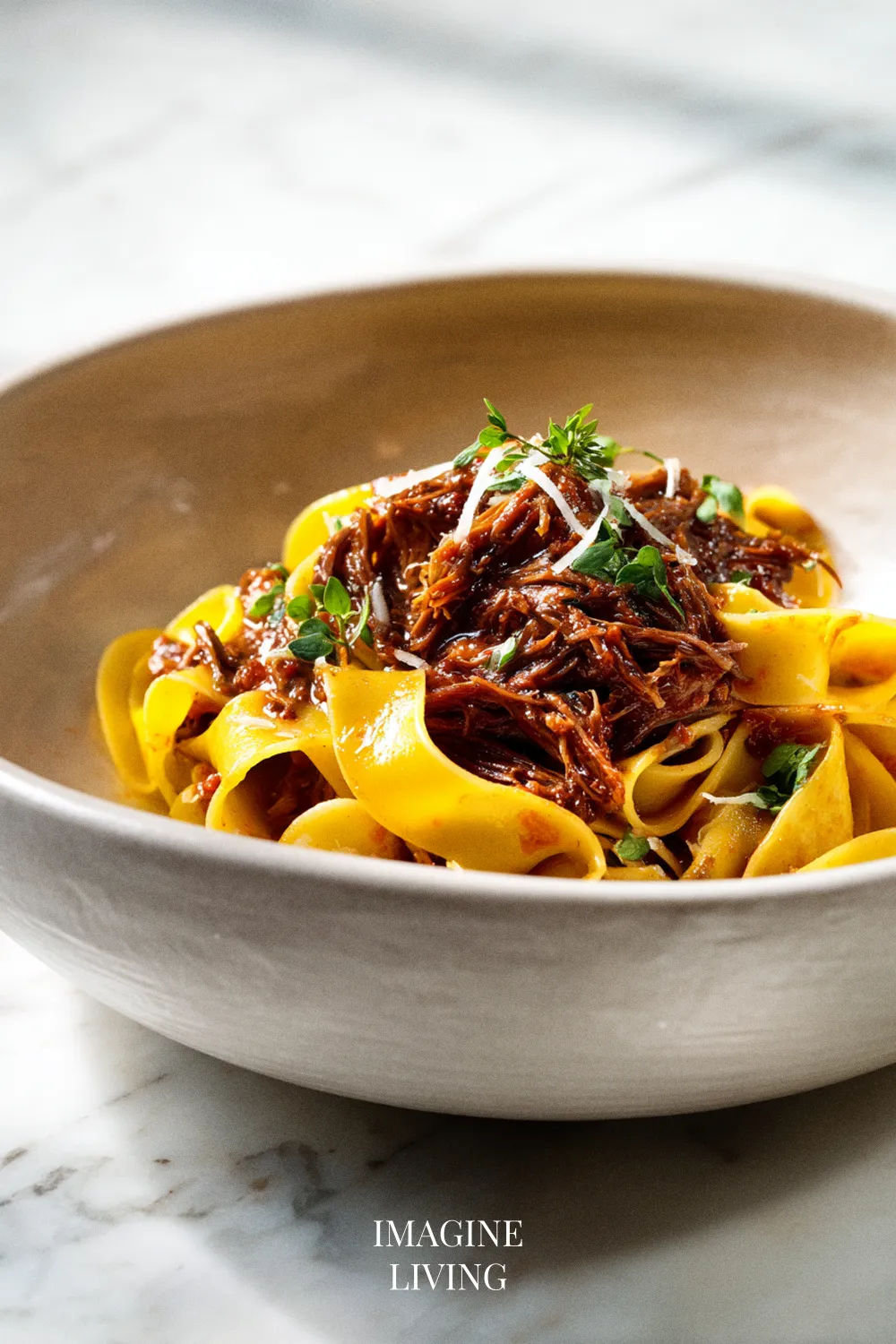
Step 7: Plate and Serve Spoon the hearty ragu over the fresh pappardelle. Drizzle a little pasta water to loosen the sauce if needed. Top with grated Parmesan.
This video is here as an extra source of inspiration! While it may not match this exact recipe, it offers helpful techniques, ideas, or visual guidance to enhance your cooking experience.
Good food is the foundation of genuine happiness.
Julia Child
Pro Tips to Elevate Your Ragu
A few tricks that turned my first batch into a showstopper.
Keep the lid on to trap moisture and enhance the tender texture. (I like to think of the lid as a cozy blanket for the beef.)
Add a bay leaf during the last hour for subtle earthy depth. (My secret: I place it on top of the meat so it never gets lost.)
Finish with a touch of fresh lemon zest to brighten the sauce. (A squeeze of lemon turns the richness into a lively dance.)
Serve with a side of garlic crusty bread to mop up the rich sauce. (Bread is the unsung hero of every good meal.)
Store leftovers in an airtight container for up to 3 days in the fridge. (I keep them in a clear jar so I can see how much love remains.)
Dietary Variations & Substitutions
Gluten-Free Version
Replace pappardelle with 1 lb (450 g) gluten‑free pasta (such as rice or corn‑based blends).
Use a gluten‑free all‑purpose blend if you prefer a homemade noodle; add ¼ tsp xanthan gum per cup of flour.
Cook pasta in salted water as usual; add a splash of the reserved pasta water to loosen sauce if needed.
Tip: If using a dry‑shelf pasta, let it soak in warm water for 5 min before draining to keep it from sticking.
Dairy‑Free Version
Omit Parmesan; instead sprinkle nutritional yeast or a dairy‑free Parmesan substitute (about ¼ cup).
If the recipe called for butter anywhere (not in this version), replace it with 2 tbsp neutral oil or dairy‑free butter.
Keep the rest of the sauce unchanged; the tomato‑broth base already keeps it creamy without dairy.
Tip: A dash of plant‑based milk can be added to the sauce for extra richness if desired.
Vegan Version
Substitute beef with 2 lb (900 g) textured vegetable protein (TVP) or a mix of lentils and diced seitan, pre‑soaked in hot water (10 min).
Replace beef broth with 1 cup vegetable broth; add 2 tbsp tomato paste, 1 tbsp balsamic vinegar, and the same herbs.
Use a vegan Parmesan alternative or sprinkle with nutritional yeast.
Cook on low for 4–5 hours (or until the plant protein is tender).
Tip: Stir in a handful of chopped spinach or sautéed mushrooms in the last 30 min for added texture.
Vegetarian Version
Swap beef for 2 lb (900 g) diced seitan or a hearty mix of sautéed mushrooms and firm tofu, browned as in Step 1.
Use vegetable broth instead of beef broth; keep the rest of the sauce the same.
Add a tablespoon of soy sauce or tamari during Step 4 for depth of umami.
Tip: A pinch of smoked paprika can mimic the savory depth of meat in the sauce.
High‑Protein Version
Increase beef to 2½ lb (1 kg) for extra protein, adjusting cooking time to 10–12 hours on low.
Alternatively, add a cup of cooked lentils or a can of drained, rinsed chickpeas to the sauce in Step 4.
Use a protein‑rich pasta such as chickpea or lentil‑based pappardelle.
Tip: Stir in a splash of Greek yogurt (if dairy‑tolerant) just before serving to boost protein and creaminess.
Egg‑Free Note
This recipe contains no eggs, so it’s already egg‑free.
If using any store‑bought pasta that lists egg, simply switch to an egg‑free variety.
Tip: Ensure that the chosen pasta is clearly labeled egg‑free to avoid cross‑contamination.
Nut‑Free Note
All ingredients listed are naturally nut‑free.
If adding a nut‑based cheese alternative, choose a soy‑ or coconut‑based version.
Tip: Read labels for hidden nut traces in processed items such as pre‑seasoned pasta or sauces.
Creative Variations: Put Your Own Spin on the Ragu
Savory Add‑on: Add a cup of sautéed mushrooms for an earthy twist.
Spicy Kick: A pinch of red pepper flakes in Step 3 adds heat without overpowering.
Herb Swap: Use fresh thyme instead of dried for a brighter note.
Roasted Garlic: Roast the garlic before mincing for a mellow, buttery flavor.
Cheese Crumble: Sprinkle gorgonzola on top for a creamy, tangy finish.
Serving Suggestions
A generous grating of aged pecorino over the top brings a nutty punch.
A drizzle of extra‑virgin olive oil just before serving gives a glossy finish.
Pair with a light, herbed salad to cut through the richness.
Storage and Reheating
Store in an airtight container; keep a clear jar for easy inspection.
Reheat on low, adding a splash of broth if needed to re‑hydrate the sauce.
Reheat the pasta separately to avoid mushiness.
Common Mistakes to Avoid (and How to Fix Them)
We’ve all slipped into one of these.
Overcooking the Beef Beef can become mushy if left too long; monitor the cook time.
Tip: Check tenderness after 8 hours; add more time if needed. (I pause at 7:30 and feel the meat shiver with anticipation.)
Too Much Salt Tomatoes and broth already carry salt; avoid over‑seasoning.
Tip: Taste after adding herbs, then salt in small increments. (I taste with a spoonful of broth—it’s the ocean’s taste.)
Skipping the Sear Missing the initial browning step reduces depth of flavor.
Tip: Use a hot skillet; do not crowd the pan. (A hot pan is like a good first kiss—quick and decisive.)
Using Only Canned Tomatoes Canned can taste flat; fresh adds brightness.
Tip: Blend fresh tomatoes for a richer base. (I blitz them until the tomatoes feel like a summer breeze.)
Forgetting the Acid Balsamic vinegar balances richness; omit can dull the dish.
Tip: Add a teaspoon at step 4 to brighten flavors. (A tiny splash of balsamic is my secret for that wink of acidity.)
Not Covering the Slow Cooker Air loss reduces moisture, making sauce thick and dry.
Tip: Keep the lid snug; use a towel if the lid slips. (If the lid keeps slipping, I use a kitchen towel as a makeshift spring.)
Serving Suggestions
A squeeze of fresh lemon over the top brightens every bite.
Pair with a simple green salad for a balanced plate.
Add a splash of your favorite red wine to elevate the whole experience.
Storage and Reheating
Store leftovers in an airtight container for up to 3 days in the fridge.
Reheat gently over low heat, adding a splash of broth if needed to loosen the sauce.
FAQs
Can I use a different cut of beef?
Yes—sirloin or brisket works well, but chuck offers the best balance of fat and muscle for a tender result.
Do I need to keep the lid on?
Keeping the lid on locks in moisture and creates a uniform, steam‑rich environment for the beef.
What’s the best pasta for this dish?
Wide, flat noodles like pappardelle are traditional, but fettuccine or linguine also hold the sauce beautifully.
Can I cook the sauce separately?
Sure—once the beef is tender, let the sauce simmer on the stove to thicken before serving.
What’s a good wine pairing?
A bold red such as Chianti or Cabernet Sauvignon complements the beef and tomato flavors wonderfully.
A Hearty Finale
Slow‑cooked beef ragu is more than a meal—it’s a ritual. Watching the flavors meld over hours, feeling the steam curl around you like a warm hug, and then diving into that first bite of tender meat and silky pasta is a reminder that the simplest ingredients can create the most comforting experiences. Enjoy every spoonful, and let the leftovers linger on your taste buds for days to come.
Slow Cooked Beef Ragu with Pappardelle
This hearty slow cooker beef ragu is the perfect comfort food, featuring tender beef and a rich tomato sauce served over wide, silky pappardelle pasta.
2 lb (900 g)chuck steak, cut into 1 in (2.5 cm) cubes
2 tbsp (30 mL)olive oil
1 largeonion, finely diced
3 clovesgarlic, minced
1 tsp (5 mL)dried oregano
1 tsp (5 mL)dried basil
Salt and pepper to taste
For the Sauce
1 can (28 oz / 794 g)whole peeled tomatoes, crushed by hand (or 4 fresh ripe tomatoes, peeled & chopped)
1 cup (240 mL)beef broth
2 tbsp (30 mL)tomato paste
1 tbsp (15 mL)balsamic vinegar
1 tbsp (15 mL)chopped fresh parsley
1 tbsp (15 mL)chopped fresh basil
1 tsp (5 mL)red wine (optional)
For the Pasta
1 lb (450 g)pappardelle, cooked al dente
Fresh grated Parmesan, for serving
Instructions
Step 1: Sear the Beef
Heat the skillet over medium‑high. Add olive oil, then brown the beef cubes on all sides. Remove and set aside.
Tip: Use a quick sear to lock in flavor without cooking through.
Step 2: Saute Aromatics
In the same skillet, add onion and garlic. Cook until translucent, about 4 minutes. Transfer to the slow cooker.
Step 3: Layer the Ingredients
Place the browned beef on top of the aromatics. Sprinkle oregano, basil, salt, and pepper.
Step 4: Build the Sauce
Pour in crushed tomatoes, beef broth, tomato paste, balsamic vinegar, parsley, basil, and wine. Stir gently to combine.
Step 5: Slow Cook
Cover and cook on low for 8–10 hours or on high for 4–5 hours, until the beef is melt‑in‑your‑mouth tender.
Tip: The longer the cook, the deeper the flavor; try adding a splash of red wine halfway through for complexity.
Step 6: Finish the Pasta
Meanwhile, boil water, add a pinch of salt, and cook pappardelle until al dente. Drain, reserving a splash of pasta water.
Step 7: Plate and Serve
Spoon the hearty ragu over the fresh pappardelle. Drizzle a little pasta water to loosen the sauce if needed. Top with grated Parmesan.
Notes
Pro Tips: • Keep the lid on to trap moisture and enhance the tender texture. • Add a bay leaf during the last hour for subtle earthy depth. • Finish with a touch of fresh lemon zest to brighten the sauce. • Serve with a side of garlic crusty bread to mop up the rich sauce. • Store leftovers in an airtight container for up to 3 days in the fridge.